As the Hebrides passed through pagan, Norse and Scottish rule, one voice endured above the turmoil: St. Columba, whose monastery at Iona transformed the faith of the North.
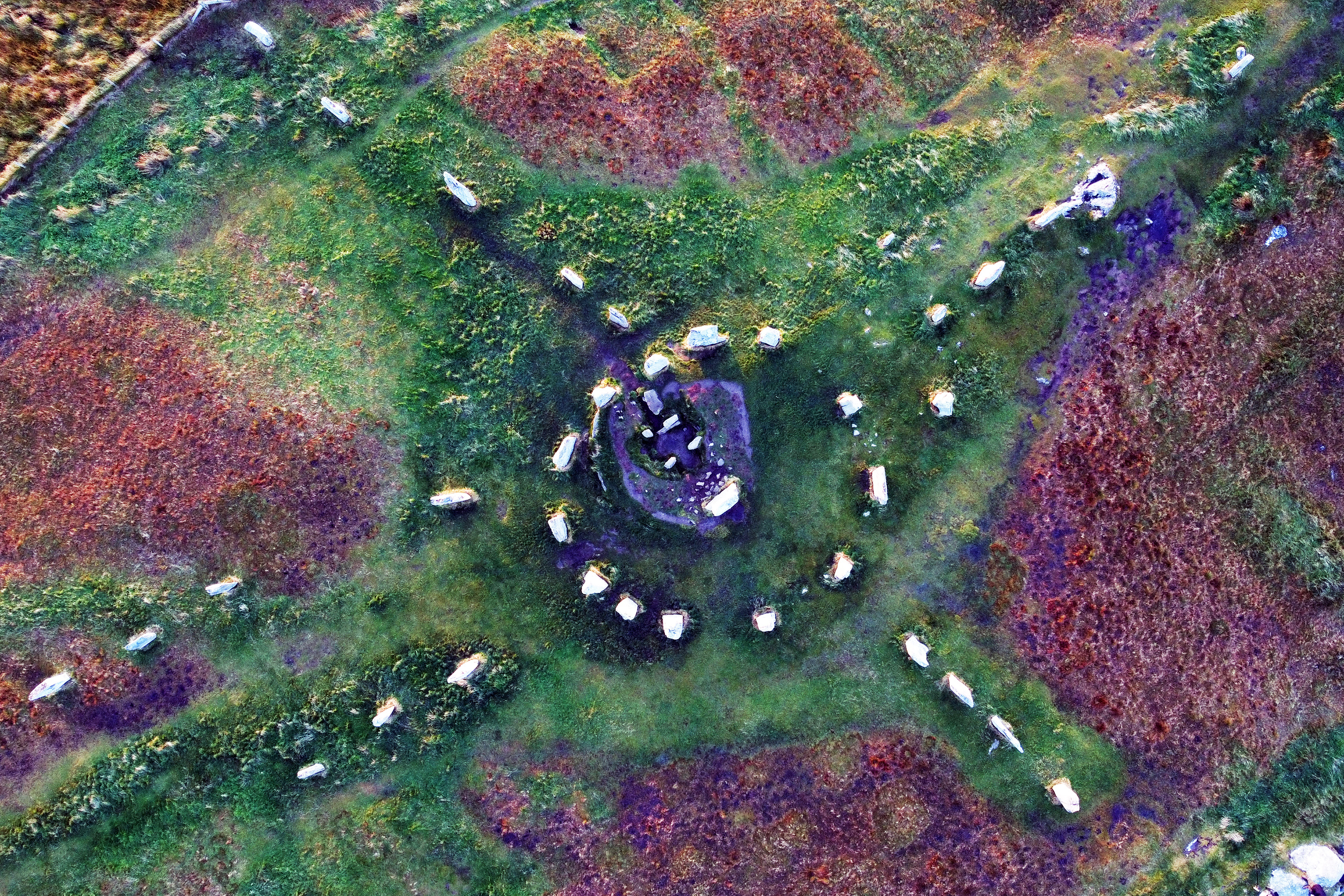
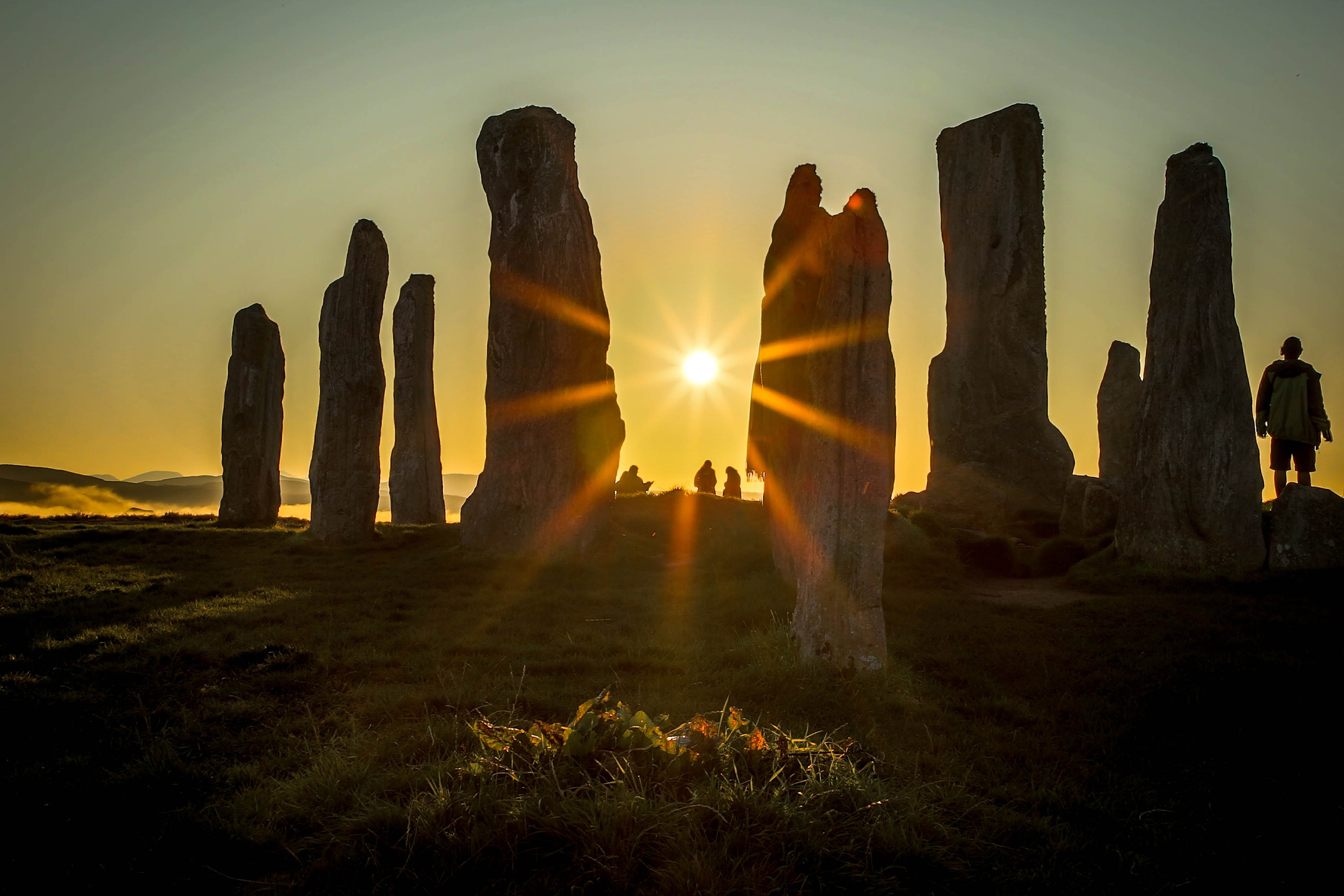
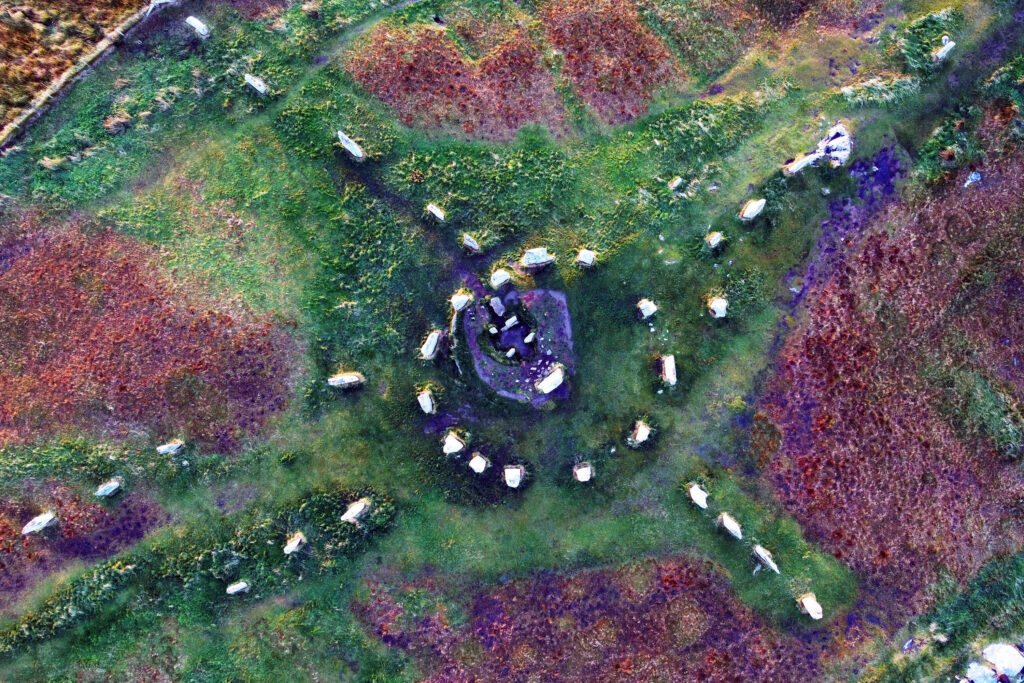
On the Isle of Lewis above the Scottish mainland stand the prehistoric Callanish standing stones in the shape of a cross. Why men born thousands of years before Christ made this impressive structure is not exactly known. Nevertheless, the stones stand today as a symbol of our Lord’s Passion above the increasingly secular world of the West.
At one time, about 890-1266, a less-than-Christian nation stood as the Kingdom of the Sudreys, consisting of the Hebrides, including the Isles of Lewis and Skye, and the Isle of Man. It was a kingdom with a unique culture of both Norse and Celtic aspects, including a Norse language and its own dialect of Gaelic. Established by Vikings from western Norway, this country lasted for approximately 300 years.
How truly Christian the Sudreys were is not fully known, as characteristics of the Norse pagan religion may have been present. A bishop from either France or England resided on the Isle of Skye, but, choosing to become political and confrontational during several violent domestic times of turmoil, he was exiled to Byland Abbey in North Yorkshire after being mutilated and defeated. The Sudreys clearly belonged to the Norwegians.
Still, the Kingdom of the Sudreys is known today for the most continuous existing parliament in Europe and can boast the existence of Juries of Matrons, composed of six mature women who dealt with issues of marriage and witchcraft under the jurisdiction of ecclesiastical courts. But such solidity in government was dashed when the kingdom was divided after an internal battle on the eve of Jan. 6, 1156, the Feast of the Epiphany. After this violent battle, the Isles of Lewis and Skye were divided from the Isle of Man and the other lower islands. Eventually, a destructive battle in the early 13th century gave political control to a totally new outside contender, the Scots. Norwegian rule ended on these islands of rough volcanic rock with sheep-herding as a primary means of subsistence.
Few people today in the 21st century have heard of the Kingdom of the Sudreys and their contributions. A 300-year period of argument and debate with diluted and adulterated Christian norms has been forgotten. But the legacy of one man in the 6th century, before the time of this kingdom, lives on and is remembered with devotion — St. Columba.
St. Columba chose to live differently from the violent, proud man controlling the Sudreys. Leaving a wealthy, noble background in his Irish homeland, he traveled to the island of Iona off western Scotland. St. Columba not only founded a monastery there, but it was one known for its evangelical practices of preaching to the Pict pagans and assisting parishes outside its boundaries. St. Columba and his monks had ascetic practices of hard living in order to grow closer to Christ and imitate him. St. Columba humbled himself by also choosing to know and learn from both Sacred Scripture and the writings of the early Church Fathers, particularly those of St. John Cassian and St. Basil.
The simple wisdom of St. Columba is honored in the poetry attributed to him or written about him. He is remembered as a saint who intercedes for those who call for his help during the storms of life, whether real, like those on the sea between Ireland and Scotland, or between human beings, even those striving for holiness. The work of St. Columba and his monks in copying, preserving and understanding Sacred Scripture lives on today and no doubt influenced the Catholic culture of Europe as a whole and us today.
The life of this one poor monk who chose to obey God and leave the world with all its pomp and rivalry is beyond the influence of what was tried later on the islands just north of him in the Kingdom of the Sudreys during the Middle Ages. His choice to live differently, leave an affluent environment, risk the high seas, and evangelize during what had to be competing difficulties to just survive is more than admirable.
St. Columba’s choices to imitate Christ may have been overlooked, but later outlasted and outshone those imitating worldly ambitions. He is the light foreshadowed from the Callanish stones constructed in the shape of a cross standing above his work on Iona.
St. Columba, pray for us!