

In recent months, a renewed fascination with Catholic beauty has swept across the world, rekindled in particular by the solemn rites of Pope Francis’ funeral and the conclave that followed.
When a newly elected Pope Leo XIV appeared wearing the red mozzetta, a traditional papal garment set aside for over a decade, it sparked more than aesthetic curiosity. It awakened the deeper intuition that, in the Church, even what is worn speaks volumes.
Few understand this better than Raniero Mancinelli, a longtime papal tailor. For more than 70 years, he has sewn and shaped the vestments of the successors of St. Peter.
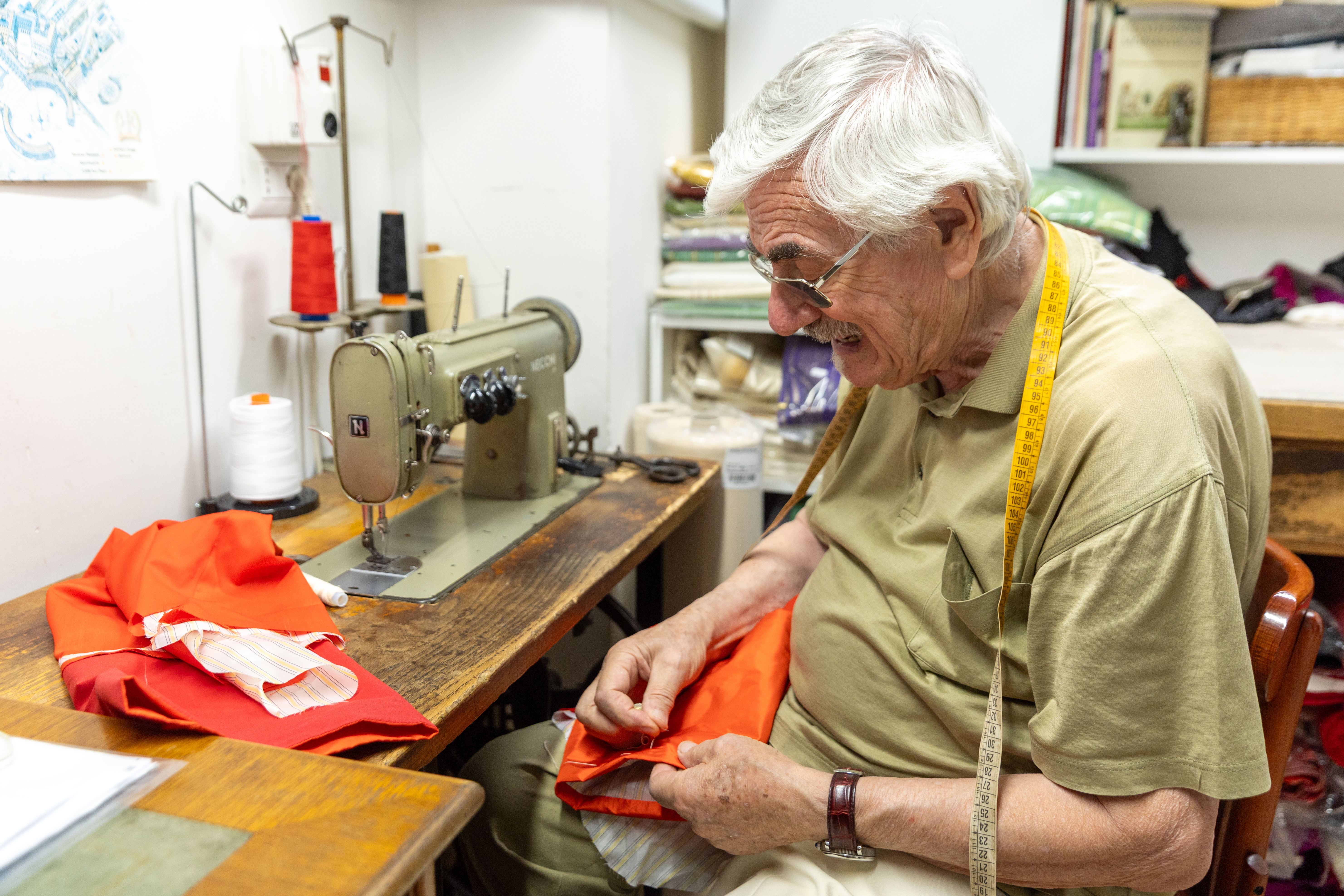
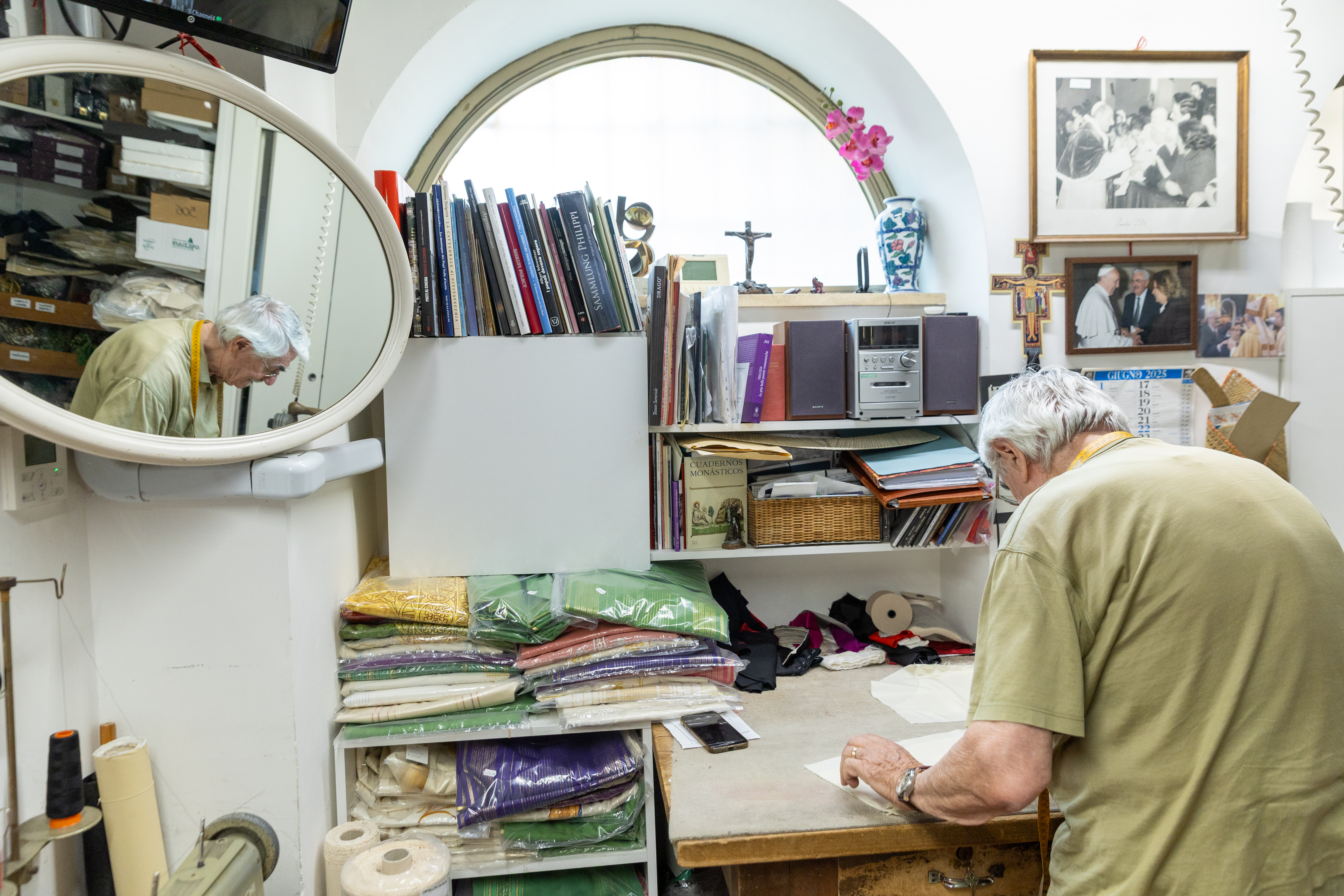
At 86 years old, he still works by hand from his small Roman atelier in the emblematic Borgo Pio neighborhood that leads to the Vatican’s main gate, Porta Sant’Anna. To him, tailoring is not simply a craft, but a deep calling rooted in faith.
“I started very young, in 1957 or 1958, sewing for altar boys and parish priests,” he said in an interview with the Register.
“Then I opened my shop in 1962, just as Vatican II began. Little by little, with a desire to work and with God’s grace, I began to serve bishops, cardinals and, eventually, several popes.”

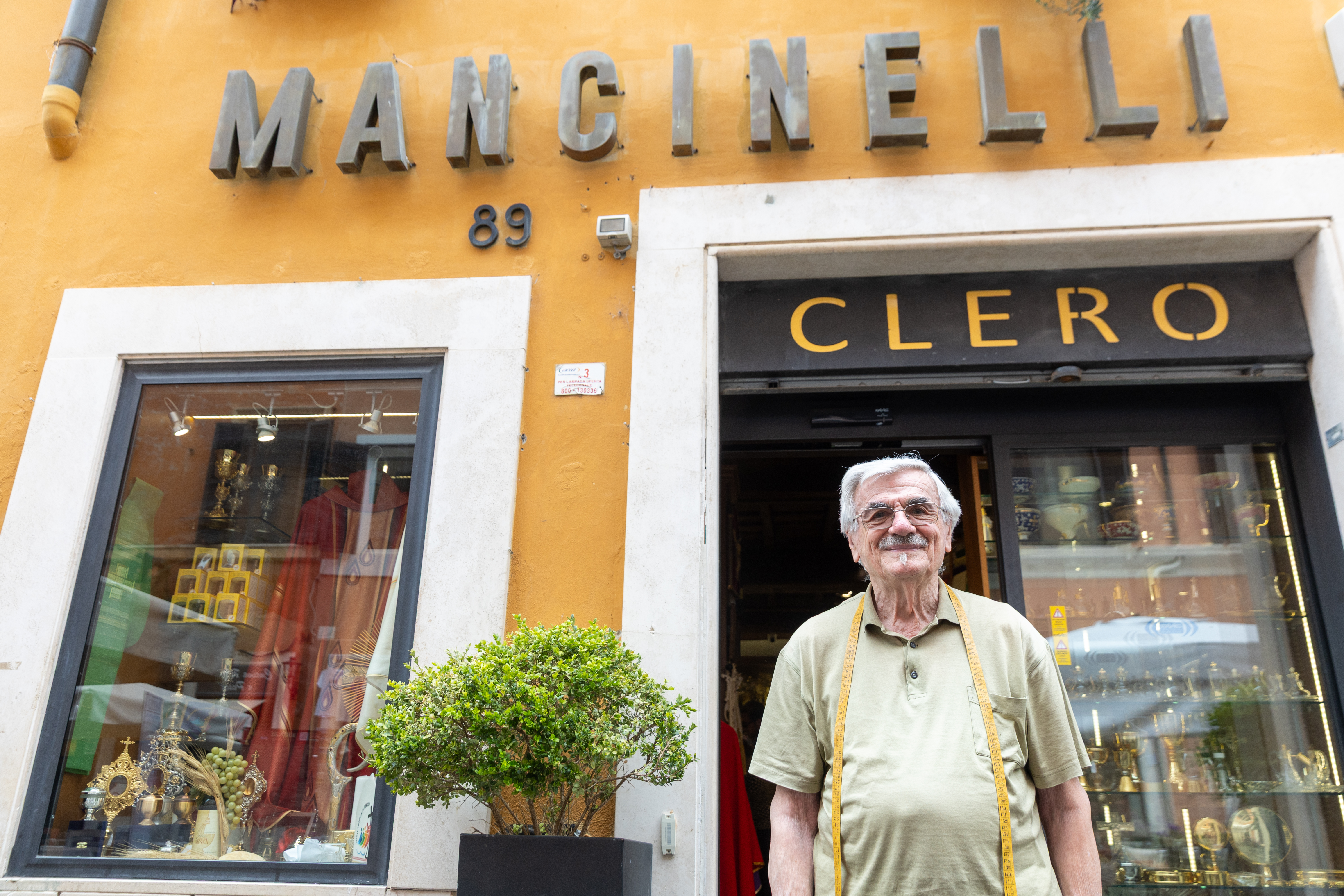
His path, he insisted, was not shaped by chance. “You need a lot of consistency, patience and an embedded desire to do things well. I had a mentor, a Salesian priest, who taught me many good things. He had a wise and generous spirit. I realized early on that what he was giving me was something precious.”
Over the decades, Mancinelli has dressed four pontiffs: St. John Paul II, Benedict XVI, Francis and, now, Leo XIV. Each, he said, left a unique mark — but he holds especially fond memories of Benedict XVI’s early days of pontificate.
“I knew him quite well beforehand; he used to live near my workshop. We’d see each other almost every day, exchange greetings. A few days after his election, he called me with some specific requests,” he continued with misty eyes. “That first visit — well, it was deeply moving. … He told me some beautiful words, from the heart, more as a man than as a pope.”
He preferred not to share the content of that exchange, noting only that some conversations, especially when they touch the soul, belong to that quiet space where confidences become prayer.
Each pope, Mancinelli noted, brought his own sensibility to how he dressed. “They each had their own style, their own way. But I saw in all of them the same desire to serve Christ and the Church.”
His task, he said, was not to impose, but to intuit. “I’m not a psychologist, but I can easily understand the tastes and desires of the person in front of me. Whether it’s a simple priest or the Pope, my goal is always to serve their needs,” he said, noting that the popes rarely give detailed instructions.
“Most often, they trust me completely, which gives me great joy. It’s a relationship of total confidence.”
Pope Francis, he said, “was easily satisfied. He never made particular sartorial requests. Everything was kept very basic, and he didn’t mind if a vestment was a little too big.”
Leo XIV, by contrast, “is lean, elegant and dresses well. He likes a well-cut cassock, something properly fitted.”

The Return of the Mozzetta
With Pope Leo, indeed, the global spotlight has turned once again to the beauty of ecclesiastical attire. The most striking change was the return of the mozzetta — a short, red shoulder cape that had not been seen since Benedict XVI.
Worn outside of penitential seasons, the red mozzetta symbolizes the blood of the martyrs — the very foundation upon which the Church of Rome was built. In donning it, the pope evokes not only the Petrine office, but the witness of those who gave their lives for the faith. This garment reminds the world that the Church is not a museum, but a living body also nourished by sacrifice.
For some observers, Leo XIV’s choice reflects an Augustinian sensibility that sees beauty not as luxury, but as an expression of divine order.
Mancinelli, who has crafted mozzettas for decades, called it “a difficult piece to get right.” He expressed doubts about whether future tailors would be able to preserve the skill. “I’ve been making mozzettas for so long it’s become part of me,” he said with the calm confidence of experience. “But yes — it’s definitely complex.”
On the evening of his election, Pope Leo also wore the traditional white cassock, made of light Italian wool, layered with the rochet — a linen garment reaching to the knees and trimmed with lace. A gold pectoral cross and a stole adorned with crosses and embroidery completed the ensemble. He retained the simple black shoes introduced by his predecessor. At his first Regina Caeli, Leo had around his waist a white moiré silk sash embroidered with the papal coat of arms.

Vestments as Witness
At a time when Catholic symbolism is once again captivating global attention — even across social media — Mancinelli recognizes the work of Providence. “I’ve noticed it, too. There’s undeniably new enthusiasm,” he said. “It’s not about going back, but about returning to what is beautiful, paying attention to small but meaningful details; that is quite thrilling.”
Asked about the message that the Church can send through such refinement, he answered that “beauty is never an end in itself, but a powerful way of revealing the Person of Christ.”
That belief, he added, has shaped every stitch of his life and special vocation. “Dressing the Successor of Peter is such an honor. But truly, every religious garment I make matters to me. I put the same enthusiasm into all of them. Of course, with the Pope, there’s more care needed — the white cassock is especially delicate. But I love this work. Thank God, it comes naturally.”
And retirement? He laughed. “Me, retire? No way. In fact, I fully intend to continue serving the next popes!”