<p><!-- BEGIN THEIA POST SLIDER --></p>
<p> <br />
</p>
<div>
<p>COMMENTARY: Meet some saints whose holiness and wisdom may earn them one of the Church’s rarest titles.</p>
</p></div>
<div>
<p>The Italian term <i>papabile</i> (“pope-able”) means “a likely candidate for the papacy.” It’s a relatively old word — the earliest documented use of the term is from the late Renaissance. The word appears in English for the first time after the 1823 conclave which elected Pope Leo XII.</p>
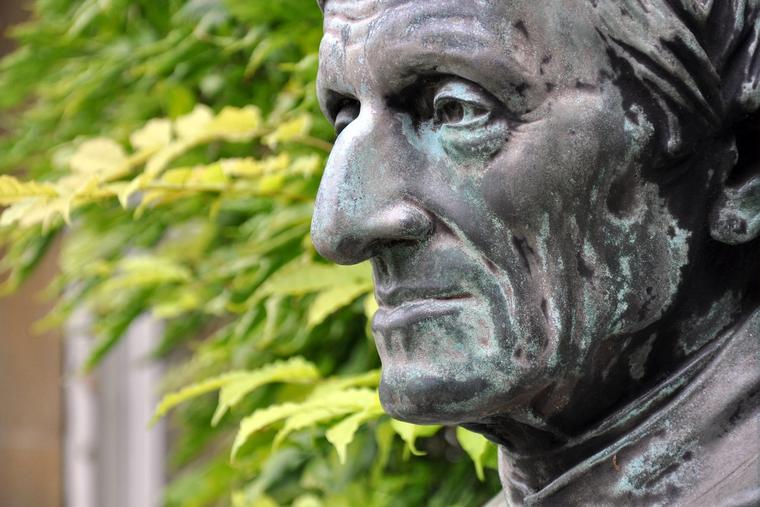
<p>Before Pope Leo XIV’s declaration naming him a Doctor of the Church, St. John Henry Newman had been <i>doctorabile</i> for a very long time — even from before he was canonized. His books have made a great impact on many lives, Catholic and otherwise.</p>
<p>The Church requires three characteristics for such recognition: First, holiness of life. Second, eminence in doctrine. Third, a universal impact on Christian teaching and spirituality. Newman’s life and writings exemplify these qualities in a way that resonates across the modern Church.</p>
<p>In addition to his academic and spiritual writings, Newman led a heroic life. His conversion from Anglicanism to Catholicism in 1845 entailed personal sacrifice, social ostracism and material hardship. Shunned by everyone who wasn’t Catholic, Newman had to suffer a great deal. Despite it all, he persevered in fidelity and humility.</p>
<p>Pope St. Paul VI praised Newman’s contributions to theology and Pope St. John Paul II described him as a “sure guide” for deepening the relationship between faith and reason. At Newman’s beatification in 2010, Pope Benedict XVI identified him as a master of integrating intellect and faith for the modern age. Pope Francis recognized Newman’s lasting impact on the Church at his canonization in 2019 and called him a pastor and teacher for our time.</p>
<p>As of Nov. 1, the Catholic Church now has 38 Doctors:</p>
<ol>
<li>St. Irenaeus of Lyons (c. 130–202)</li>
<li>St. Athanasius of Alexandria (c. 296–373)</li>
<li>St. Ephrem the Syrian (c. 306–373)</li>
<li>St. Hilary of Poitiers (c. 315–367)</li>
<li>St. Basil the Great (c. 329–379)</li>
<li>St. Gregory of Nazianzus (c. 329–390)</li>
<li>St. Ambrose (c. 340–397)</li>
<li>St. John Chrysostom (c. 347–407)</li>
<li>St. Jerome (c. 347–420)</li>
<li>St. Augustine of Hippo (354–430)</li>
<li>St. Cyril of Jerusalem (c. 313–386)</li>
<li>St. Cyril of Alexandria (c. 376–444)</li>
<li>St. Peter Chrysologus (c. 380–450)</li>
<li>St. Leo the Great (c. 400–461)</li>
<li>St. Gregory the Great (c. 540–604)</li>
<li>St. Isidore of Seville (c. 560–636)</li>
<li>St. John of Damascus (c. 675–749)</li>
<li>St. Bede the Venerable (c. 673–735)</li>
<li>St. Anselm of Canterbury (1033–1109)</li>
<li>St. Peter Damian (1007–1072)</li>
<li>St. Bernard of Clairvaux (1090–1153)</li>
<li>St. Hildegard of Bingen (1098–1179)</li>
<li>St. Gregory of Narek (951–1003)</li>
<li>St. Anthony of Padua (1195–1231)</li>
<li>St. Albert the Great (c. 1200–1280)</li>
<li>St. Bonaventure (1221–1274)</li>
<li>St. Thomas Aquinas (1225–1274)</li>
<li>St. Catherine of Siena (1347–1380)</li>
<li>St. Teresa of Ávila (1515–1582)</li>
<li>St. John of Ávila (1499–1569)</li>
<li>St. Peter Canisius (1521–1597)</li>
<li>St. John of the Cross (1542–1591)</li>
<li>St. Lawrence of Brindisi (1559–1619)</li>
<li>St. Francis de Sales (1567–1622)</li>
<li>St. Robert Bellarmine (1542–1621)</li>
<li>St. Alphonsus Liguori (1696–1787)</li>
<li>St. Thérèse of Lisieux (1873–1897)</li>
<li>St. John Henry Newman (1801–1890)</li>
</ol>
<p>Though no one can predict with any accuracy who will be the next Doctor after St. John Henry Newman, if anyone at the Vatican is reading this article and needs a new <i>cause of saintly</i> <i>célèbre, </i>the following are my picks for, to coin a word, <i>dottorabíli (</i>“candidate for Doctor of the Church”).</p>
<ol>
<li>Blessed John Duns Scotus (c. 1266–1308) – Franciscan theologian, “subtle doctor,” defender of the Immaculate Conception.</li>
<li>Blessed Raymond Lull (1232–1316) – Logician, missionary and pioneer of interfaith dialogue.</li>
<li>St. Bernardino of Siena (1380–1444) — Preacher on the Holy Name of Jesus. He revitalized lay spirituality and Franciscan reform across Italy.</li>
<li>St. Bridget of Sweden (1303–1373) – Mystic and reformer with significant influence on late medieval piety.</li>
<li>St. Charles Borromeo (1538–1584) – Reforming cardinal of Trent, model bishop, catechetical influence.</li>
<li>St. Edith Stein (St. Teresa Benedicta of the Cross, 1891–1942) – Philosopher and Carmelite nun, developed a profound Christian anthropology.</li>
<li>St. Faustina Kowalska (1905–1938) – Mystic and apostle of Divine Mercy, widely influential devotion.</li>
<li>St. Gertrude the Great (1256–1302) – Benedictine mystic who offered profound insights into the Sacred Heart.</li>
<li>St. Gregory Thaumaturgus (c. 213–c. 270) – Miracle worker and defender of Trinitarian faith.</li>
<li>St. Ignatius of Loyola (1491–1556) – Founder of the Jesuits, master of discernment and spiritual exercises.</li>
<li>St. John Bosco (1815–1888) — Innovative Educator and Preacher who synthesized pastoral theology, pedagogy and spirituality in the formation of youth</li>
<li>St. John Cassian (c. 360–435) – Spiritual master bridging Eastern monasticism and Western theology.</li>
<li>St. Josemaría Escrivá (1902–1975) – Founder of Opus Dei, theology of sanctification in ordinary life.</li>
<li>St. Julian of Norwich (1343–c. 1416) – English anchoress, first female writer in English with profound Trinitarian and Christological insights.</li>
<li>St. Louis de Montfort (1673–1716) – Marian theologian and promoter of consecration to Mary.</li>
<li>St. Maximus the Confessor (580–662) – Brilliant Christologist, defender of dyothelitism, foundational for Byzantine and Western theology.</li>
<li>St. Mechtilde of Hackeborn (1241–1298) – Closely tied to Gertrude; contributions to mystical theology.</li>
<li>St. Melito of Sardis (d. c. 180) – Influential early bishop, paschal homilist and apologist.</li>
<li>St. Óscar Romero (1917–1980) – Archbishop and martyr, defender of justice and theological witness to the poor.</li>
<li>St. Pope John Paul II (1920–2005) – Theologian of the body, philosopher and one of the most influential magisterial teachers of modern times.</li>
<li>St. Theodore the Studite (759–826) – Defender of icons and monastic renewal.</li>
<li>St. Thomas More (1478–1535) – Martyr and lay theologian of conscience, influential in Catholic humanism.</li>
<li>St. Vincent de Paul (1581–1660) – Reformer of charity, pastoral theology and clerical formation.</li>
</ol>
<p>Consider learning more about these <i>dottorabili</i> and their writings. As Daniel 12:3 points out: “Those who are wise shall shine like the brightness of the sky, and those who lead many to righteousness, like the stars forever and ever.”</p>
</p></div>
<p><br />
<br /><a href="https://www.ncregister.com/commentaries/stagnaro-possible-future-doctors">Source link </a></p>
<p><!-- END THEIA POST SLIDER --></p>

Who’s After Newman? 23 Saints Who Might Become Doctors of the Church| National Catholic Register