


COMMENTARY: I’ve always loved Joan of Arc.
True faith, sacrificial faith and strong faith in the face of deadly opposition inspire people, even if they don’t share it or fully understand it. In my daily life, on campuses and at events across America, I’ve witnessed ordinary young women and men unafraid to say what’s right, true and holy about the life that God creates in the womb.
But it’s not easy to be countercultural, no matter when you have a chance to make a difference.
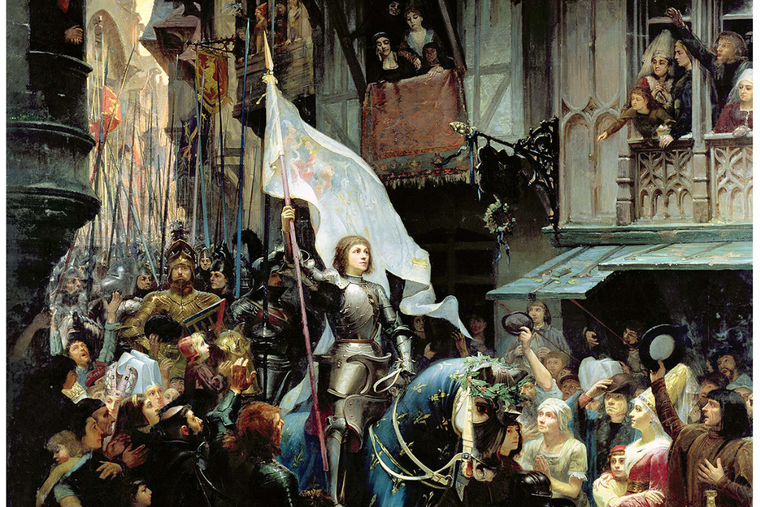
I’ve always loved Joan of Arc, a saint whose life began as a simple girl from the French countryside in the 1400s and who had such a passion for the suffering of her nation that she became a national figure willing to tell the truth, even if it cost her everything.
The novel Joan of Arc tells the story of her life as a labor of love from none other than Mark Twain, best known for The Adventures of Huckleberry Finn and Tom Sawyer. Few people know that a man considered to be an agnostic said that writing about a Catholic saint was his favorite project of all time, even calling it his “best.”
In addition, “it furnished me seven times the pleasure afforded me by any of the others: 12 years of preparation and two years of writing. The others needed no preparation and got none,” said Twain.
It’s beautiful that the story of a young, courageous woman who stood up in halls of power, speaking to political men about timeless, eternal truths, moved even a man whose own faith was fragile.
In a speech, Twain once said that St. Joan was “the ultimate symbol of female leadership, asking, ‘Who was more patriotic than Joan of Arc? Who was braver? Who has given us a grander instance of self-sacrificing devotion?’”
Twain tells the story through the voice of a fictional narrator, who is supposed to be her childhood friend and scribe, Sieur Louis de Conte. And it’s a narrative that’s easy to read, full of little stories of a young girl’s growing conviction that it was her job to get involved, rather than wait for someone else.
Says de Conte, “Her religion made her inwardly content and joyous; and if she was troubled at times, and showed the pain of it in her face and bearing, it came of distress for her country.”
As her country is falling apart, plagued by weak leadership unwilling to fight, Joan begins to lay out the foundation for why she, with their help, needed to show up for the fight. Her friend repeatedly tries to paint the bleakest picture possible of the odds against France, and Joan insists that not in 30 years, but in two years, things will change.
Her friend asks, “Indeed? And who is going to perform all these sublime impossibilities?”
“God.”
“It was a reverent low note, but it rang clear,” Twain imagined.
We all know how she was ultimately left to die after numerous trials, after she was captured by the English, but I love the description of Joan as she marched forward into battle.
“It was a remarkable march and shows what men can do when they have a leader with a determined purpose and a resolution that never flags,” writes her fictional friend, who later observed how greatness inspires everyone around them.
“That is the way with us; we may go on half of our life not knowing such a thing is in us, when in reality it was there all the time, and all we needed was something to turn up that would call for it. All that was necessary in my case was for this lovely and inspiring girl to cross my path.”
At 19, she was burned at the stake at the hands of the English, whom she had defeated. Her belief in her country and God’s plan for it was “political,” and as someone who fights for life and against abortion, I understand that false narrative when a government decides that things of faith are “political.”
But she didn’t waiver; she stood firm as she was attacked by men who believed more in their right to rule than in the God they said they served.
St. Joan said, “And that which God hath made me do, hath commanded or shall command, I will not fail to do for any man alive.”
May we all be so inspired to do the thing God has asked of each of us.