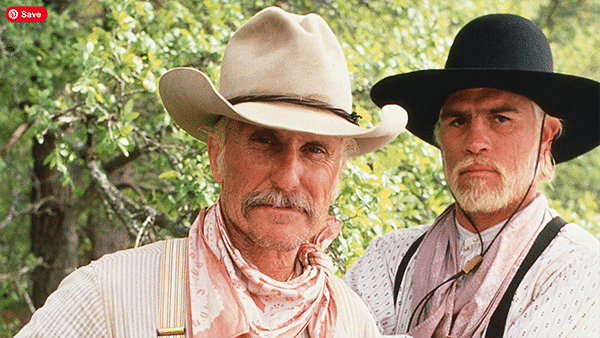
<p><!-- BEGIN THEIA POST SLIDER --></p>
<p> <br />
</p>
<div>
<p>“Woodrow,” Gus McCrae says, lying in a bed dying, “quite a party.”</p>
<p>It’s one of my favorite lines from my favorite novel, <a href="https://amzn.to/3VVDxGY"><em>Lonesome Dove.</em></a></p>
<p>Why?</p>
<p>Because it perfectly captures one of the richest portrayals of male friendship in literature: the friendship of Gus McCrae and Woodrow Call.</p>
<p>Like a party, Gus and Woodrow’s friendship is messy. It’s uneven and full of tension, punctuated by laughter and the occasional fight. And like a party, where you often find yourself shoulder to shoulder with people you didn’t pick to hang out with but have to figure out how to get along with, Gus and Woodrow were thrown together as young men and had to learn how to get on while being polar opposites.</p>
<p>To understand why their friendship hits so deep for me (and other men), it helps to look at what communication scholar Bill Rawlins calls the “tensions of friendship.” In his book <em><a href="https://amzn.to/3KHxvXS">Friendship Matters</a></em><em>,</em> Rawlins describes four opposing forces that exist in every close friendship. <a href="https://www.artofmanliness.com/people/relationships/podcast-567-understanding-the-wonderful-frustrating-dynamic-of-friendship/">I talked to Bill about this on the podcast</a> several years ago, and it’s one of my favorite conversations.</p>
<p>The four tensions of friendship, if not managed appropriately, can destroy the relationship. But these same tensions are what give friendship its unique tang. And if you look at Gus and Woodrow, you’ll see all four playing out throughout the sweeping story of <em>Lonesome Dove.</em></p>
<h3><strong>Independence and Dependence</strong></h3>
<p>Unlike family, marriage, and business alliances, friendships are not held together by blood or legal bonds. There are no clear cultural expectations or contractual obligations that set its terms. The bond between friends is purely voluntary and made only of will. You enter a friendship by choice and can end it by choice. That freedom is what makes friendship so rewarding, but also so fragile.</p>
<p>In my podcast interview, Rawlins said that friends “gift each other two freedoms”: 1) the freedom to live their own lives, and 2) the freedom to depend on each other when needed. These two gifts — the gift of independence and dependence — create a tension.</p>
<p>Gus and Woodrow’s friendship showcases that tension throughout the novel. They’re opposites in nearly everything. Woodrow is the stoic — all duty and discipline; Gus is the epicurean — content with a bottle of whisky and a game of cards. Each lives his own life on his own terms and mostly lets the other be.</p>
<p><em>Mostly.</em></p>
<p>Because they can’t help but meddle with each other. Gus ribs Woodrow for being joyless; Woodrow mutters that Gus is lazy. They tussle and irritate one another, but they know how far they can push each other. When the tension gets too high, they back off and give the other person some space. But then they always circle back to one another, because they both know they need each other.</p>
<p>That back-and-forth between independence and dependence is the heartbeat of their friendship and that tension is what kickstarts the main plot of <em>Lonesome Dove.</em> Woodrow, bored with life on the Texas-Mexico border, decides to drive a cattle herd from Texas to Montana. Gus wants no part of it; he’s happy enough sitting on his porch in Lonesome Dove and watching his pigs. Gus could have let Woodrow go off on his own and do his own thing while he stayed behind doing his.</p>
<p>But he knows Woodrow can’t do the drive alone.</p>
<p>“It’s your show, Call,” he says. “Myself, I’m just along to see the country.” </p>
<p>Gus gives Woodrow the gift of dependence.</p>
<p>While on the trip, Gus serves as Woodrow’s faithful companion. But he still does his own thing. And Woodrow lets him.</p>
<p>Woodrow gives Gus the gift of independence.</p>
<p>Good friends go back and forth in offering each other both dynamics — sometimes freedom, and sometimes attachment.</p>
<h3>Affection and Instrumentality</h3>
<p>Rawlins notes that friendships hover between affection — caring for someone simply for who they <em>are</em> — and instrumentality — valuing them for what they can <em>do</em>. Men, he says, often lean toward the instrumental side. We bond by doing stuff with each other and for each other. We value guys for the concrete things they add to our lives — skills, resources, connections, advice, etc.</p>
<p>That tension runs through Gus and Woodrow’s friendship. One of the reasons Woodrow puts up with Gus is that he knows Gus is a cool operator. He’s proven his grit in their battles with the Comanches as Texas Rangers. Gus is useful . . . when he wants to be.</p>
<p>Woodrow’s got an undercurrent of affection for Gus as well — even if he just doesn’t have it in him to express it. Woodrow instead shows his affection the only way he knows how: through work. Woodrow demonstrates his love for his lifelong friend by hauling Gus’s carcass all the way back from Montana to Lonesome Dove. Everyone thought it was stupid. But Woodrow did it because he loved his friend.</p>
<p>Gus leans more towards the affection side. He expresses his love to Woodrow through words. He teases and provokes Woodrow in an effort to draw his buddy out of his shell. When Woodrow refuses to loosen up, Gus keeps talking anyway.</p>
<p>Their friendship lives in this tension. Woodrow’s practical devotion frustrates Gus, who wants warmth; Gus’s talk frustrates Woodrow, who wants deeds. Between the two, affection and instrumentality keep tugging at each other.</p>
<h3>Judgment and Acceptance</h3>
<p>Every friend wants to be accepted for who they are. But real friendship also involves judgment. We choose friends because we admire them. When friends fall short of their own ideals, we notice. But do we call our friend out and risk a relational rupture? Or do we stay silent in order to maintain the friendship? It’s a fraught tension. Rawlins says one of the defining tests of friendship is “the moment when someone risks delivering the judgment that needs to be delivered.”</p>
<p>For the most part, Gus and Woodrow accept each other — warts and all. But the tension between judgment and acceptance comes to a head when Gus challenges Woodrow for not claiming Newt as his son. “Give him your name, and you’ll have a son you can be proud of. And Newt will know you’re his pa.” But Woodrow can’t do it. He’s too restrained by pride and the duty-first code that’s governed his life. Gus knows that, but he presses anyway. He cares about Woodrow too much to let him off the hook.</p>
<p>Gus doesn’t scold to feel superior. He does it because he genuinely cares about Woodrow. He knows Woodrow’s got more in him than orders and work, and loves Woodrow enough to say so. Woodrow accepts the rebukes because he knows Gus isn’t taking a cheap shot. He knows Gus loves him.</p>
<p>Real friendship lives in that uneasy space of accepting someone as they are while still asking them to be better.</p>
<h3>Expressiveness and Protectiveness</h3>
<p>The last tension of friendship that Rawlins identifies is between expressiveness and protectiveness. This is the tension between the desire to share feelings versus the instinct to hold them back. Sometimes we don’t share our feelings because there are parts of ourselves we want to keep to ourselves — we want to protect certain aspects of who we are. Or we don’t share our feelings because they would poke someone else’s vulnerabilities too acutely — we want to protect them from being hurt. Women, generally, lean toward the expressive side; men toward the protective. We tend to want to keep more of our inner lives private.</p>
<p>Ol’ Gus isn’t afraid to express his feelings to Woodrow. It annoys Woodrow how much Gus shares his opinions with him. But he lets Gus yammer.</p>
<p>Woodrow, the stoic, keeps his feelings close to his chest. If he wants to let Gus know how he feels, he’ll show him. When Gus lies dying, this difference becomes heartbreakingly clear. Woodrow sits by his bed, silent. He’s thinking about how stubborn his friend is and how much they’ve quarreled over the years, but also about all the good times they’ve had together. But he can’t bring himself to say anything. Gus saves him the trouble: “Woodrow, quite a party.” That’s it. The line sums up decades of friendship.</p>
<p>Woodrow’s final act — hauling Gus’s body across a continent to bury him where he wanted — is the ultimate form of protectiveness. It’s Woodrow’s way of being able to say “I love you” without having to express his affection in words.</p>
<h2 id="h.fdmvt6ju31ti">The Fruitful Tension of Friendship</h2>
<p>The thing that makes friendship special — its freedom — can also make it fraught. With no external scaffolding to hold it together, and no set expectations for how it’s supposed to go, tensions inevitably arise.</p>
<p>Gus and Woodrow’s friendship reminds us that the tensions in friendship aren’t problems to solve. Independence and dependence, affection and instrumentality, judgment and acceptance, expressiveness and protectiveness — these dynamics will always push and pull against each other. The trick isn’t to eliminate the tensions but to figure out how to live with them. That’s what mature friendship looks like: not a hope for frictionless ease, but a commitment to faithful grappling.</p>
<p>If you’ve ever had a friend willing to wade through the hard parts without walking away, you know how rare it is. It’s a friendship that lasts because you both keep choosing it again and again.</p>
<p>By God, it’s not always easy. But it’s quite a party, ain’t it?</p>
<p><em><strong>For more insights on friendship, listen to this episode of the AoM podcast with Bill Rawlins (<a href="https://www.artofmanliness.com/living/reading/podcast-824-lonesome-dove-and-lifes-journey-through-uncertainty/">and be sure to check out this episode all about </a></strong></em><strong><a href="https://www.artofmanliness.com/living/reading/podcast-824-lonesome-dove-and-lifes-journey-through-uncertainty/">Lonesome Dove</a></strong><em><strong><a href="https://www.artofmanliness.com/living/reading/podcast-824-lonesome-dove-and-lifes-journey-through-uncertainty/"> as well!</a>):</strong></em></p>
</div>
<p><br />
<br /><a href="https://www.artofmanliness.com/people/relationships/gus-and-woodrow/">Source link </a></p>
<p><!-- END THEIA POST SLIDER --></p>

What Lonesome Dove Can Teach Us About the 4 Tensions of Friendship