


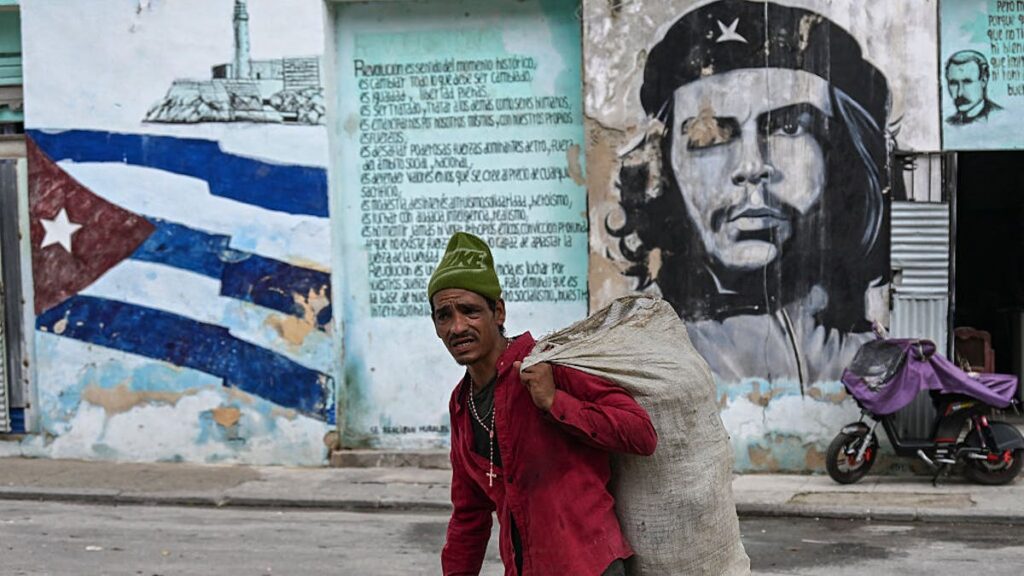
Four House Democrats — Reps. Mark Pocan (D-WI), Teresa Leger Fernández (D-NM), Maxine Dexter (D-OR), and Delia Ramírez (D-IL) — spent four days in Cuba meeting with communist President Miguel Díaz-Canel, government ministers, medical officials, business leaders, and other groups before concluding that President Donald Trump’s energy sanctions had transformed the island into what they described as a “silent Gaza.”
The congressional delegation made the trip after the Trump administration imposed a de facto fuel embargo on Cuba earlier this year following the capture of Venezuelan dictator Nicolás Maduro, tightening pressure on Havana by threatening penalties against countries that continue supplying fuel to the island.
Speaking to reporters after the trip, Pocan said someone he met in Cuba described the island as a “silent Gaza” — a comparison he said was “apt.”
“There may not be bombings, but there are certainly conditions that prevent people from going about their daily lives,” Pocan said. “They can’t go to work, they can’t preserve their food, they can’t access medical supplies, or live as they did before.” The comparison comes as left-wing lawmakers have repeatedly invoked Gaza in debates over seemingly unrelated domestic and foreign policy issues.
The delegation also directed criticism at Secretary of State Marco Rubio, whose family fled communist Cuba. “I think Marco Rubio is making this personal and not professional,” Pocan said.
Ramírez went considerably further, accusing the United States of pursuing “60-year-long imperialistic policies” against Cuba and blaming Trump and Rubio for worsening what she called a humanitarian crisis.
“Plain and simple, our 60-year-long imperialistic policies, including an immoral, inexcusable, cruel blockade, have contributed to the dire conditions facing Cubans who yearn to be free,” Ramírez said in a statement released after returning from Havana.
She also claimed Trump was advancing a “white nationalist agenda” through his immigration policies and argued the United States must end the blockade, end the sanctions, and dismantle policies she said violate international law.
In a joint statement, the four lawmakers claimed the Trump administration’s policies were “strangling” Cuba and warned that sanctions were “killing everyday Cuban citizens.”
Dexter, a physician, praised Cuba’s government-run healthcare system, saying, “Cuba created a free, universal healthcare system that millions of Cubans and others around the world have come to expect and depend on.”
Léger Fernández likewise condemned U.S. policy, saying, “What the United States is doing to this island is a siege.”
Cuba’s communist government quickly embraced the Democrats’ comments.
Foreign Minister Bruno Rodríguez Parrilla celebrated the delegation on X, writing that the lawmakers had confirmed through “firsthand exchanges” the “collective punishment” imposed by the United States and the “inhuman impact” of what he called a “genocidal policy designed in South Florida.” Rodríguez also promoted the slogan “Cuba is not a threat,” a phrase frequently used by the Cuban government in international campaigns against U.S. sanctions.
The Trump administration has defended its Cuba policy as an effort to weaken the communist regime rather than to punish the Cuban people. The White House has argued that Havana’s decades of economic mismanagement, combined with authoritarian rule, bear primary responsibility for the island’s ongoing shortages and rolling blackouts.
Rubio, whose parents emigrated from Cuba before Fidel Castro consolidated power, has long supported maintaining pressure on the communist government and has argued that sanctions should remain in place until meaningful democratic reforms occur.