


This article is part of Upstream, The Daily Wire’s new home for culture and lifestyle. Real human insight and human stories — from our featured writers to you.
***
As a freshman in high school, my friends and I didn’t avert our eyes in the hallways when the jocks or seniors walked by; we averted our eyes from the tail-wearing furries. By no means was I considered “cool” — my friends and I were nerdy kids who took art and theater classes — but even we were made uncomfortable by the aggressive, antisocial behavior of our school’s small population of self-identified “furries.”
High school is already a confusing time, and adding in the anthropomorphic obsession didn’t help. Traveling in small packs, they usually had tails pinned to their sweatpants and whiskers drawn on their cheeks with eyeliner, and they sometimes yipped like dogs. At late-night parties, we gathered around to tell stories about what they did at parties, in the full fursuits that they hid from their parents. They would post videos of themselves working on their fursuits or acting out their “fursonas” to trending TikTok songs.
If you think that furries are rare, you’d be wrong. My average-sized, suburban Wisconsin high school was rooted in a generally conservative community. Despite this, there were several very progressive student groups, a large LGBT club, and, of course, quite a few furries.
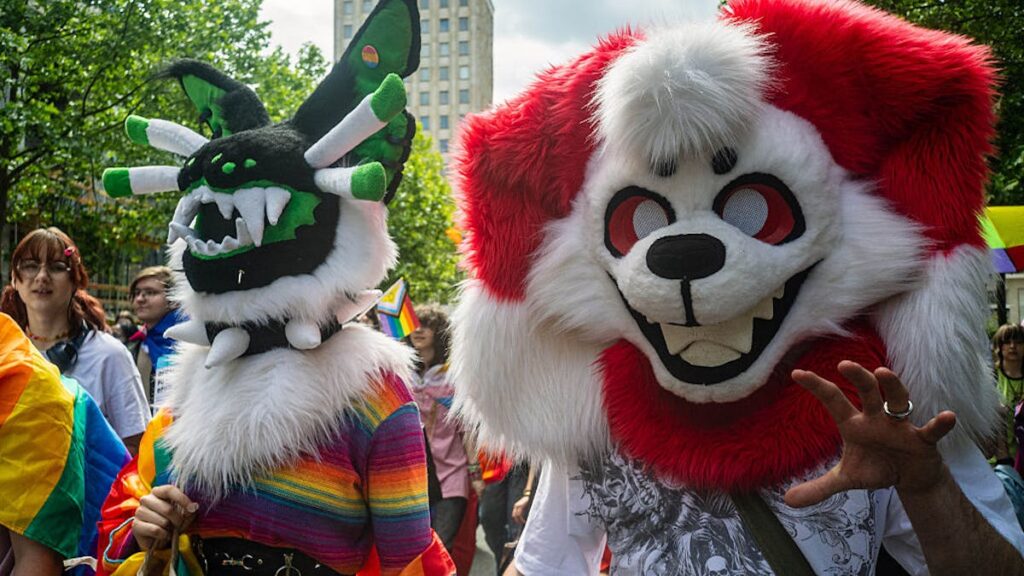
Once a fringe subculture, dressing like animals has in recent years exploded into the mainstream. Many people join the furry fandom through social media sites, initially engaging with fan art or role-playing in their newfound fursonas. Finding hard data on the number of people who identify as furries is difficult because the community is extremely private, primarily interacting online under the guise of anonymity. However, furry conventions offer some insight into how populous the subculture has become. In 2025, the largest furry convention, Anthrocon in Pennsylvania, set a record of 18,300 attendees. That same year, Furry Weekend in Atlanta had 17,700 attendees, and Midwest Fur Fest near Chicago had 16,900 attendees. Additional conventions in Florida and Texas have seen their attendance peak at around 10,000. Smaller, regional meetups are also becoming increasingly common, with new events being introduced each year. Furry communities have also been arranging meetups at music festivals, comic cons, and Renaissance fairs.
Some self-reporting from these conventions and online polling has revealed a lot about furry demographics. Unsurprisingly, almost 75% are under the age of 25, 84% are male, and 83.2% are white. Furry culture — which involves dressing up and role-playing as an anthropomorphic creature — appeals to a very specific demographic.
It’s almost impossible to talk about the people behind the fursuits without talking about the sexual stigmas surrounding furries. This is the extent of most people’s understanding of furry culture, and it’s not entirely unwarranted: A survey of 334 male furries found that 84% identified as “non-heterosexual” and 99% stated that there was “some degree of sexual motivation involved” in their interest in furry culture. The survey also discovered that participants felt some degree of both attraction and arousal toward other anthropomorphic characters. Other studies have found that more than 70% of furries are members of the LGBT community and as many as 25% may be “gender diverse.” The growth in furry culture is tied to the growth in the LGBT community.
Gen Z is overwhelmingly more likely to identify as LGBT, indicating that young people are increasingly open to alternative lifestyles. In the case of furries, the subculture is slowly becoming normalized. When I graduated from high school, I was friendly with two kids who were both members of the furry fandom, one of whom identified as transgender and one of whom was bisexual. Neither of them ever mentioned it, and I only knew about it from lunchroom gossip and Snapchat screenshots of their fursuits.
However, in the few years since I graduated, the furry trend has become more socially acceptable. Faux-fur fashion has become incredibly popular, with a 220% increase in searches for faux-fur styles (not all of this is tied to furries, of course). Around the same time, animal tail styles began appearing on runways, with high-fashion brands such as Chloe selling clip-on fur tails for nearly $700. Other accessories, such as cat ears and cartoonish paws, have also become more common in alternative stores like Hot Topic. Furry-inspired styles are increasingly being found in clubs and at raves.
The uncomfortable truth is that furries are becoming normalized. Most young people who are interested in furry culture probably initially approach it as a fun alter ego. They’re primarily quirky kids who feel like they don’t fit in, with large numbers claiming to have been bullied as adolescents. However, it’s a kind of escapism incompatible with reality. Normalizing furry culture allows people to remove themselves from their bodies. Similar to how transgenderism lets people deny their biology, fursuits and fursonas allow people to deny their biology, too. Pretending to be another species will not solve kids’ problems.
Furries aren’t as fringe as they once were. They’re in schools across the U.S., and they’re increasingly going to be your coworkers, customers, and acquaintances. Our culture pretends that human bodies don’t matter, but they do. The people I went to high school with weren’t anthropomorphic wolves; they were self-conscious teenagers who needed guidance. Underneath all of the fur, we are still just dealing with people.
***
Brooke Brandtjen is a writer and journalist from Wisconsin who focuses primarily on culture, politics, and religion. She is a senior contributor at New Guard Press, a publication she joined while attending Hillsdale College.