


When women begin formation in religious life, they are asked a question that sounds simple but carries more weight than it first appears: “What name do you feel the Lord may be calling you to receive?”
In religious life, a name is not just a label or a line on paperwork. It is bestowed at a moment that marks a shift in how a woman is received into a way of life, and how she begins to understand herself within it.
In the months that follow entry into a religious order, names begin to emerge for the women in discernment: saints who have accompanied someone quietly over the years, Marian titles learned early and never quite forgotten, words that seem meaningful before they are fully explained. Some sisters arrive with something already in mind, while others hesitate to write anything down at all.
But in practice, the process is less about reinvention than recognition. As with men who enter religious orders and receive religious names, whether a sister proposes a name or discovers its meaning only later, the moment of naming tends to reflect something already taking shape in her vocation rather than replacing what came before it.
Although most sisters still use their baptismal names in legal documents such as passports and driver’s licenses, the practice of taking a new name — or the decision to keep their original name — varies widely among religious communities. Since the Second Vatican Council, some orders have returned to using baptismal names in daily life, while others continue the tradition of receiving a distinct religious name at entrance or profession.
The Register spoke with four religious sisters whose experiences of receiving a name show how differently the practice can unfold — and what it reveals about identity.
From Karol to Karolyn
For Sister of St. Francis M. Karolyn Nunes, vocation director of the Sisters of St. Francis of the Martyr St. George (FSGM) in Alton, Illinois, the process began with a clear idea of what she wanted her name to express: mission and a kind of spiritual urgency.
“I wanted to be named for a set-the-world-on-fire kind of saint,” she told the Register. She proposed the name Sister Mary Xavier, inspired by the missionary zeal of St. Francis Xavier.
But when she presented the name to her superior, the answer was unexpectedly firm: “I don’t know why, but no.”
She was the only postulant in her group whose proposed name was rejected.
Months later, on the first anniversary of the death of Pope John Paul II, she came across a magazine article that repeatedly referred to him by his birth name, Karol Wojtyła.
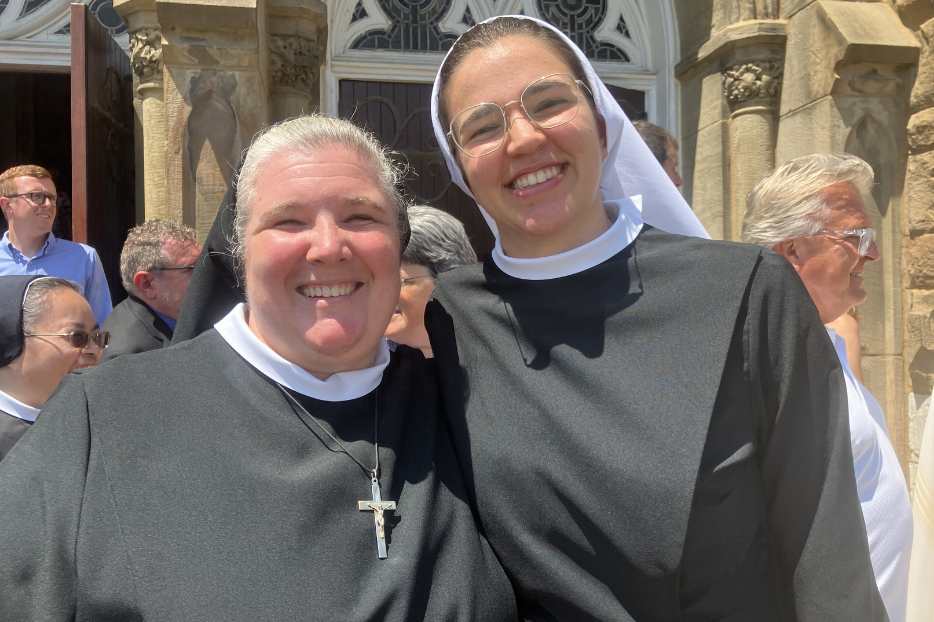
Something about it stayed with her as she began to ponder what it meant that the man she had admired so deeply had first lived as Karol.
While still maintaining the required Marian reference for her community through the initial “M” for Mary, she proposed a new name: What if she went by Karolyn, with a K?
The idea immediately resonated with her superior.
“So much of what I love about [John Paul II] … was actually because of who he was as Karol,” she said. “His understanding of the human person, young people, suffering, women — all of that was formed long before he was John Paul.”
‘Mother, Will You Give Me a Name?’
For Carmelite Sister Gianna of the Resurrection of the Carmelite Sisters of the Most Sacred Heart of Los Angeles (OCD), the naming process began less with choice and more with surrender.
“I just said, ‘Mother, will you please give me a name?’” she told her superior.
In her community, postulants may suggest names, but final discernment rests with the mother superior, who prayerfully chooses the name for each novice.
“It’s terribly nerve-wracking to be called up in front of the community of more than 100 Carmelite sisters,” she said. “Everyone gets to see your reaction to hearing your name for the first time — some sisters are overjoyed, while some are in shock.”
Before entering religious life, she had been drawn to St. Gianna Beretta Molla and quietly noted the name during discernment. The saint’s witness, she said, demonstrates “that the universal call to holiness can be achieved by anyone, layperson or religious.”
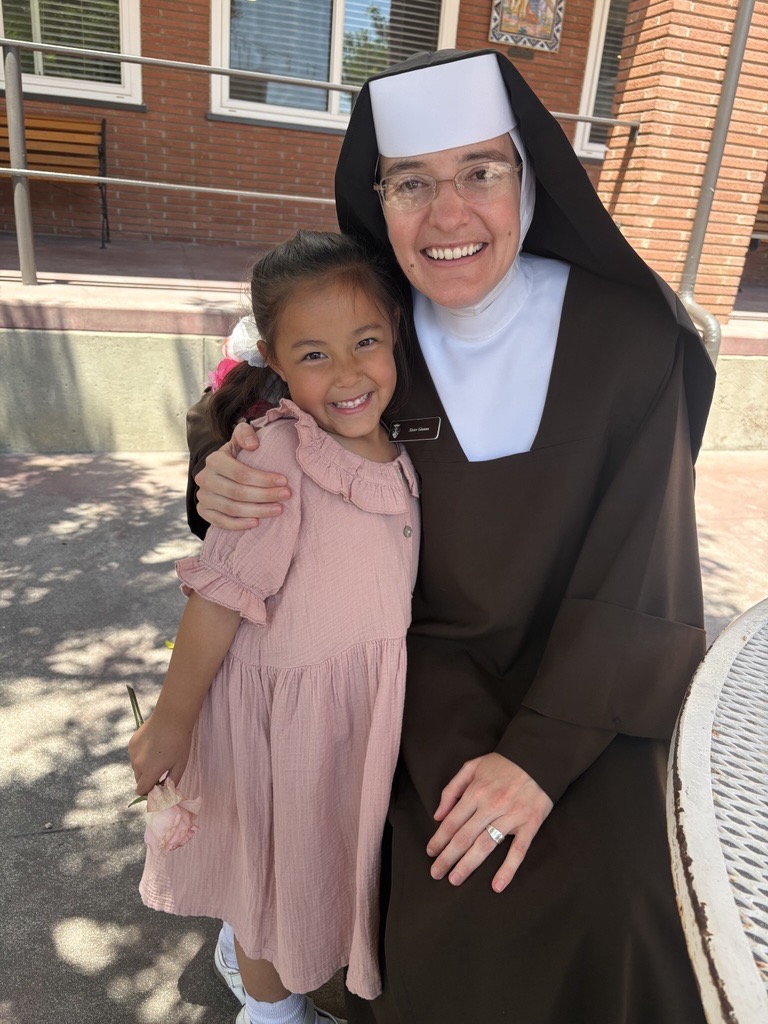
But in her case, the second part of her name — “of the Resurrection,” following the Carmelite tradition of including a title — came as a surprise rather than something she had anticipated.
During a difficult day in her postulancy, Sister Gianna’s superior asked how she was doing.
“I’m okay because Christ rose on the third day,” she replied.
Her superior noticed. “She later told me, ‘When you turned around and walked away, I instantly knew that that would be your name,’” she recalled.
From that exchange came the title she would later receive, an expression of a conviction already shaping her life: that “no suffering has the final word” because Christ is risen.
From ‘Marah’ to Meaning
Similar to Carmelite communities, the Dominican Sisters of St. Cecilia (OP) often describe the naming process as beginning with an attraction to particular saints or devotions.
In the case of Dominican Sister Mara Grace Gore, the vocation director for the community’s motherhouse in Nashville, the initial pull came instead through Scripture.
In search of a name linked to the Blessed Virgin, she was drawn to the word Marah from the Book of Exodus — the place where the Israelites encounter bitter water in the desert.
At first, she resisted the connection. “I didn’t really like that the water was bitter,” she said.
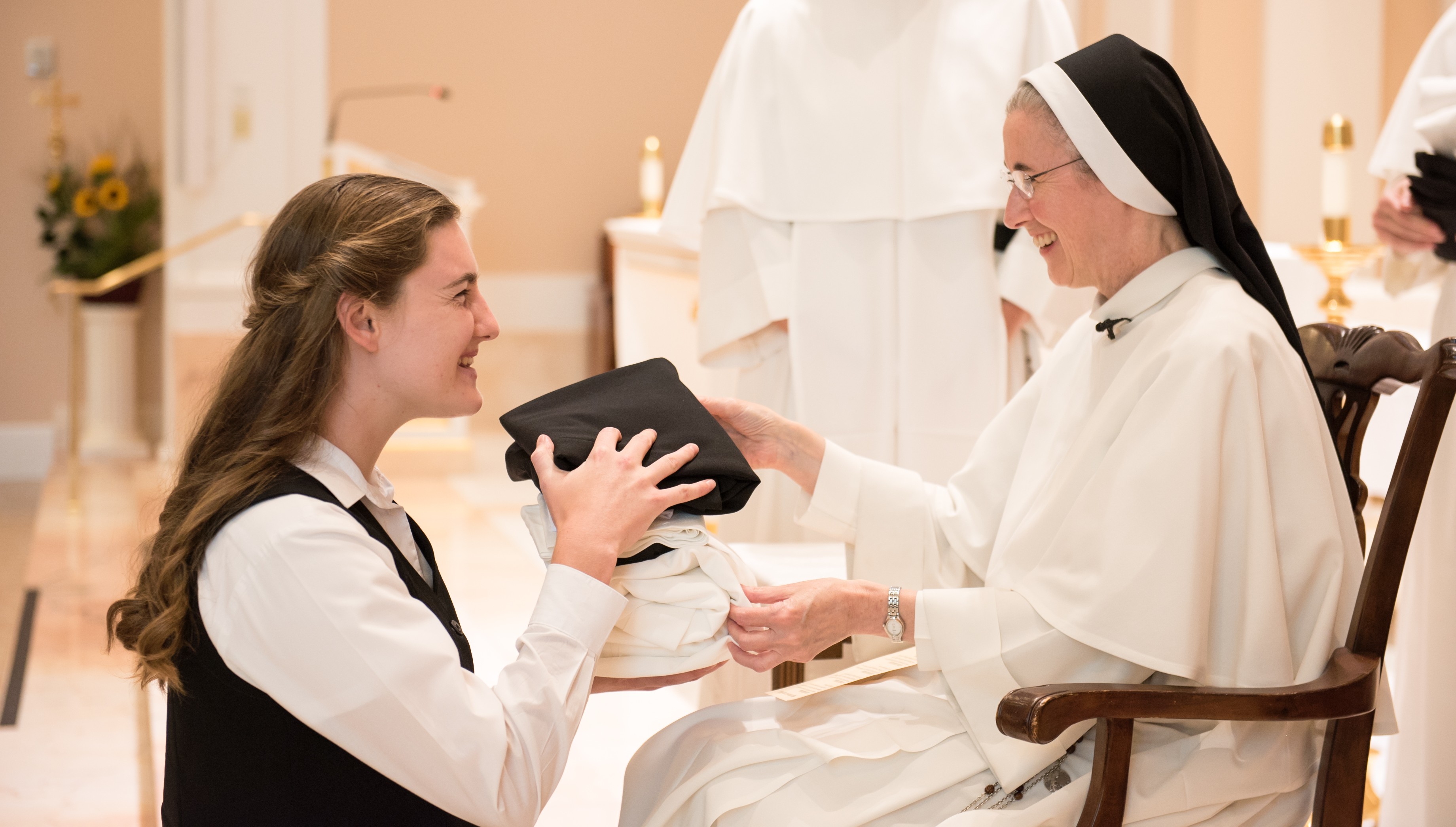
But as she continued reading, she came to the moment when God instructs the Israelites to cast wood into the water, transforming bitterness into sweetness.
For her, the image became inseparable from the cross — and from Mary.
“Because of the wood of the cross, because of what her Son has done for us, her name is the sweetest of all names,” she said.
The story also reflected her own life, including the death of her mother and the unexpected graces God brought through her grief.
“In trial,” she added, “the Lord draws forth from great joy.”
Sister Mara Grace now celebrates the Solemnity of the Immaculate Conception as her namesake feast day: a “spiritual birthday” that honors a sister’s patron saint. The feast day also happens to be her mother’s birthday.
“I had really wanted to receive the Feast of the Immaculate Conception in honor of Mother Mary,” she said, “but also in honor of my birth mom.”
When the Name Remains
For Sister Mary Claire of the Holy Family, vocation servant for the Society of Our Lady of the Most Holy Trinity (SOLT), the surprise was not receiving a new name but discovering she was being called more deeply into the one she already had.
As a child, Claire Strasser never liked her name. Though she was named after her grandmother, Mary Claire, she felt it was “too old-fashioned” and assumed she would change it upon entering religious life.
“I was really excited when I entered religious life to finally change my name to something else,” she said.
But during formation, she encountered a different understanding: that a religious name is not simply chosen but received as part of a vocation.
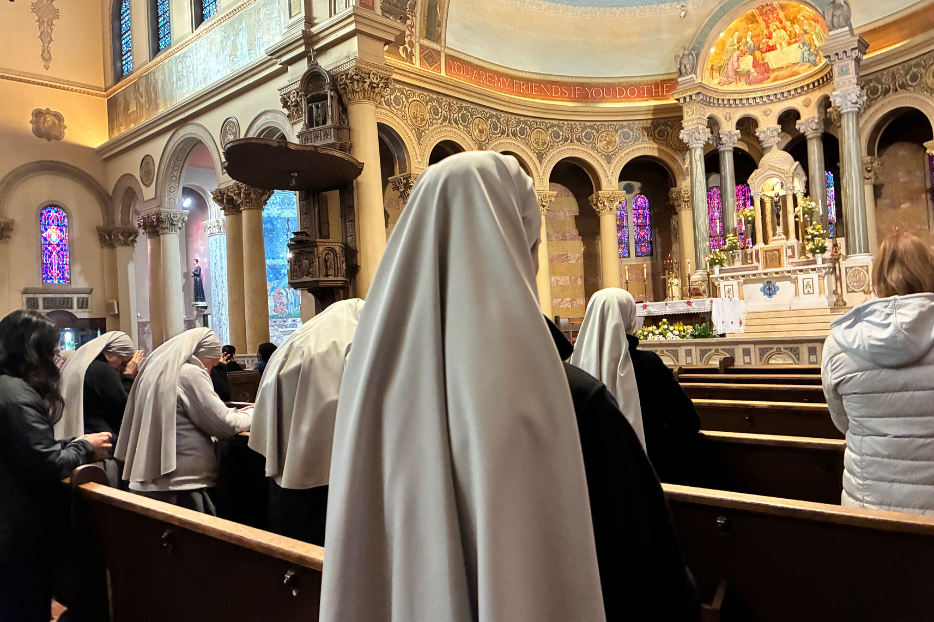
As she prayed, she reflected on her own name.
“Claire actually means ‘light,’” she said. “That amazed me — it felt like a call to be the light of Christ to the world.”
Instead of setting her name aside, she chose to embrace it more deeply.
She now serves as Sister Mary Claire of the Holy Family, a name that reflects her desire to share “the light and the beauty of the Holy Family.”
“My name,” she said, “is the expression of who God is calling me to be.”
A Deeper Fulfillment of Baptism
As demonstrated by these four religious sisters, names are proposed, resisted, received or reinterpreted — but rarely simply chosen.
Again and again, Scripture provides the pattern: Abram becomes Abraham, Simon becomes Peter, Saul becomes Paul. A change of name marks a change in mission, the sisters noted, but it does not erase what came before it.
For Sister Gianna, that continuity matters as much as change. Her baptismal name remains, not set aside but carried alongside her religious name.
“I remember early on my superior telling me, ‘You will always be Melissa,’” she recalled. “I just burst into tears; I needed to hear that that wasn’t going away.”
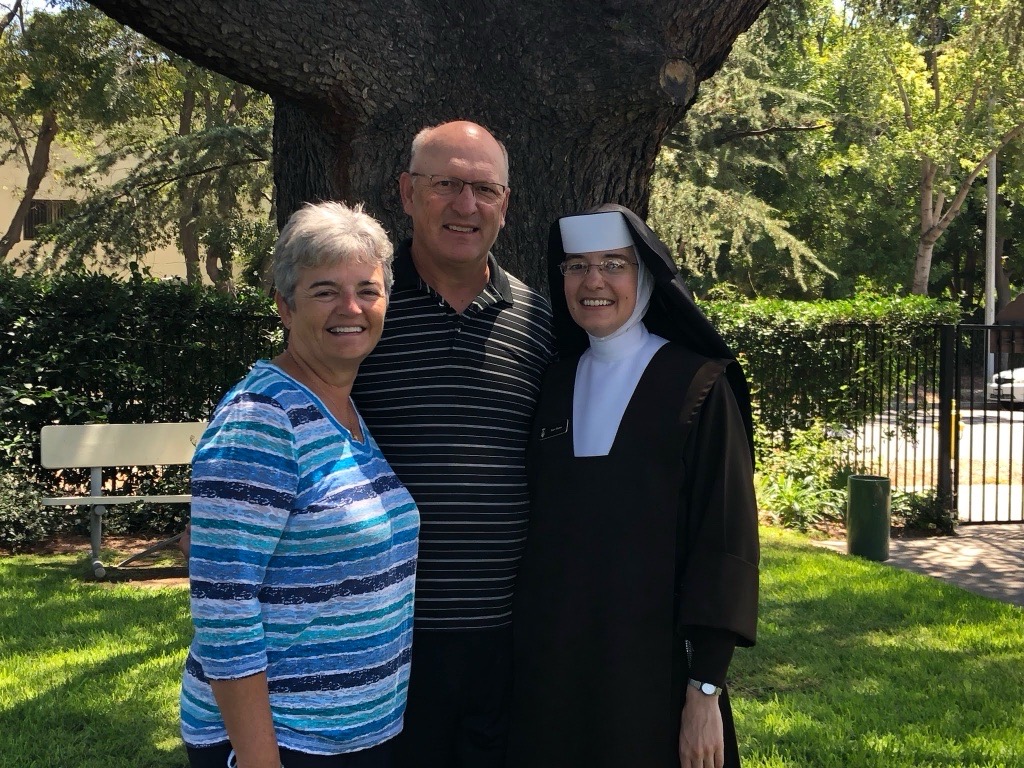
The “theological significance,” she added, is that religious sisters enter into a “deeper flowering” of our baptism “through religious vows.”
Sister M. Karolyn described that shift as something rooted in baptism itself.
“We are always in relationship with Christ,” she said. “When the relationship shifts, the name shifts.”
To Sister Mara Grace, that religious name becomes an “outward orientation beyond the self,” often revealing something of how God is at work in a sister’s life.
“It’s a conformity to Christ,” Sister Mary Claire added. “It’s a bit of dying to ourselves, being who the Lord calls us to be in this earthly mission looking toward our heavenly one.”
