

Boulaur Abbey in France Offers Original Recipe for Monastic Revival| National Catholic Register

In nature, a forest’s perimeter does not end abruptly, as though cut off by a sidewalk pavement or a wall. It thins out, opens up and lets in more light until it reaches a clearing, where something unexpected happens. This transitional zone itself becomes richer in plant life than either the forest or the field it borders. The same is true where a river meets its bank, or where a coral reef gives way to open water. Experts in ecology call these in-between zones “ecotones.” Paradoxically, they are among the most densely inhabited environments in the natural world — and, under the right conditions, they can help repopulate the ecosystems on either side.
It is this nature-inspired concept that a community of Cistercian nuns in the Gers, in southwestern France, has chosen to describe its own vocation in the world. And it offers a striking example of how this biological reality can be translated into human and spiritual life.
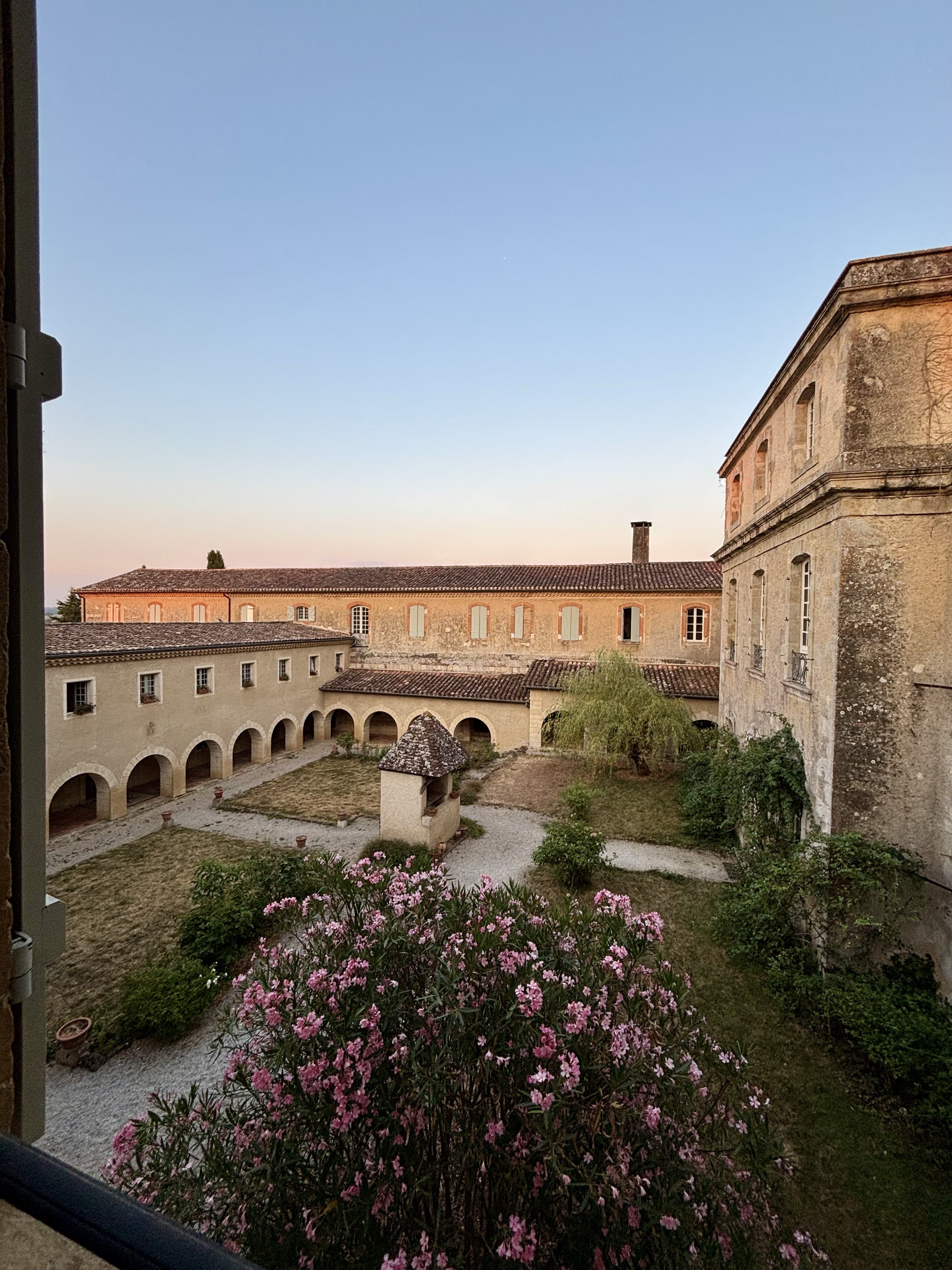
Although its history goes back centuries, the community of Boulaur Abbey began attracting international attention in 2020, when it embarked on the ambitious project of rebuilding a Cistercian grange — a self-sufficient monastic farm modeled on those that dotted Europe with thriving enterprises at the height of the Cistercian order’s medieval expansion.
Since then, the farm has become something of a regional phenomenon, drawing the attention of nutrition researchers, a wave of young interns in farming and crafting, and a small army of local craftsmen who now count on it as much as it counts on them.
Connecting Two Worlds
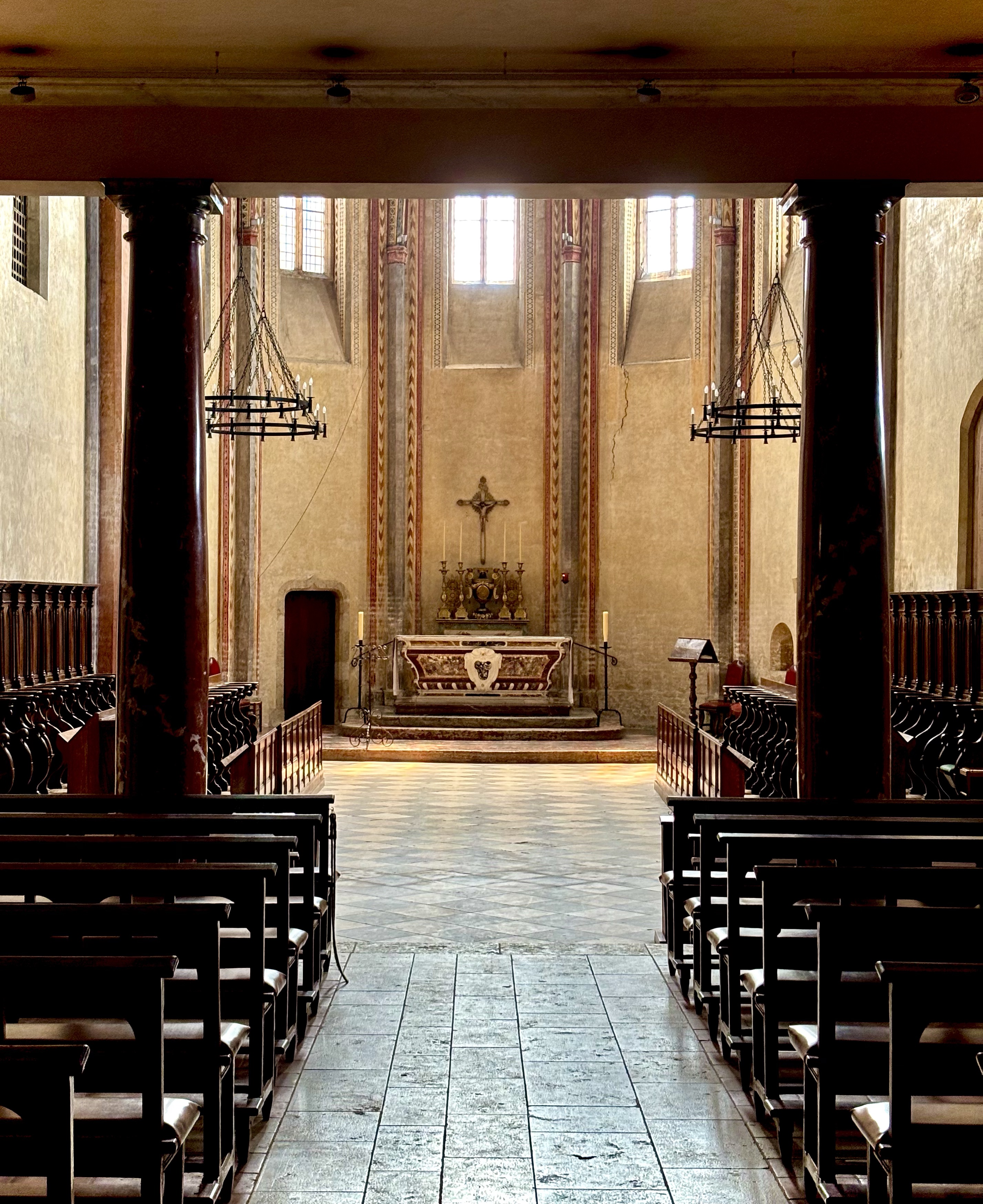
The abbey itself rests on a rich and tormented history. Founded in the 12th century as a Fontevrist priory, it was seized during the French Revolution, returned a decade later, and lost again under France’s 1905 law separating Church and state. The monastery was in ruins when a group of Cistercian nuns arrived in 1949. Their community remained small for three decades before vocations began pouring in in the 1980s. Today, it is one of the most thriving monastic communities in Europe.
The idea of the ecotone came to the community while designing the reception area, which connects the cloister to the outside world. The nuns had realized that they could not agree on where, exactly, the entrance to their monastery was, as five different doors were viable options. “We understood we needed a clear, unified entrance, a space to welcome visitors,” Sister Claire, in charge of the abbey’s visits, told the Register.
Inspired by nature’s ecotones, the nuns established an in-between space between the outside world and the cloister that now shapes a stretch of the abbey’s grounds. It includes a covered market hall built in the style of the region’s old farm buildings, a small chapel devoted to Servant of God Claire de Castelbajac (1953-1975) — a local young woman who died in the odor of sanctity at 21 years old and is buried there — and a fountain lined with columns evoking a cloister. The nuns now simply call it the “Ecotone.”
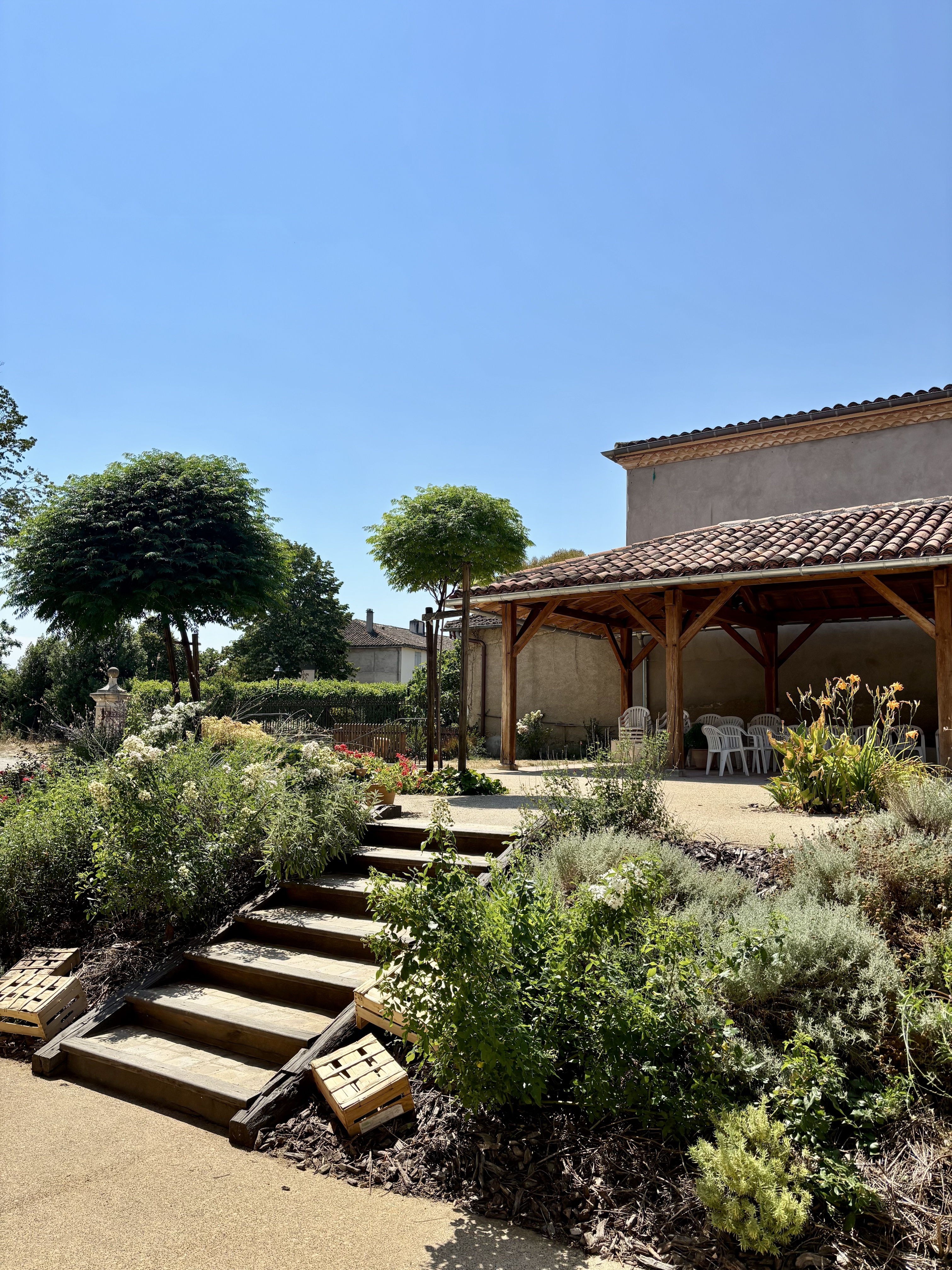
“Our goal was precisely to create that special zone of contact between monastic life and life outside,” said Sister Diane, who oversaw the abbey’s recent building projects. “Nature shows us how to have contact between two different worlds in the most fruitful way — in a real exchange of life.”
Visitors are free to browse cheese, jam, pâtés and other monastic products in the abbey’s shop, sit by the water, or continue on toward the church and the nuns’ quarters. “People don’t necessarily know how to interact with a monastery,” Sister Diane said. “But they know how to use a shop.”
In nature, Sister Diane pointed out, an ecotone cannot be forced into shape; rather, it forms organically according to the needs of the species that inhabit it. “If I decide for the other species, I break everything,” she said. The same, she believes, holds true here: The nuns can build the space, but they cannot dictate what happens inside it, or who lingers, or for how long. What they can do is make sure the boundary between the two worlds is porous enough for something to cross it.
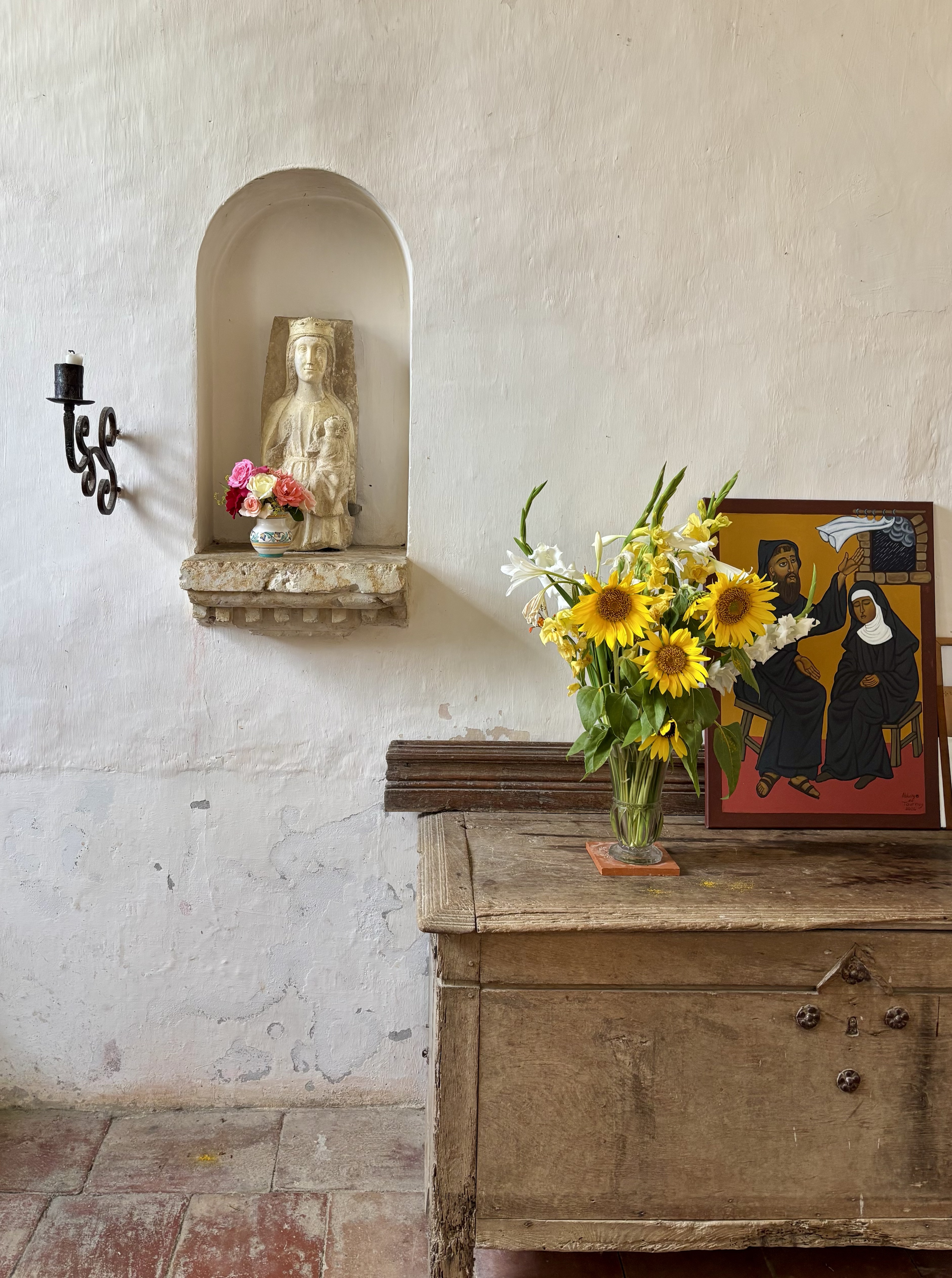
This porosity is reflected in the people staying at the guesthouse. In the course of a single week, the nuns may find a priest, a seminarian or a nun resting and young converts discerning a vocation, alongside a retiree who has spent a lifetime far from God and is only now sensing what was missing. Others come for reasons entirely unrelated to faith — whether they are farmers, agronomists (plant and soil scientists) or engineering students curious about the model the nuns have built.
Virtuous Chain
Since 2020, the nuns have expanded their herd of Alpine browns and Jersey cows, built a dairy and cheesemaking workshop connected directly to the barn by a milk pipeline, and turned what was once boggy, unwanted land — the kind medieval Cistercians specialized in reclaiming — into a working farm of roughly 50 animals.
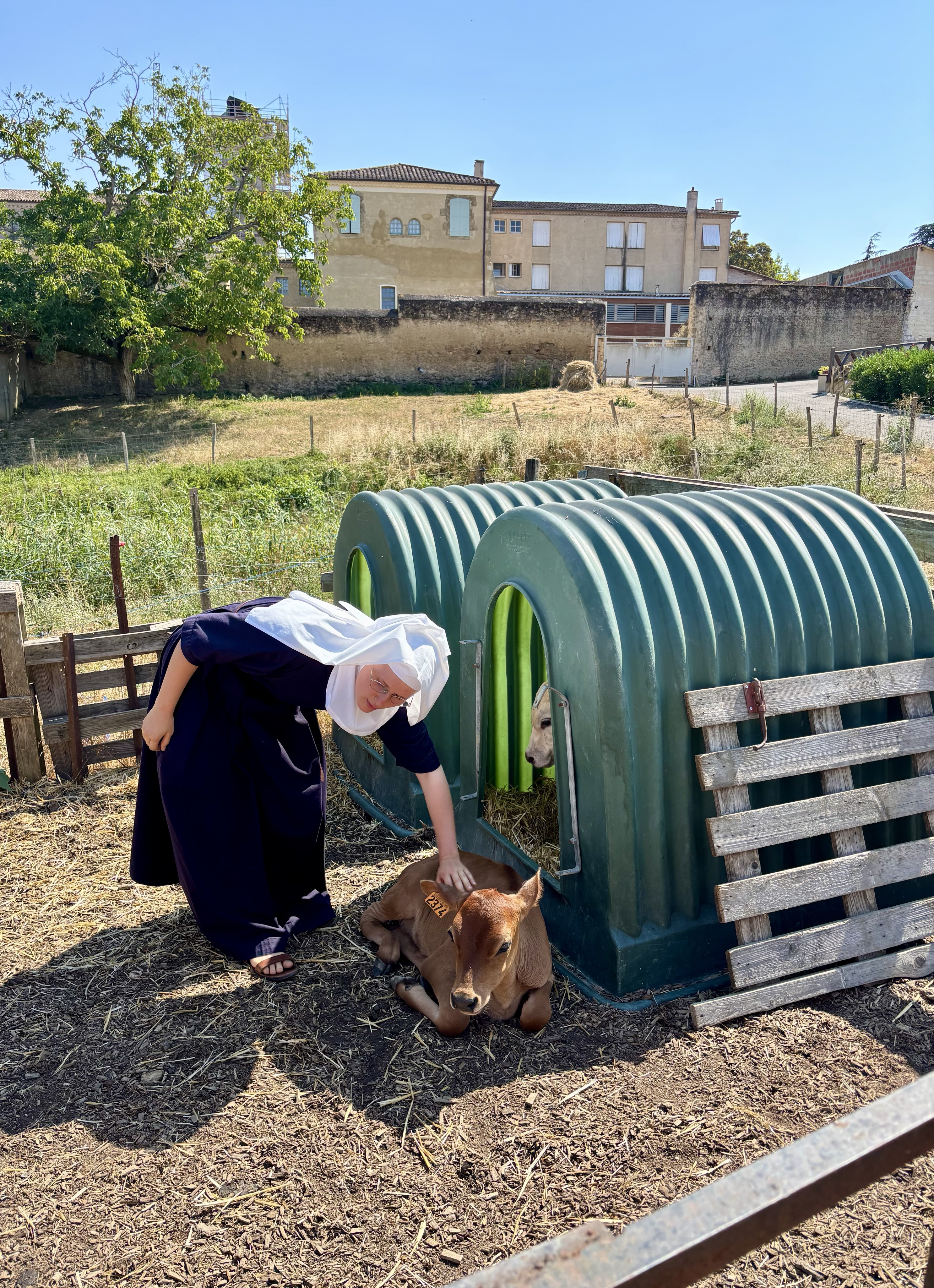
The reputation of this farm has caught the attention of Pierre Weill, an agricultural engineer who co-founded the “Bleu Blanc Cœur” label, a French certification recognizing farming practices that improve the nutritional quality of food. After testing samples of the nuns’ milk and cheese four times over, he told the community’s superior, Mother Emmanuelle, that their cheese contained four times more omega-3s than a standard cheese, making it anti-inflammatory and potentially helpful against diabetes, cancer and neurodegenerative diseases.
Science confirmed something the nuns had already come to believe as a matter of theology as much as agronomy. “If we want human beings to be healthy, what they eat has to be healthy,” Sister Constance, who oversees the farm, explained. “The animals that produced it have to be healthy. The soil the food grew on has to be healthy.” A cow that grazes on healthy pasture, she continued, absorbs the plant’s own natural defenses into its milk — and, eventually, into the cheese that the customers will buy at the shop. “We can’t preach that nature is good, and that God made it good, if we keep adding chemical inputs because we’ve decided it isn’t good enough.”
That conviction has since resulted in a partnership with France’s national agricultural research institute (INRAE) to grow ancient, low-gluten wheat varieties — einkorn, buckwheat, rye — which the nuns mill into flour and pass on to local artisans who turn it into beer, pasta and pastries, sold back in the abbey shop under Boulaur’s name.
In a region the nuns describe as economically fragile, the arrangement has become a small economy of its own — farmers, millers and craftsmen tied together by raw material that started in the ground the nuns tend.
For Mother Emmanuelle, this mutually beneficial cycle is a direct and intentional outcome of the ecotone project. The artisans who gather around the abbey are not mere suppliers; their work is valued throughout the process, just as the abbey’s raw materials gain value through the artisans’ craftsmanship. “This creates a harmonious give-and-take,” she said. “And in this ecotone, what ultimately emerges are finished products of excellence resulting from this encounter between two worlds.”
Food-industry experts have already taken note, as have a number of other monasteries, including some in the U.S., where the nuns stay in close contact with the Cistercians of Our Lady of Dallas Abbey in Irving, Texas. Sister Diane sees this as a journey that is still taking shape, at a time of profound transformation in the monastic world, community life, and the relationship to consumption in the West.
“We don’t necessarily know where these intuitions will lead us,” she said. “We simply see doors opening and promising paths taking shape. And we know that the Lord is waiting for us there. We don’t know where he is leading us, but we are here to answer his call.”
HOW YOU CAN SUPPORT THE MISSION
The community is online, as well as on Facebook and Instagram.
