

Wildfire Smoke, Conflict, and Conversion: Asian Laudato Si’ Groups Compare Notes in Philippines

Leaders from Myanmar, South Korea, Timor-Leste, Indonesia, and the Philippines shared their work and adopted the movement’s plan for 2027–2030.
Editor’s Note: Cyprianus Lilik Krismantoro Putro coordinates the national working team of the Laudato Si’ Movement Indonesia and took part in the retreat.
Smoke from wildfires in Indonesia shut every school in East Timor for three days in October. A young Catholic from the small Southeast Asian nation brought that story to a gathering of Church environmental leaders in the Philippines.
“Smoke haze from Indonesia forced schools to close in Timor-Leste for three days,” said Isaura Barros, 24, who serves on the executive board of the Laudato Si’ Movement in Timor-Leste.
The government suspended classes nationwide Oct. 15–17 because of poor air quality.
Barros spoke at the movementʼs Asia-Pacific chapters retreat, held Oct. 24–27 at the CBCP-Caritas Philippines Development Center in Tagaytay City, south of Manila. Seventeen delegates from Myanmar, South Korea, East Timor, Indonesia, and the Philippines took part, Radio Veritas Asia reported.
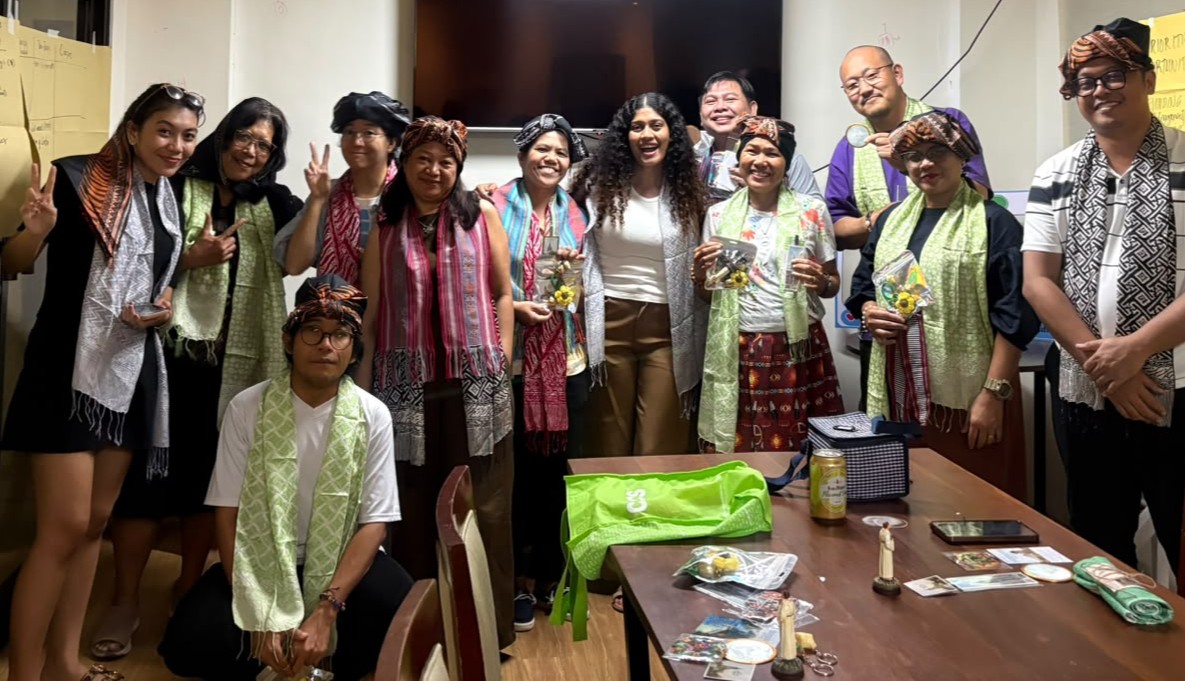
The Laudato Si‘ Movement is a Catholic network founded in 2015 and named after Pope Francis’ encyclical on care for creation. It says it has more than 8,000 trained volunteers, called animators, and nearly 900 member organizations.
Asian bishops back the work
Bishop Allwyn DʼSilva, auxiliary bishop emeritus of Bombay, India, addressed the retreat by video. He chairs the Office of Human Development of the Federation of Asian Bishops’ Conferences (FABC). He pointed to heat waves, flash floods, and unpredictable cold waves across Asia and thanked grassroots animators for their work.
“We all know that there is an ecological crisis in Asia, as well as in the world. The Laudato Si’ movement has played a very important part in making people aware and care for creation, to take care of their common home. We are happy that we are collaborating, and I see a great future in our networking and taking care of creation,” Bishop DʼSilva said.
Climate activist Lorna Gold, the movementʼs executive director, also spoke by video, from Ireland. She recalled St. Francis of Assisi praying before the crucifix in the ruined church of San Damiano, where he heard the words “Go and repair my house.” Ecological conversion, she said, is a conversion of the whole community, not only of the individual.
A road map to 2030
Cheryl Dugan, the movementʼs Asia-Pacific director, and Christina Leaño, its associate director, presented a global strategic road map for 2027–2030 that leads toward a “Vision 2035.”
The movement, they said, drew up this map over an 18-month process of listening to grassroots communities.
The plan puts ecological conversion at the center, symbolized by the ichthys, the early Christian fish sign. Three pillars meet there: eco-spirituality, rooted in catechesis, liturgy, and faith formation; sustainable and resilient communities; and prophetic advocacy, which includes pressing for fair public policies and an end to investment in fossil fuels. A fourth pillar, organizational strengthening, supports the other three.
Yeb Saño, a Filipino climate activist who chairs the movementʼs board, urged delegates to decentralize leadership so the movement better reflects the synodal spirit of a Church that walks together. Saño led Greenpeace Southeast Asia from 2016 to 2025 and was once the Philippines’ chief climate negotiator at the United Nations.
5 countries, 5 settings
In the Philippines, the chapter is known for its annual Walk for Earth and its Deep Journey to Laudato Si’ programs. It works with the bishops’ conferenceʼs Laudato Si’ program and wants to draw in more young people.
In Myanmar, the movement works amid ongoing political and humanitarian conflict. Based mainly around Yangon, the chapter helped write care for creation into the Catholic Bishops’ Conference of Myanmarʼs socio-pastoral framework for 2026–2030. It runs the BEES Network, which offers interfaith ecological education for young people and supports people displaced by the fighting.
In South Korea, the chapter has held a Friday climate action in Seoulʼs Gwanghwamun Square since 2020. It has organized ecological Stations of the Cross and protested against the Samcheok coal-fired power plant. Ahead of World Youth Day in Seoul in 2027, it is pressing the countryʼs bishops and dioceses to bring parishes to net-zero carbon emissions.
In Timor-Leste, the chapter grew out of a youth group of 16- to 18-year-olds started by Dircia Sarmento. It now has legal status, works with U.N. agencies and the government, helps run the countryʼs Local Conference of Youth, and reaches remote districts across the nation.
In Indonesia, the movement, known by its Indonesian initials GLSI, is organized in seven diocesan chapters as well as in schools and religious communities. It has set up Laudato Si’ centers with the Missionaries of the Sacred Heart. With partners in the Archdiocese of Jakarta, it plants mangroves, trains parishes in composting, and runs courses for animators.
Young people and a farm
Delegates agreed on two priorities for the region: giving young people a bigger role, including in the run-up to World Youth Day, and strengthening national chapters and the movementʼs Asia-Pacific secretariat.
The retreat ended with a visit to the SVD Laudato Si’ Farm in Tagaytay, a 5.8-hectare (about 14-acre) site run by the Society of the Divine Word. It serves as an ecological education center, a pilgrimage site, and an ecotourism destination. Father Samuel “Sam” Naceno-Agcaracar, SVD, started it in 2020.
Participants ranged in age from baby boomers to Generation Z. The retreat closed with words from Laudato Si’: “May our struggles and our concern for this planet never take away the joy of our hope.”
