


At most weddings, photographers know exactly which moment will matter most.
The kiss is coming. It is brief, unmistakable and easy to frame: the image that will be shared, printed and remembered as the beginning of a couple’s life together.
But at a Catholic wedding Mass, the moment that matters most is not always the most obvious.
It may unfold at the altar in stillness, as the priest elevates the Eucharist. Or it may appear in quieter acts of devotion: a groom reaching for a crucifix, the bride placing flowers before a statue of the Blessed Virgin Mary, family members bowed in prayer in the pews. There is no cue from the crowd, no movement toward the camera. And yet, for a growing number of Catholic couples, these are the moments they most want remembered.
That difference — between what is obvious and what is essential — is reshaping how some couples approach their wedding photography. It is not only about style or price, but whether a photographer understands the liturgy, anticipates the moments that carry deep meaning and can remain present without disrupting the sacred ritual.
Lucy and Sam Jones, who married in November 2025 at the Holy Family Cathedral in Tulsa, Oklahoma, knew they wanted that kind of understanding from the start. Their wedding was a traditional Latin Mass in which, according to Lucy, “so much of the beauty happens in more subtle moments.”
They chose Allison and John Girone of The Latin Mass Photographer, a mother-and-son team based in Southern California and Philadelphia who travel across the country to document Catholic weddings.
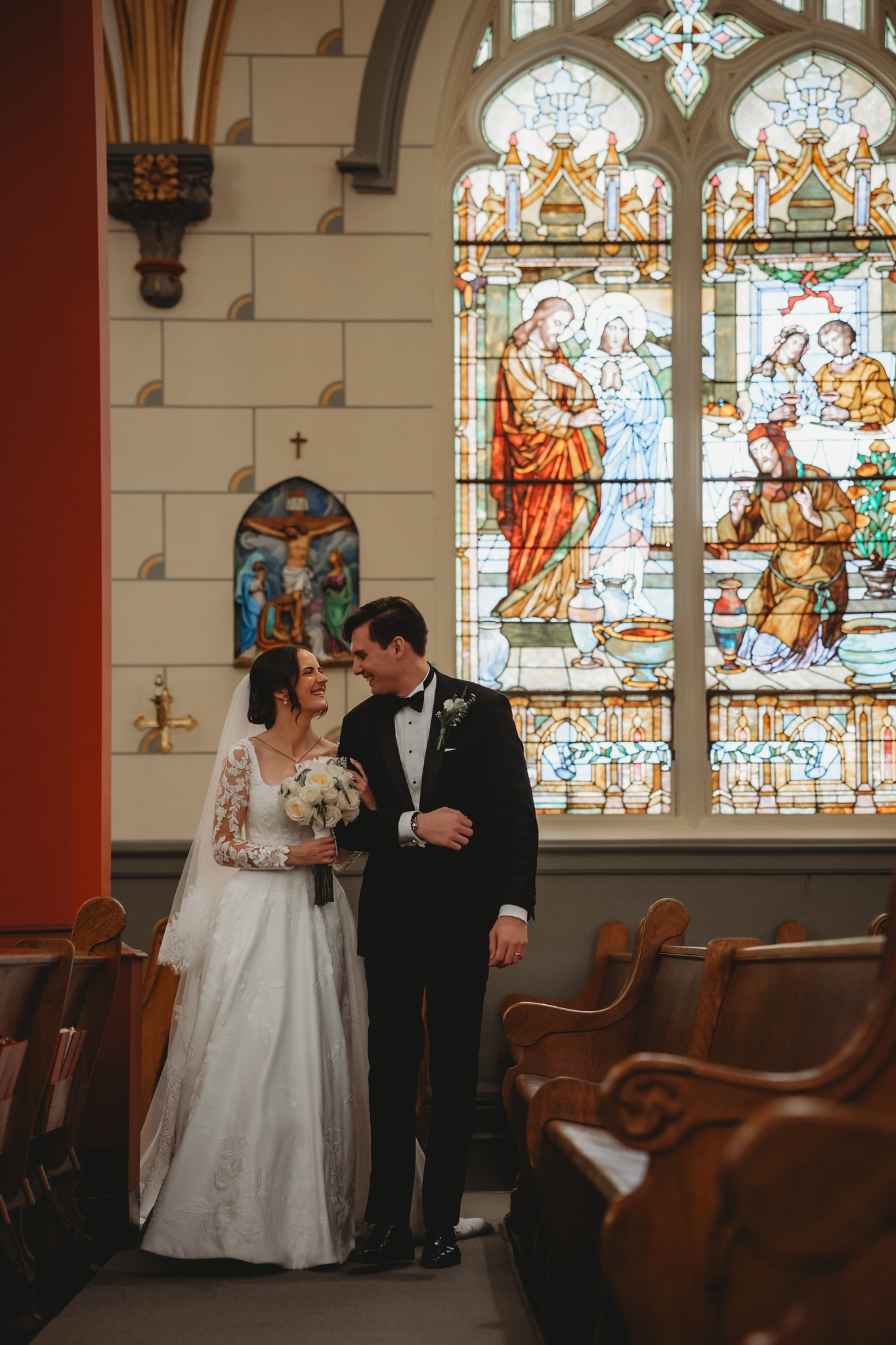
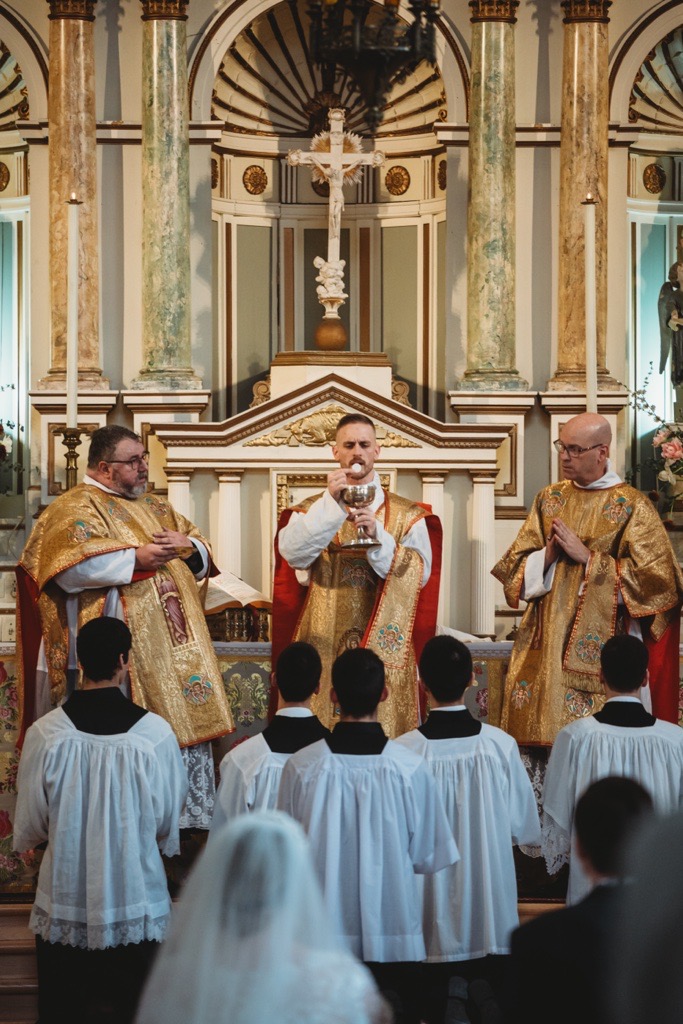
For Lucy Jones, the difference was immediately clear. One of her favorite images captures the elevation of the Host during the Consecration in a way that, she said, even non-Catholic guests could “feel its gravity.”
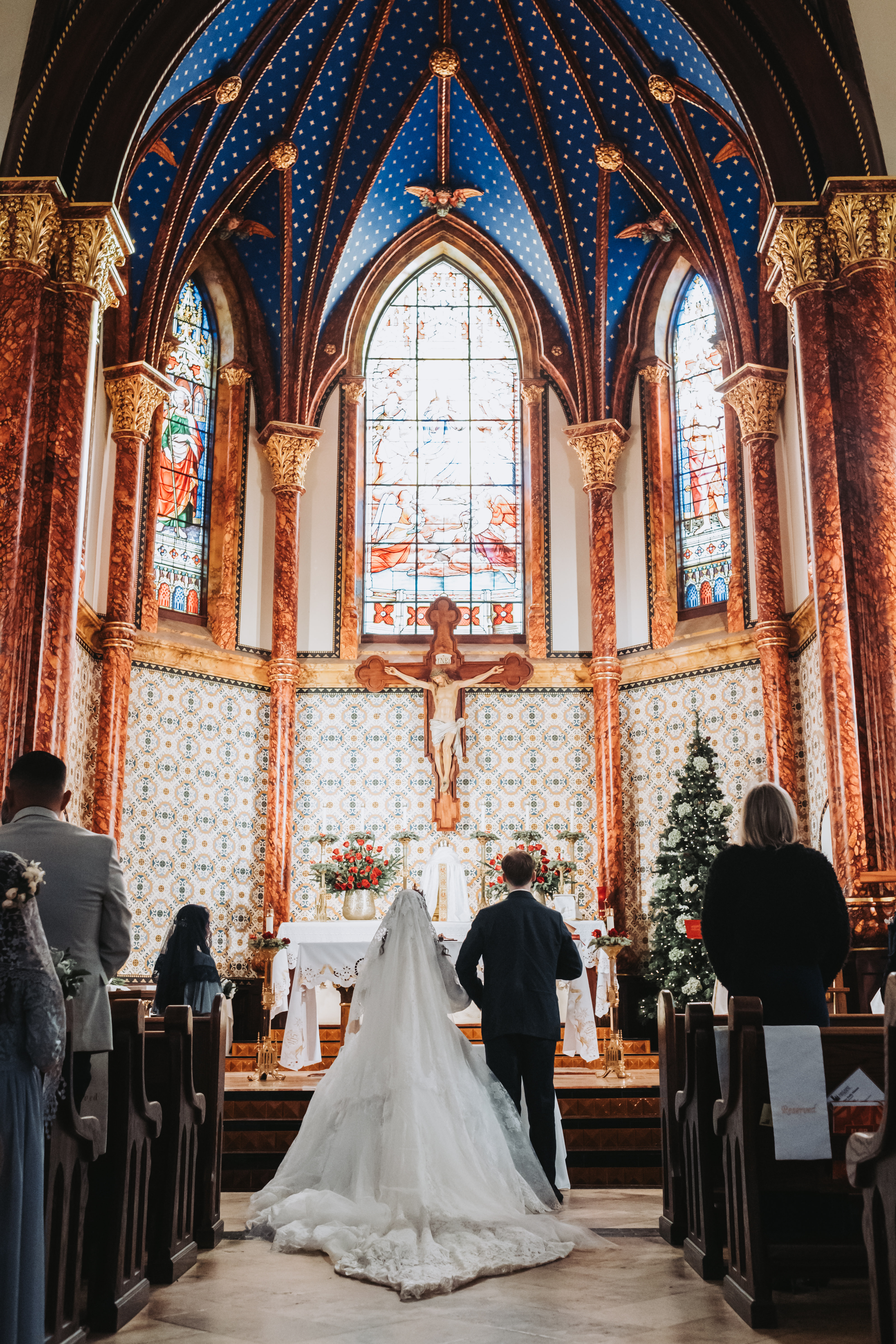
Another shows her and her husband standing before a large crucifix framed by stained glass, his hands holding her veil between them. That image, she noted, reflects the love and sacrifice of Christ for his bride, the Church, mirrored in the “covenant between husband and wife.”
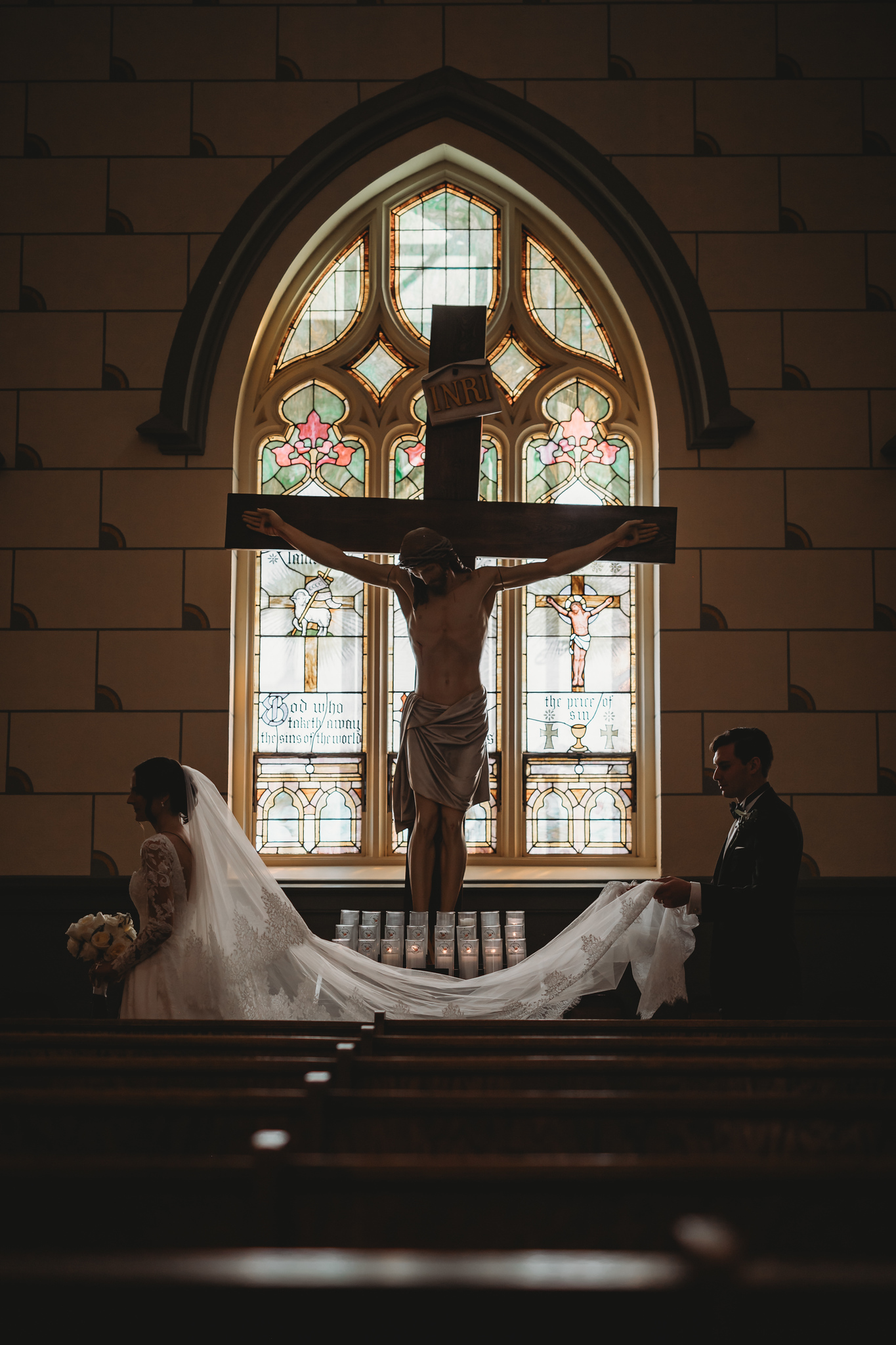
Because most of her family is not Catholic, those photographs carried particular weight. “They could see the significance of what was happening, even if they didn’t fully understand it,” she said, “and really appreciate the day with us.”
For Alexandra and George Yeryomin, who also chose a traditional Latin Mass for their wedding in May 2024 at St-Irénée-de-Lyon in Montreal, finding a photographer with that same sensitivity was essential.
“We knew we wanted someone who could capture not only the beauty of the space but the heart of the Mass itself,” Alexandra told the Register.
In largely secular Montreal, skilled Catholic wedding photographers were difficult to come by. The couple ultimately brought the Girones from the U.S., navigating immigration paperwork to do so. But for the Yeryomins, it was worth every effort.
“There was a sense of peace of mind, of knowing that those moments mattered equally to us as they did to them,” she said. “I didn’t have to think during the Consecration, ‘I really hope they’re getting this.’ I knew they were.”
She added, laughing, that for couples prioritizing their faith, “it’s a lot more important to have a good Catholic wedding photographer than, say, a Catholic cake maker.”
Capturing the Liturgy
Photographers familiar with Catholic weddings emphasized that understanding the Mass is essential to capturing its depth.
Allison Girone, who primarily photographs traditional Latin Mass weddings but also works within the Novus Ordo, shot her first wedding in 2018 after years of documenting Catholic liturgies. “A Catholic marriage unfolds liturgically, not just romantically,” she said. “Our eyes are turned to the theology playing out.”
“Marriage is the image of Christ and his Church,” she continued, “and we’re reminded of the words of Archbishop Fulton J. Sheen, ‘Three to get married!’ The bride, groom and Jesus Christ [as] their center.”
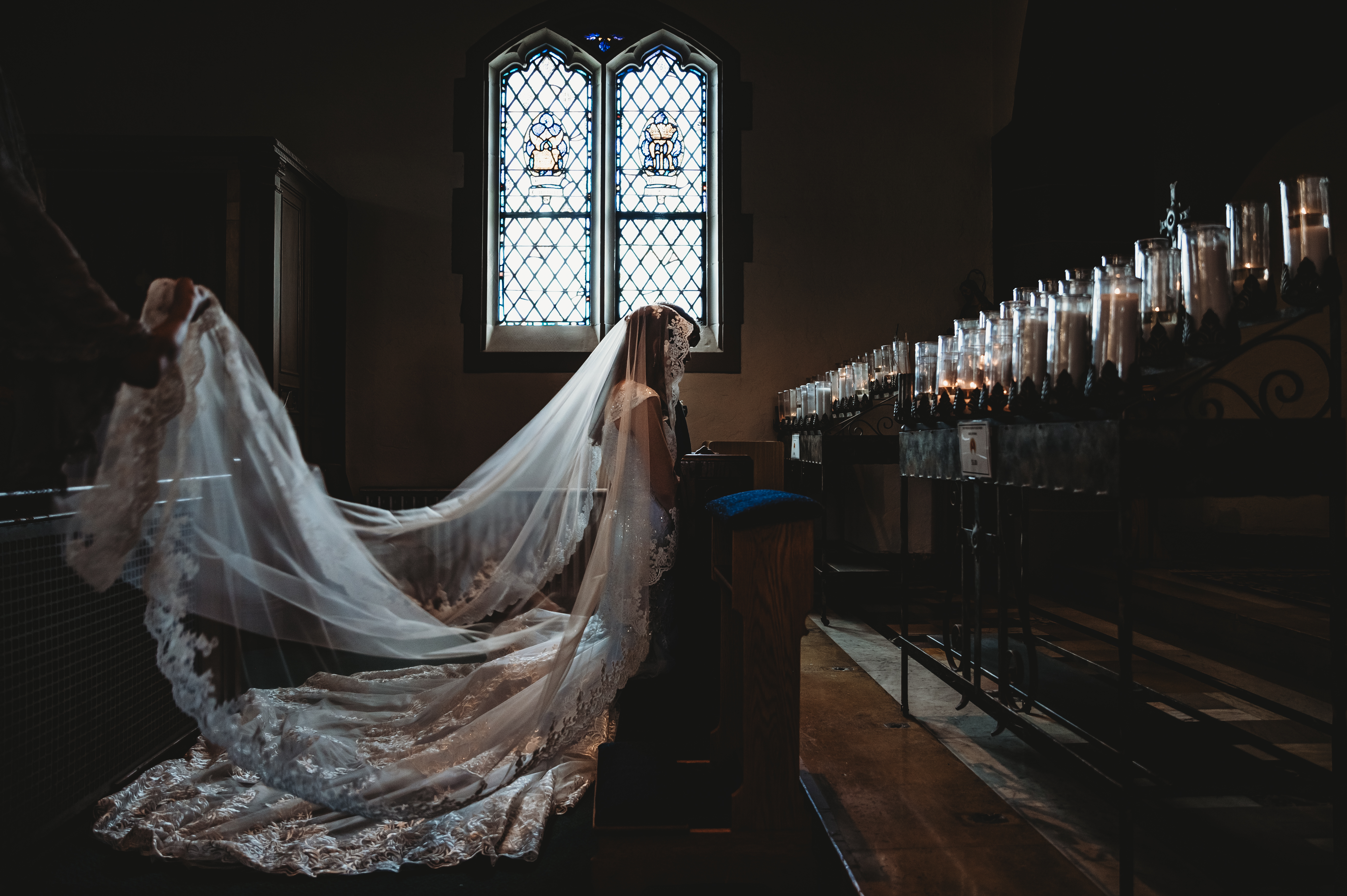
Like the Girones, many Catholic wedding photographers travel nationwide to serve couples seeking this specialized approach.
Kaylee Toole, based in Southern California, began her work in Catholic wedding photography after years of assisting in parish marketing and youth ministry events. Victoria Cerise of Mystical Rose Photography, based in Cincinnati, similarly photographs couples across the country.
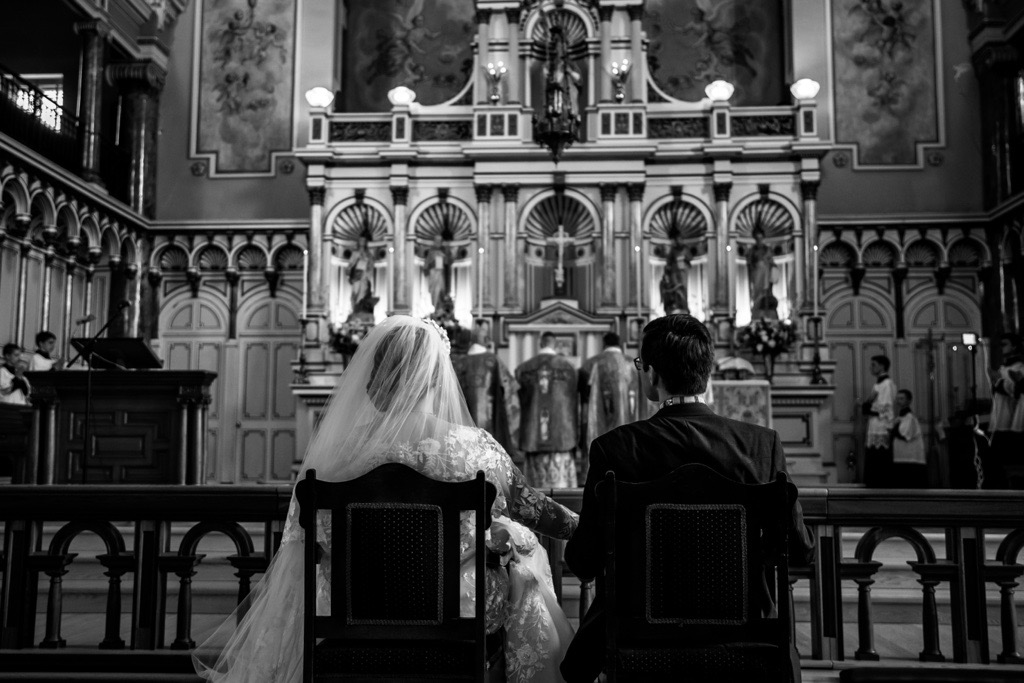
All three emphasized that photographing a Mass requires restraint as much as skill. “Yes, it might be nice to stand right in front of the couple to photograph them head-on,” Toole said. “But at what cost?”
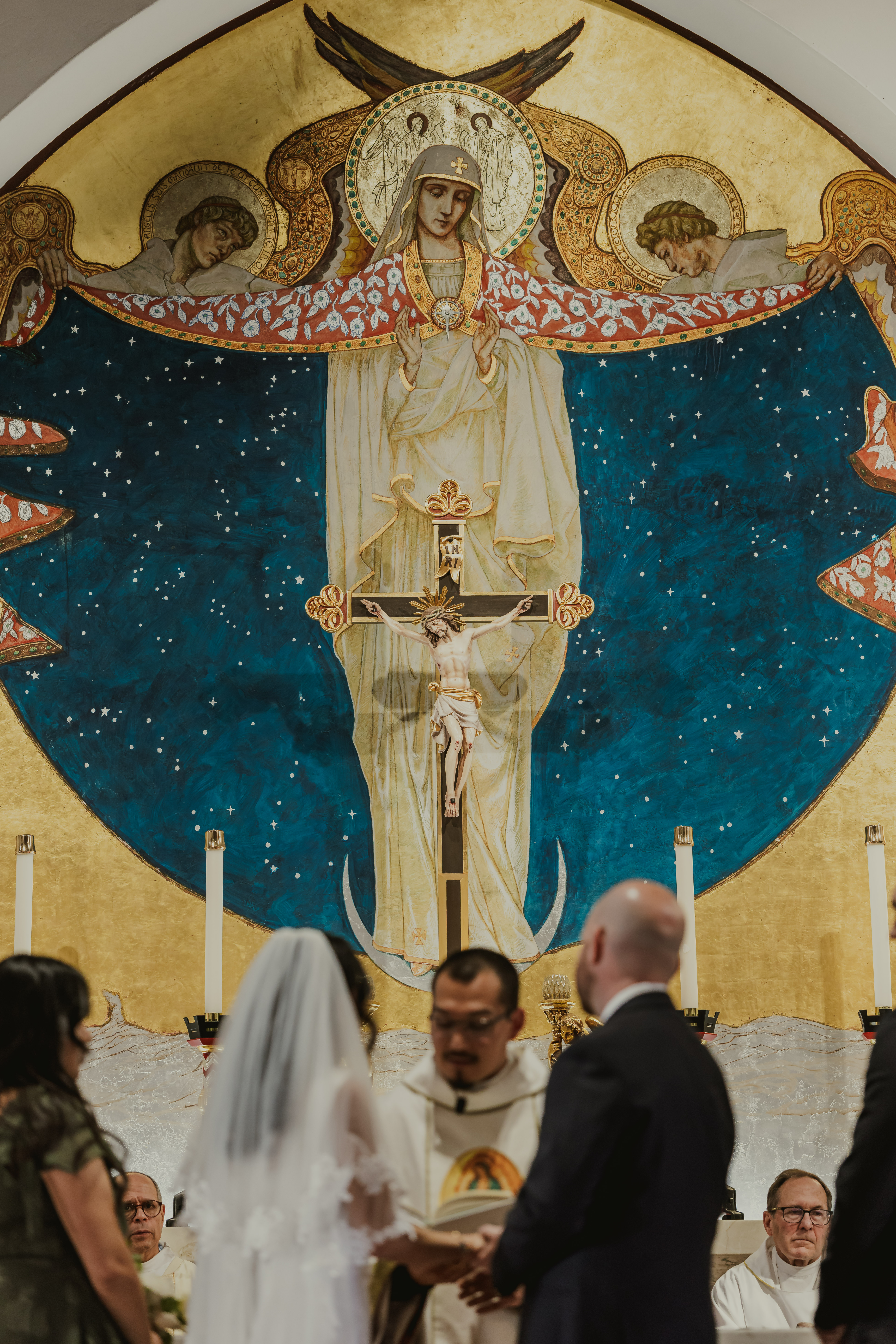
Cerise came to that realization after seeing how often secular photographers missed key moments entirely — especially the Consecration. “They genuinely didn’t know any better,” she said. “It made me realize just how important having a Catholic photographer matters on a wedding day.”
Even the slightest disconnect can have practical consequences. Gabe Gessler, co-founder of the Cana wedding platform and a wedding photographer himself, recalled hearing of a secular photographer who, unfamiliar with the structure of the Mass, stepped aside during the Consecration to eat a sandwich.
“The couple spent thousands of dollars on a photographer, and he missed that moment,” he said. “That’s the moment everything is centered on.”
Instead, Catholic photographers watch the liturgy closely: the priest elevating the Host, the couple responding, the light moving through the stained glass.
That attentiveness, they noted, allows couples to focus fully on the sacrament. Cerise dresses modestly, moves silently around the church and keeps equipment unobtrusive. “I let [the couples] live in the moment,” she said. “Although this is one day, it is a huge day — the one where you create a new family! It is worth capturing beautifully.”
A Sense of Peace
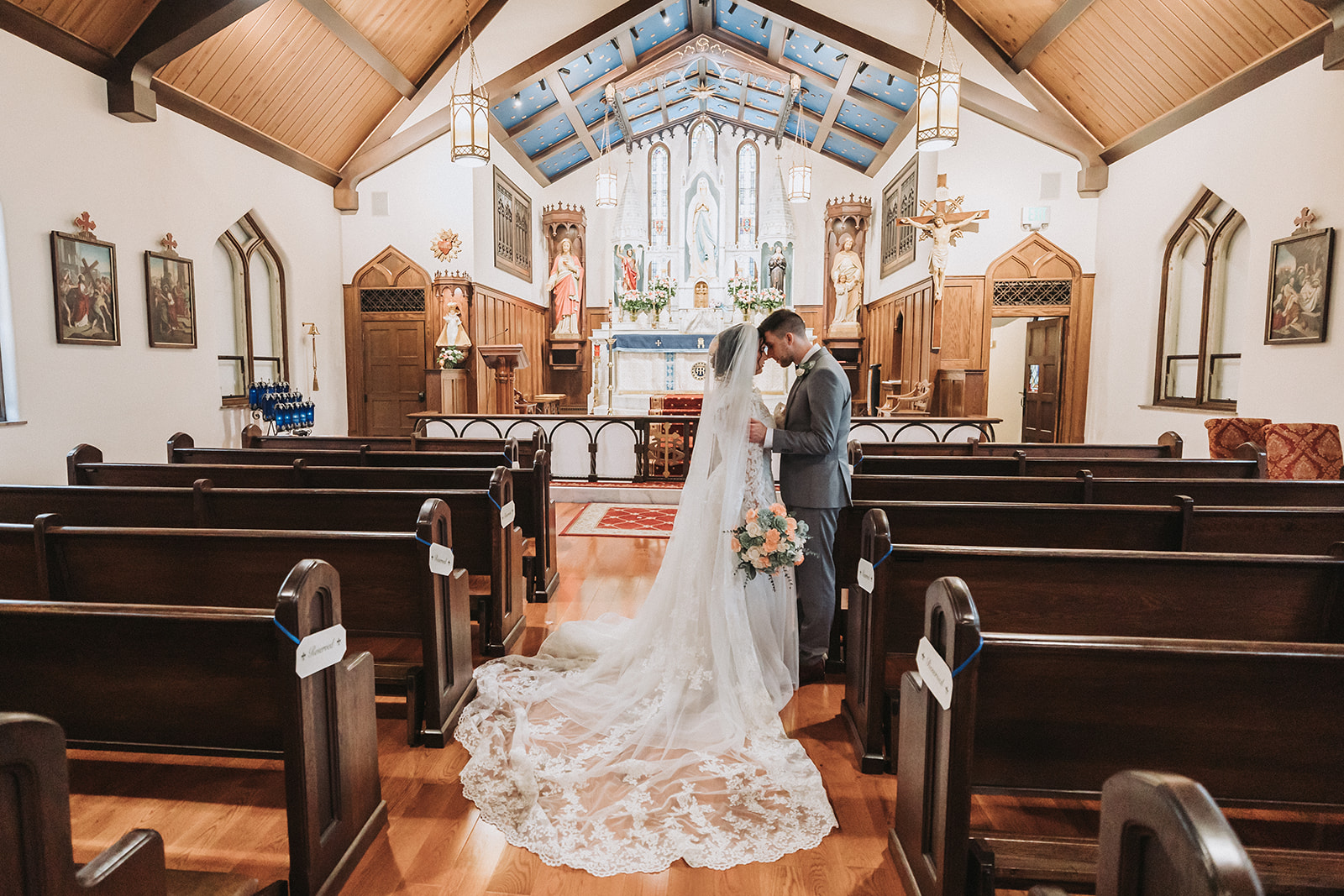
For Alexandra Yeryomin, having photographers who understood both the liturgy and the visual beauty of the space created a sense of calm amid the hectic nature of wedding planning.
“There are so many things you have to think about in a wedding,” she said. “Not having to worry about whether the Mass was being captured respectfully just allowed us to be present.”
Lucy Jones echoed this sentiment. The team’s guidance produced images that became unexpected favorites. “Even when we had ideas of what we wanted,” she said, “the team suggested shots that ended up being some of our most cherished.”
For both brides, beauty was never merely aesthetic. The final images, they noted, captured the sacredness of the day and the flow of the Mass. Yeryomin described Catholic wedding photography as a vocation: one that preserves beauty and allows couples to fully inhabit the day. “It’s a role that’s sorely needed,” she said. “It’s about creating something that honors God and the sacrament the couple is entering into.”
Jones encouraged couples to seek out photographers with liturgical experience. “It’s very comforting and makes the day go a lot smoother,” she said. “If the photographer lives and understands that faith element, it’s a lot easier to know the entire day is taken care of — from the Mass to the reception.”
Gessler said couples often don’t realize until after the fact how much their memories of the day are carried in the photographs — and how much depends on who is behind the camera in the first place.
“These photos stay with you for years,” he said. “They become part of how you remember your wedding, long after everything else has passed.”
The kiss is the image most people expect. But for brides like Yeryomin and Jones, the photographs that matter most capture what cannot be anticipated: the gestures, the glances and the moments that make the Mass itself unforgettable.
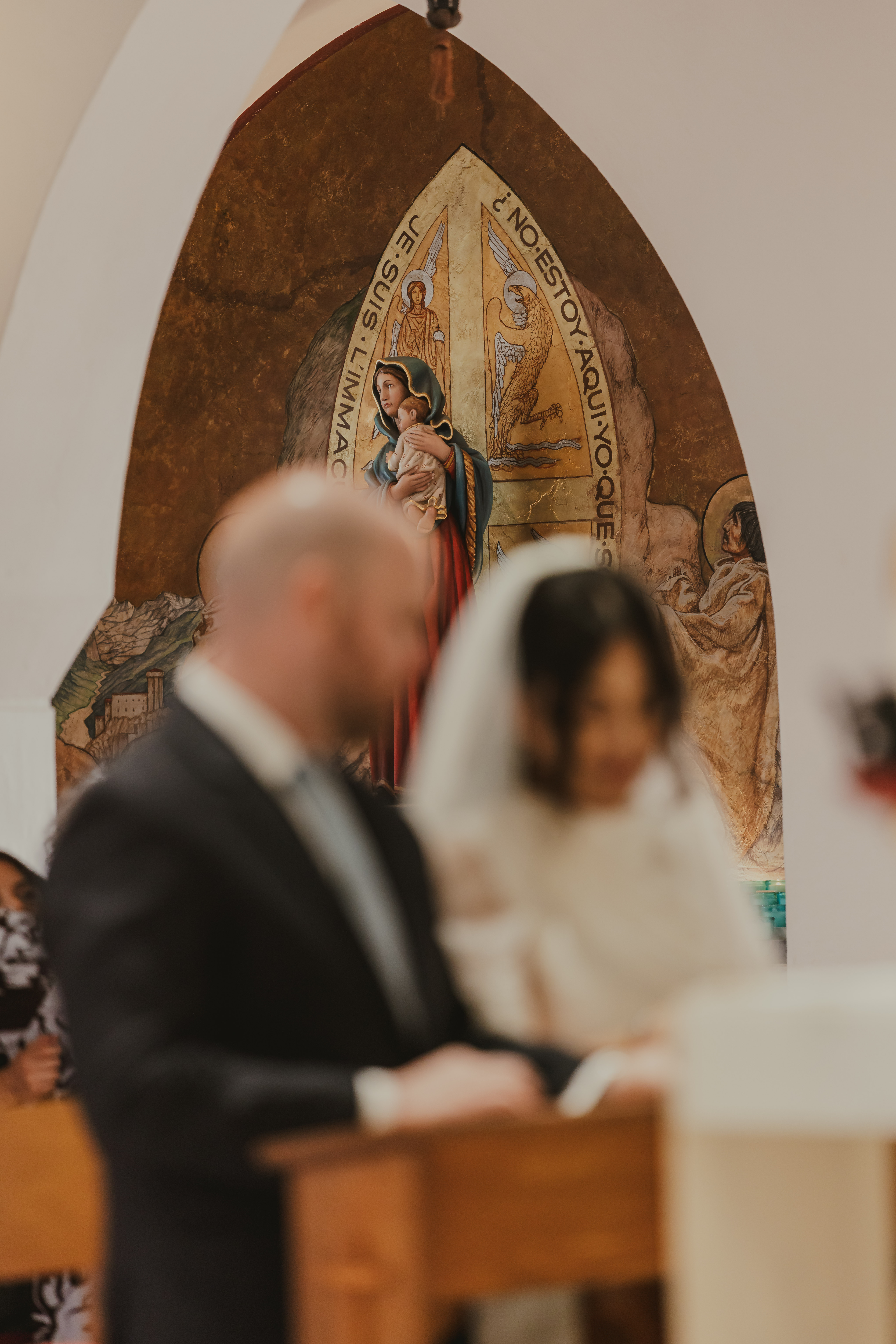
These are the images that, long after the flowers fade and the celebration ends, remain a testament to the covenant formed at the altar.
