


TAIPEI, Taiwan — How do you explain the Real Presence to someone who has never heard of Jesus, let alone the Blessed Sacrament?
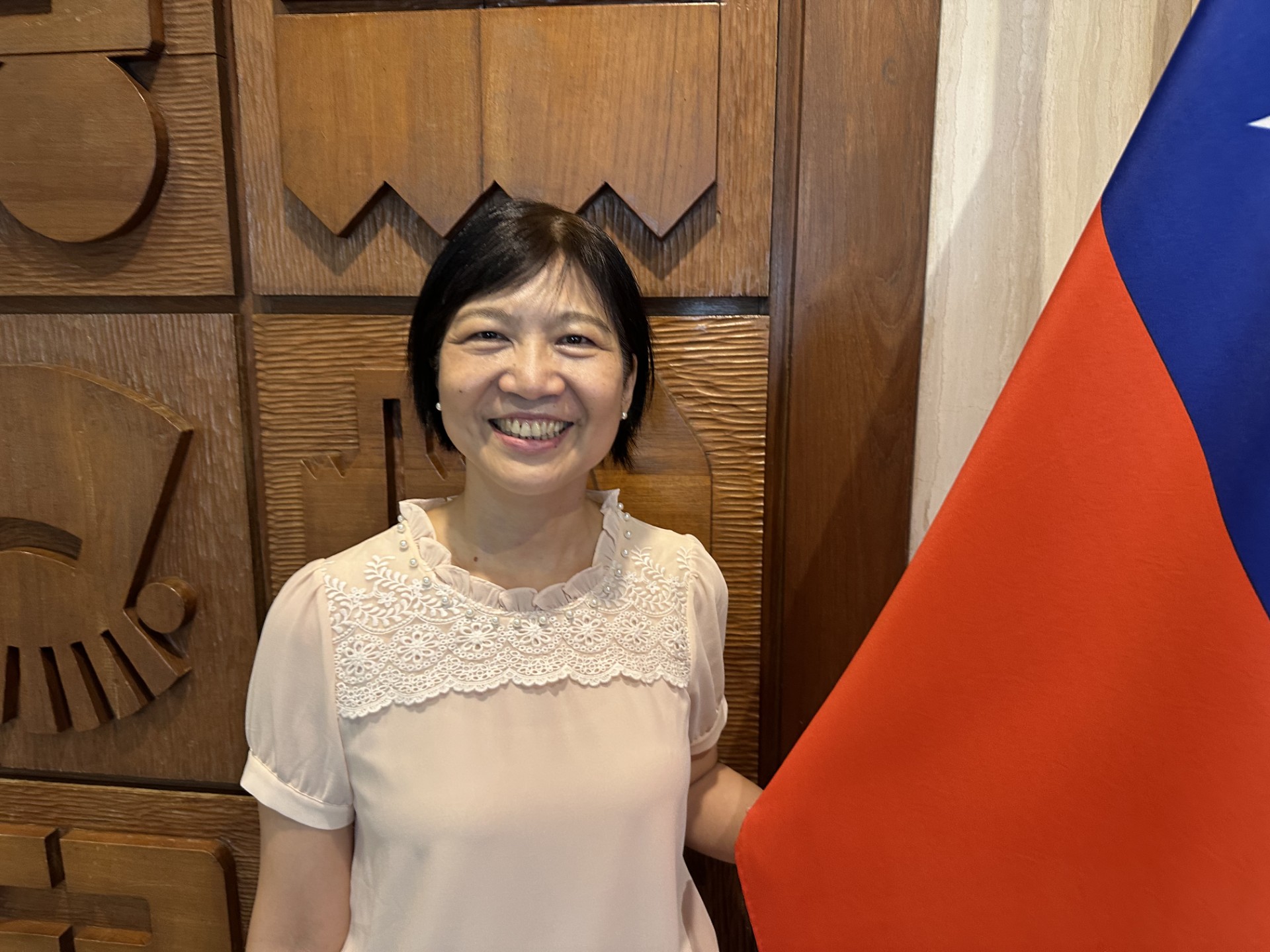
For Mary Wu, one of the founders of the National Eucharistic Congress in Taiwan, where Catholics make up only 1% of the 23 million population, it all begins with the power of a simple invitation.
When an old friend confided in Wu about personal suffering, Wu told her: “I have a friend who knows you, and he knows everything that you have suffered.” Her friend had never heard of Jesus.
Wu invited her to a chapel during Eucharistic adoration and sat silently beside her in front of the Blessed Sacrament.
“I said, ‘I am a Catholic and I do believe Jesus is here.You can tell everything in front of Jesus,’” Wu said. After 30 minutes, the friend turned to Wu. “She said, ‘He knows everything. And I can feel he knows everything that I have suffered,’” Wu recalled. “And then, she cried.” That friend later enrolled in classes for Christian initiation and is now Catholic.
Taiwan’s National Eucharistic Congress
During a weeklong reporting trip in Taipei last fall, Catholic leaders and laypeople offered insight with EWTN News into the state of the Church at a precarious moment for Taiwan, which Xi Jinping recently surrounded with large-scale military drills and live-fire exercises while declaring “reunification unstoppable.”
Among the findings: Eucharistic adoration has been gaining ground in Taiwan over the past 15 years, thanks in large part to Taiwan’s National Eucharistic Congress.
Taiwan’s next National Eucharistic Congress is set to take place on the island of Penghu in the Taiwan Strait in 2027, which U.S. intelligence assesses is the year Xi has instructed the People’s Liberation Army to be ready to conduct a successful invasion of Taiwan.
The Eucharistic evangelization effort began in 2010, when Taiwan was invited to send a delegation to the Vatican for preparatory meetings ahead of the 2012 International Eucharistic Congress in Dublin. Wu was part of that delegation.
At the time, a survey showed that fewer than 1% of Catholics in Taiwan regularly attended Eucharistic adoration on their own. Yet the same survey found that 13% of Catholics said they would be willing to attend if their priest invited them.
For Wu, the message was clear: People were open; they just needed to be asked.
After returning from Rome, Wu worked with the Taiwanese bishops’ conference to establish the Eucharist Worship Adoration Promotion Section. The team traveled to dioceses across Taiwan, organizing 24-hour Eucharistic adoration events at parishes.
Even if no one showed up, the organizers resolved to remain in prayer throughout the day. But people did come.
Taiwan’s first National Eucharistic Congress was held in 2011 in the Archdiocese of Taipei and drew more than 4,000 participants.
Wu said she quickly saw the impact.
She invited a friend who had left the Catholic Church years earlier and had begun practicing Buddhism to attend the congress, along with her children. When the crowd prayed the Our Father together, the woman began to cry.
She later told Wu she felt God inviting her back to Mass.
After the congress, the woman had her son baptized and enrolled her children in the parish Sunday school. She invited her mother, who had also left the Church, to return to Mass. She invited her sister, who later had her own children baptized.
‘Come’
Wu is especially passionate about encouraging families to attend adoration together.
“Come, not only yourself,” she said. “You come with your children, with your husband, with your family, and you come together.”
Following the first congress, Wu’s team submitted a proposal to the bishops’ conference asking that Taiwan host a National Eucharistic Congress every two to three years. The bishops approved the plan.
Since then, national Eucharistic congresses have been held four times between 2014 and 2024, each time hosted by a different Taiwanese diocese.
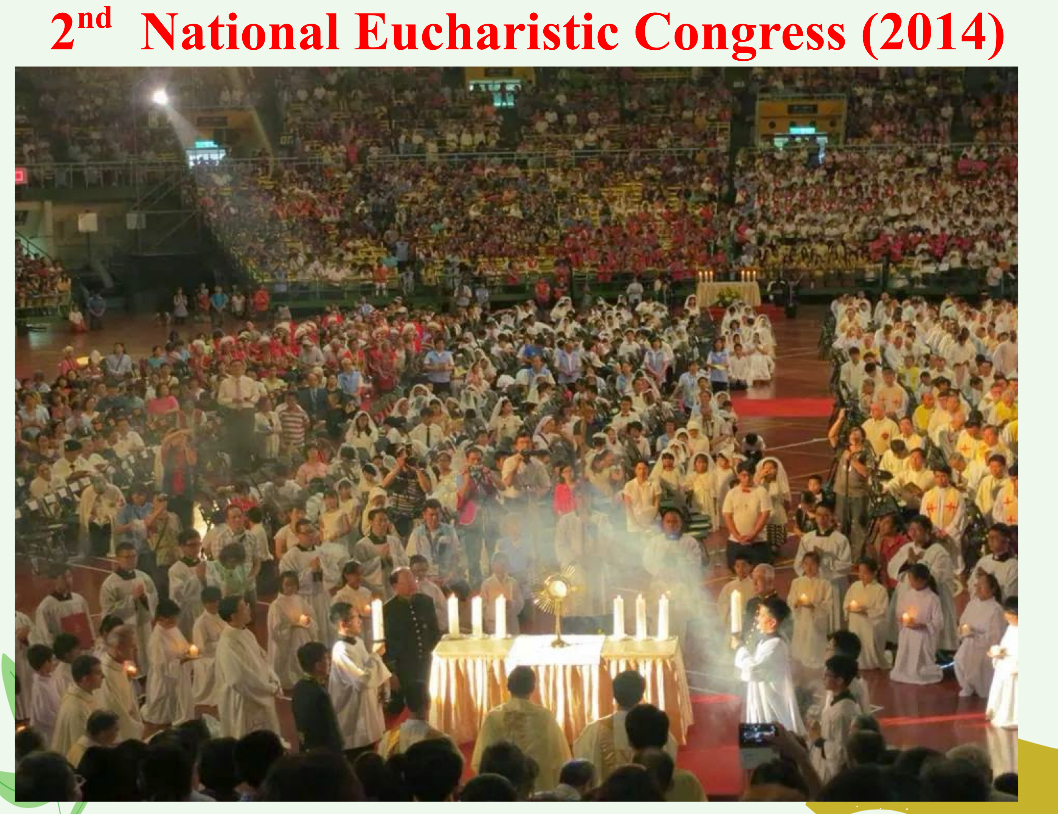
Nearly 10,000 people attended the second congress. About 14,000 participated in the most recent gathering in October 2024. Pope Francis appointed Cardinal John Tong Hon, bishop emeritus of Hong Kong, as his official envoy to the event.
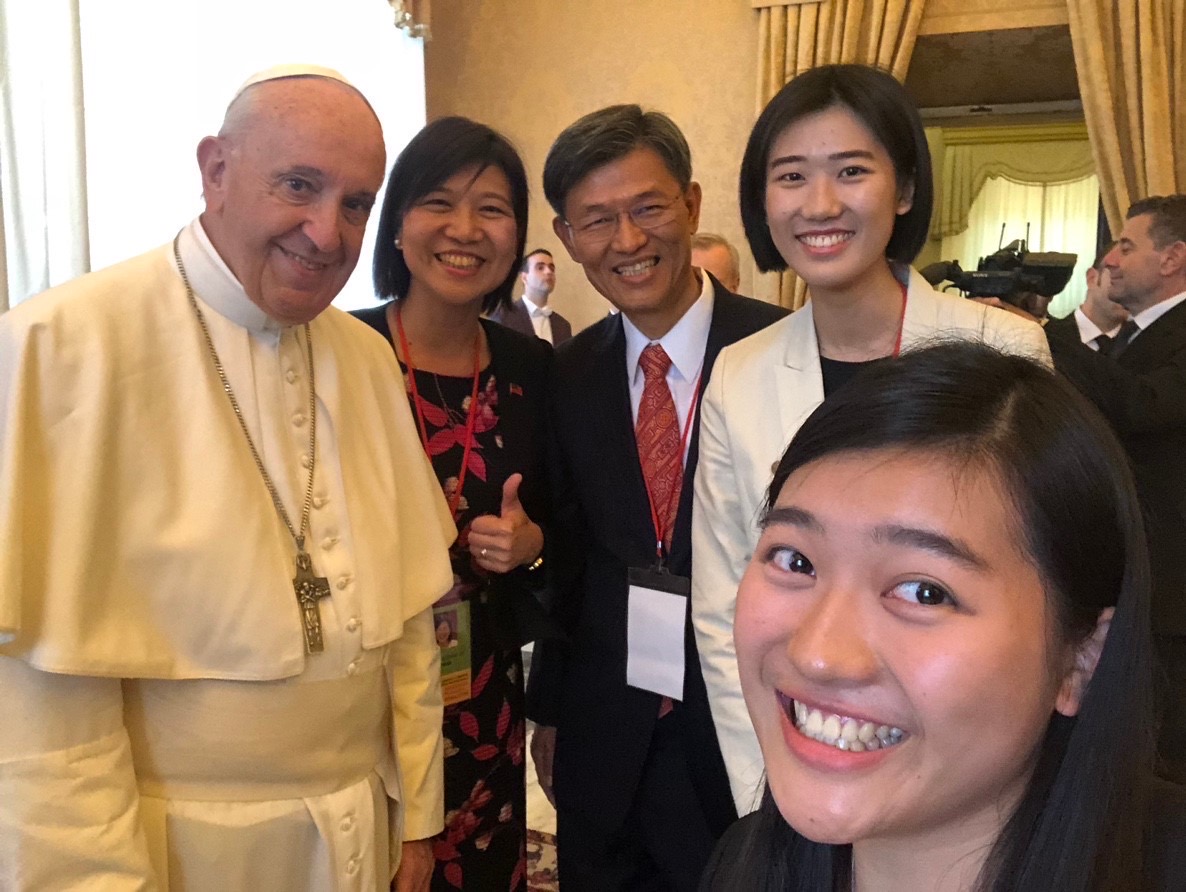
Participants included clergy, religious, seminarians and lay Catholics, as well as delegations from Hong Kong and Southeast Asia. Priests and religious from mainland China who were studying theology in Taiwan were also able to attend.
“We see the beauty when we come together because of Jesus,” Wu said.
Looking back at the tremendous growth of the congress, Wu remarked, “If you do things by yourself, you can do nothing. But with God, you can do everything.”
“Jesus is the center of this event,” Wu said. “It’s not just an activity; it’s not just an event. It is the center of the Eucharist. And we gather together; we come together because of Jesus.”
Reporting for this article was supported by the Ministry of Foreign Affairs of Taiwan.
