


WASHINGTON — Dan Cellucci might just be one of the most influential people in the U.S. Catholic Church today, although it’s probably safe to say that few Americans sitting in the pews know his name.
The 44-year-old father of four from the Philadelphia suburb of Malvern is CEO of the nonprofit Catholic Leadership Institute (CLI).
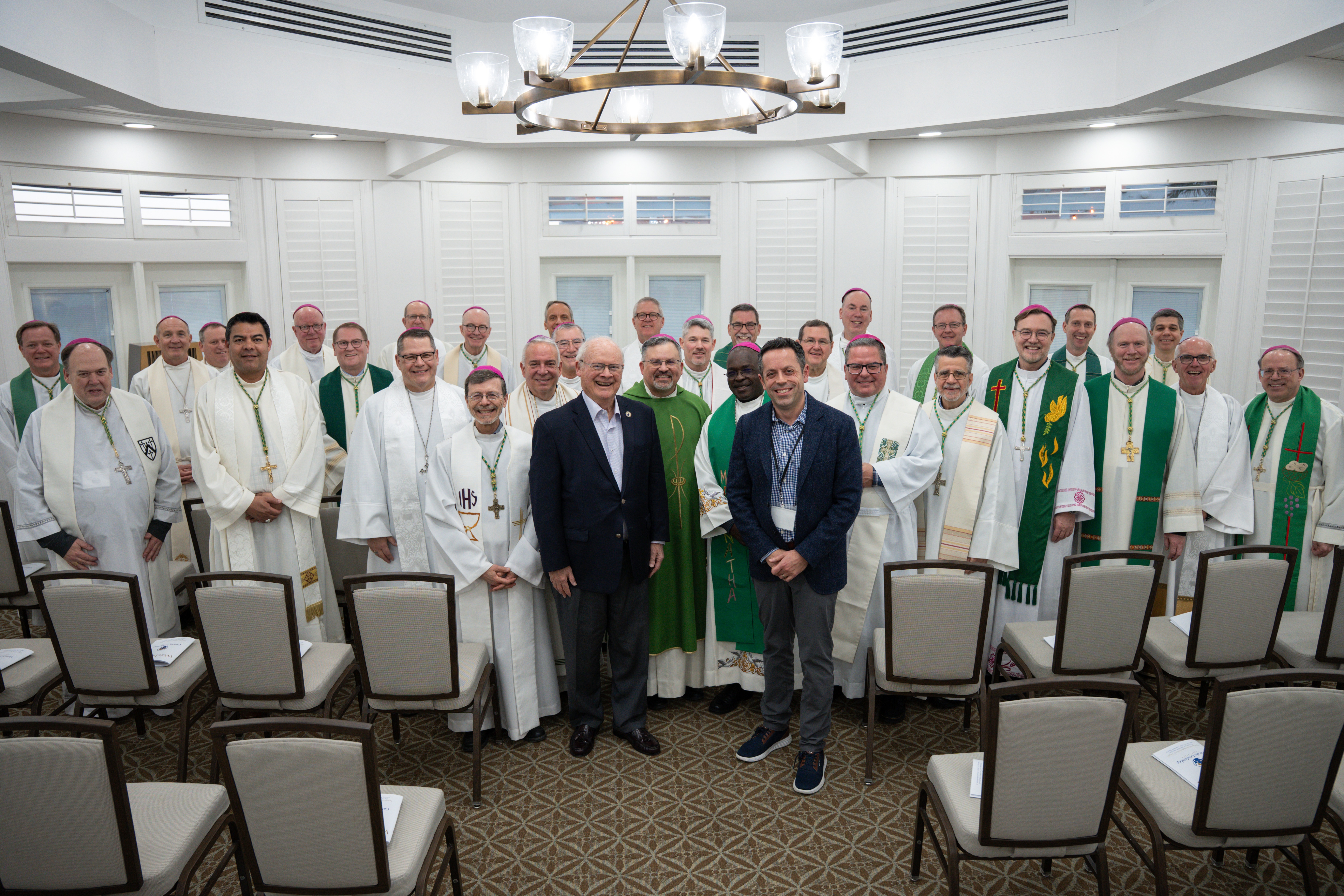
For the last 35 years, CLI has advised roughly half the bishops in the U.S., worked with almost 150 dioceses in the U.S. and Canada, and had about a third of the diocesan priests in the U.S. go through its formation program. At any given time, Cellucci said in an interview with the Register, his staff of 70 is working with some 20 to 30 dioceses throughout the country.
Bishops turn to Cellucci when they’re newly appointed or when they’re trying to reinvigorate once-thriving Catholic communities that are facing shrinking Mass attendance, as Archbishop Nelson Pérez is doing in Philadelphia.
They may also seek his counsel when they are in financial straits and facing the prospect of having to restructure their dioceses — as then-Bishop Ronald Hicks of the Diocese of Joliet did before he was named shepherd of the Archdiocese of New York.
The first thing you might notice about Cellucci is the palpable enthusiasm he has for his work as he talks about what CLI is doing to revitalize the Church. It’s not surprising, as we would later learn, that he drinks six cups of coffee a day.
You begin to understand why bishops trust him to help them get their houses in order. He’s a man of deep faith, seemingly limitless energy, and a source of innovative ideas grounded in practical know-how.
Having spent his entire career with the Catholic Leadership Institute hasn’t dulled his zeal for the work.
What began as a summer internship turned into a full-time position after founder Tim Flannagan hired him upon his graduation from college in 2005. He’s been at CLI ever since and has served as CEO for the last decade. It’s even where he met his wife, Tricia — the organization’s longest-serving employee.
He hadn’t planned for his life to unfold this way. While he was active in youth ministry when he was in high school, he envisioned a future in the diplomatic corps when he went off to the University of Richmond.
Then, during his summer internship with CLI, he attended a retreat where he had an experience that gave him his vocation.
“I had a moment of encounter with the Lord that first summer,” Cellucci told the Register. “What I heard I hadn’t heard all my life, even though I had grown up Catholic: that God has a purpose for our lives and that our task is to discern what that purpose is and to fulfill it in his name.”
“Once I heard that, I couldn’t unhear it and I wanted other people to know that,” he said.
Cellucci got a chance to live out his vocation in his own backyard when Archbishop Pérez tapped CLI to help come up with a plan to bring back the 83% of baptized Catholics in the archdiocese who no longer attend Mass.
As part of the Philadelphia Archdiocese’s initiative, in 2025, Archbishop Pérez announced the establishment of five parish-based “missionary hubs,” staffed by Catholic leaders with a heart for evangelization, to help reach those who may feel far from the Church. Within 10 years, the plan is to establish 50 such hubs.
“So, no matter where someone lives in the Archdiocese of Philadelphia, they can find a place that’s going to welcome them, that’s going to connect them to the Lord, connect them to other people, and bring them deeper into a relationship with Christ,” Cellucci explained.
Cellucci rejects the suggestion that he is helping to “save the Church.”
“Jesus will save the Church — no program is going to save the Church. I think we do need to change the way we think though,” he added, pointing to the example of Archbishop Pérez.
“He’s willing to counter the narrative that we’re just in decline and that we can’t grow,” he said. “He bucks that narrative, and he’s willing to think differently for the sake of the Gospel — and that’s what I think will help us grow the Church.”
Throughout his time working with Cellucci, Archbishop Pérez said that he has come to think of him as a close friend as well as a consultant. He told the Register that a few weeks after his mother died, Cellucci invited him to spend Christmas Eve with his family.
“Dan knew that I was pretty sad and down, and he didn’t want me to be alone,” the Philadelphia archbishop said, adding: “He has a heart of compassion, which means ‘to feel with,’ and he is a trusted mentor who pushes me beyond where I can imagine — two wonderful blessings.”
The goal of the Philadelphia initiative, Cellucci said, is to amplify the missionary spirit that already exists in the hub parishes. He’s particularly excited about the hub established in the city of Chester, a Philadelphian suburb and an economically disadvantaged area.
Once a vibrant Catholic center, Chester has gone through demographic changes that have seen its seven parishes merge into one. It was chosen because, he said, seeds of revitalization have already been sowed there.
“What they’re doing without any help is already amazing. They’re a missionary community already, but they are really strapped for resources,” Cellucci said.
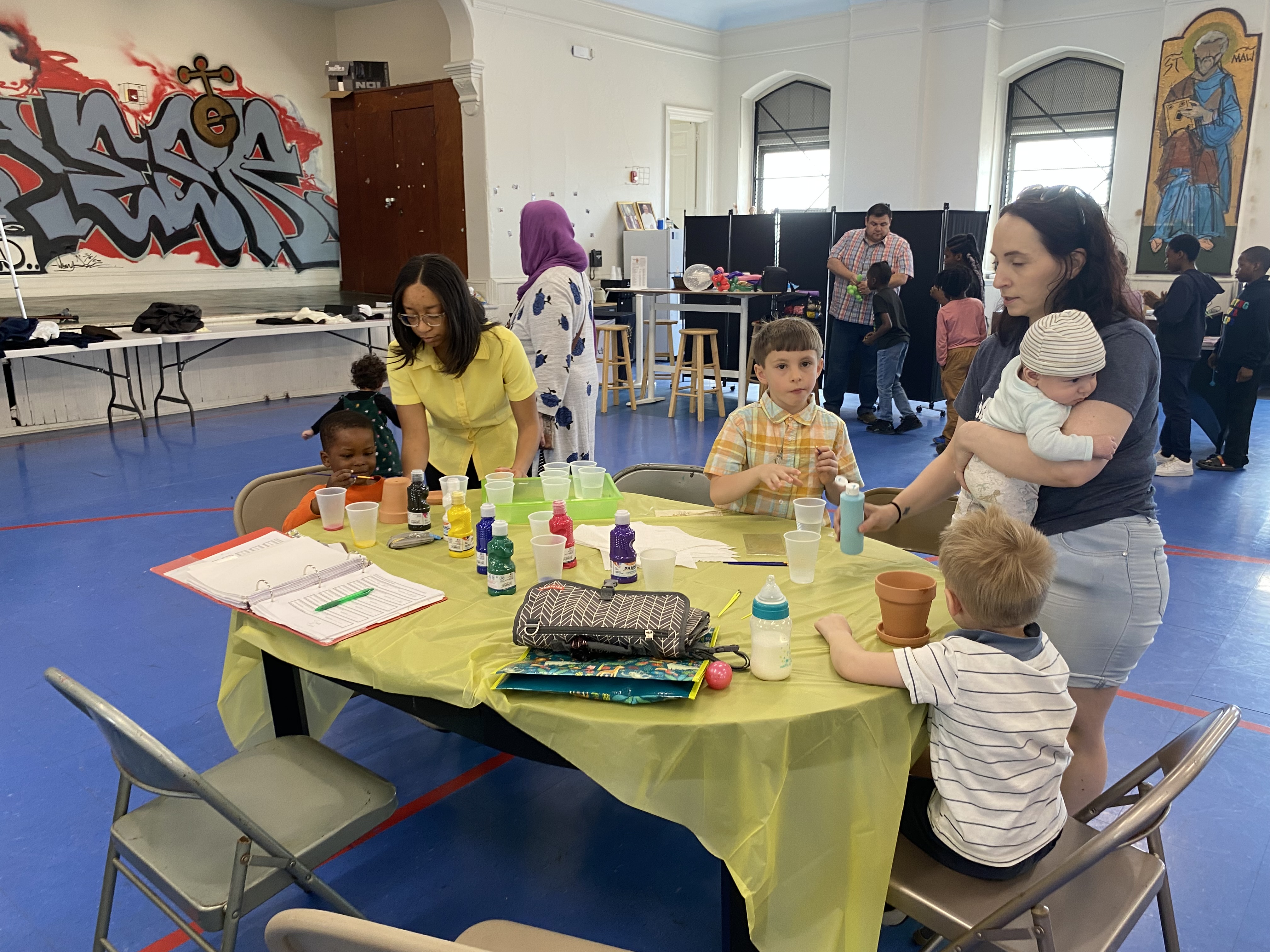
Joshua Bean, the missionary hub director at St. Katharine Drexel Parish in Chester, has begun working with Catholic leaders in the city, hosting Bible studies and viewings of The Chosen for clients of the local Catholic Charities agency, and sponsoring praise-and-worship nights, which are popular with members of the Hispanic community.
“An important part of the mission here is waking that part of the history up and reintroducing the city in many ways to the Catholic Church,” Bean told the Register.
“What we’re really looking forward to is developing leaders,” he said.
The Man Behind the ‘Bishop Whisperer’
Over salmon pastrami sandwiches and iced tea one Friday during Lent, Cellucci, in his slim-fitting blue suit worn without a tie, is perhaps the best-dressed person in The Dubliner restaurant, a 10-minute walk from Washington’s Capitol Hill. The conversation turned to the enormity of the task before him and what preternaturally energetic Cellucci does to unwind — that is, when he’s not at the gym or pool, exercising four or five days each week.
Cellucci conceded that when he’s not working for “the Church” he is often involved in his local parish’s activities — whether he’s bringing Communion to the sick, raising money for the renovation of its school, or taking part in a small men’s group. He’s also, he said, a big Lego guy: He likes the movies, but he loves creating something with the plastic bricks.
When friends see him rush downstairs to the basement to work on a new Lego project, they often remark on how wonderful it is that he spends time playing with his kids. His wife, Cellucci said, is quick to correct their misapprehension.
“She tells them I’m actually like a toddler,” he said, admitting that he loves nothing more than to be let loose with a tub of Legos and to build something from scratch (he proudly shared photos, exterior and interior, of his “St. Juan Diego Catholic Church” over lunch).
It’s hard not to see the way Cellucci approaches Legos as a metaphor for his work to bring more souls to the Church. While he still has the Legos from his childhood, he never uses the instruction booklets that came with the sets. He and CLI encourage bishops to carefully assess the materials at hand and explore using new ways to create something with a sturdy foundation that will last far into the future.
Emily Scarola, operations and fulfillment manager at CLI, has worked with Cellucci since 2011.
“He’s probably one of the most creative and visionary people that I know,” she said. “I think he has a really unique ability to see to the root of a problem or a dysfunction very quickly and knows what needs to be done to address it.”
In his work with bishops, Cellucci tries to help them change their focus to bringing more people into the Church.
“One of the biggest challenges for bishops is trying to shift the Church’s posture from assuming people will come to engaging in the missionary impulse of their local Church. How do I turn this ship, so to speak, to be more outward-focused?” Cellucci said.
To do this, CLI arms bishops with the information to help them make tough decisions for their dioceses based on the reality of what their flock looks like today. Before making suggestions to prelates, his team sends out a 95-question survey called the “Disciple Maker Index,” which gives them hard data on the attitudes and beliefs, participation and demographics of each parish in their dioceses. More than a million Catholics have participated in the survey, giving CLI a unique insight into the state of the Church today.
About 90% of CLI’s work is funded by philanthropic partners, including individuals, family foundations, and foundations like the Lilly Endowment.
CLI works directly with parishes, helping them with everything from having parish leaders take part in role-playing exercises so they can become comfortable talking to people about having a relationship with the Lord to providing them with the crucial data to help make decisions that will help ensure growth in the future.
“Even in a parish that looks great on paper, there’s always opportunity,” he said, adding that parishes that seem to be thriving financially, in the Southeast for example, may face trouble down the road due to their disproportionately older membership. He said CLI often asks parishes to look beyond how much their parishioners are contributing to the offertory each week and take a close look at the people who are doing the giving.
“Is it coming from people who are all in their 70s and 80s? If so, praise God for their generosity, but you want to start cultivating younger people in the life of the parish — not just for money, but for the life of the parish,” he said.
Turning the ship around to bring younger people into the Church is a major aspect of what CLI tries to make happen. That might mean something as simple as adjusting schedules to make it possible for young families to take part in parish activities outside of normal business hours.
Cellucci said parishes often structure their schedules around older generations — those who can attend a 9 a.m. Mass or volunteer during the day. While their service is invaluable, he said, “if the rhythm of parish life doesn’t shift or at least expand to include people who are working full time, people who travel for work, [and] parents who both have to work … we’re going to be missing this opportunity to cultivate not only the leaders of tomorrow but the leaders of today.”
One way to reach more people, Cellucci said, is by taking part in community activities that already exist in the parish neighborhood but are outside the parish campus, such as farmers’ markets.
He told the Register that a recent experience at a youth charity 5K race in Pennsylvania’s Delaware County showed him that the Catholic Church could learn something from her Protestant brothers and sisters.
He and his family approached a booth that was drawing a crowd because they were handing out free soft pretzels. It turned out that two women working the booth were full-time volunteers from a Christian church in the area.
Curious, he asked them why they were there. “I said, ‘So you’re going to stand here all day and give out soft pretzels?’ And what they said to me stays in my mind,” he said.
“They said, ‘This is where our people are. Where else would we be?’” he recalled.
“Now, I have a fantastic parish. We would never do that,” he said. “We have this notion that comes from a very good place, I think, that people are going to keep coming.”
“Some people will come, and we have to be ready to receive them when they come, but we also have to go out. That’s really the parish,” he said.
As a consultant to new bishops, Cellucci is positioned to share these ideas at a pivotal moment for the U.S. Church amid what he describes as a coming wave of change in Church leadership.
“I don’t know that a lot of people know this, but this is the largest transition in episcopal leadership in the country,” he said, noting that more than 70 dioceses will change ordinaries over the next five years.
This emerging generation of bishops, he said, brings a different perspective from those who preceded them. Having served as priests during some of the Church’s most turbulent years, they are more attuned to the challenges facing clergy today and understand that they have to be “a little bit more hands-on and active.”
Catholics accustomed to seeing the same “instruction booklet” used year after year may soon see a new generation of bishops and priests — formed, in part, through Cellucci and the CLI’s guidance — set out to become disciples of a revitalized, missionary Church.
Dan Cellucci, Up Close and (Overly?) Personal:
1. What are you reading now?
The Courage to Be Disliked
2. Do you use any prayer apps?
Hallow, iBreviary, and Exodus 90
3. Do you have any particular devotions?
Our family has a devotion to St. Carlo Acutis.
4. Did you give anything up for Lent?
I was doing Exodus 90 for the first time, so I was following the asceticisms.
5. Do you ever take vacations? Where did you go on the last one?
The last family one we took was to Rome for what was supposed to be the canonization of Carlo Acutis but ended up being the funeral of Pope Francis. My wife and I also got to go to the Our Lady of Guadalupe Shrine in Mexico City for our 20th anniversary in November.
6. Are you an ardent fan of any college or pro team?
The Iowa Hawkeyes (because of my older sister) and my own Richmond Spiders
7. Do you drink coffee? How much?
I’m actually trying to give it up — but too much, usually six cups a day.
8. Are you on texting terms with any bishops? Which ones?
About a dozen — I never text and tell!
9. Are you known as a neat or not-so-neat person?
Definitely neat person — nothing on the counters — that comes from my mom!
10. Do you smoke cigars and drink scotch; if so, when and with whom?
No longer cigars and no longer bourbon, but I used to enjoy both; now I’m too old, and both don’t help me sleep!
11. Do you have any other favorite drinks or “guilty pleasures”?
I love egg rolls. I could eat egg rolls every day.
12. Do you exercise? What’s your routine?
I exercise four to five times a week, usually a mix of strength training, spin classes, and sometimes swimming.
13. Where do you buy your suits?
Banana Republic
14. Do you speak any other languages? If so, when and why did you learn them?
I am fluent in Italian, which I learned studying abroad for a semester in Ferrara during my undergraduate [years].
15. Do you play any video games or puzzles (e.g., “Wordle”)?
Only occasionally “Word Cookies!” — if you know, you know.
16. Pat’s or Geno’s for cheesesteak?
Pat’s — my grandfather had his picture on the wall.
17. What do you drive?
A beat-up 2019 Chevy Tahoe
