

How the Mystical Visions of Caryll Houselander Show Christ Is in Everyone| National Catholic Register

The Reed of God, a meditation on the humanity of Mary by Caryll Houselander (1901-1954), the English Catholic spiritual writer, has long been considered a “spiritual classic,” but in the final weeks of 2025, it edged out Confessions (made popular with the installation of our Augustinian Pope) to become Amazon’s bestselling book about saints.
This sudden rise in popularity was largely due to the Hallow app featuring the book in its annual “Advent Challenge.” The Reed of God, first published in 1944, is a timely choice for Advent, as, in it, Houselander reflects that Christ dwells within man and that Our Lady — who gave birth to him — shows us the way to respond to this truth.
Seeing Christ in others was the central theme of Houselander’s spirituality. A Rocking-Horse Catholic, Houselander’s brief — and highly engaging — autobiography, reveals the source of the spiritual thought that earned her the admiration from some of the greatest Catholic theologians and continues to inspire readers today. The title of the book, which was republished by Cluny Media in 2024, refers to the unusual start to her life of faith: She was received into the Church at age 6, so she was a “rocking-horse” rather than a “cradle” Catholic.
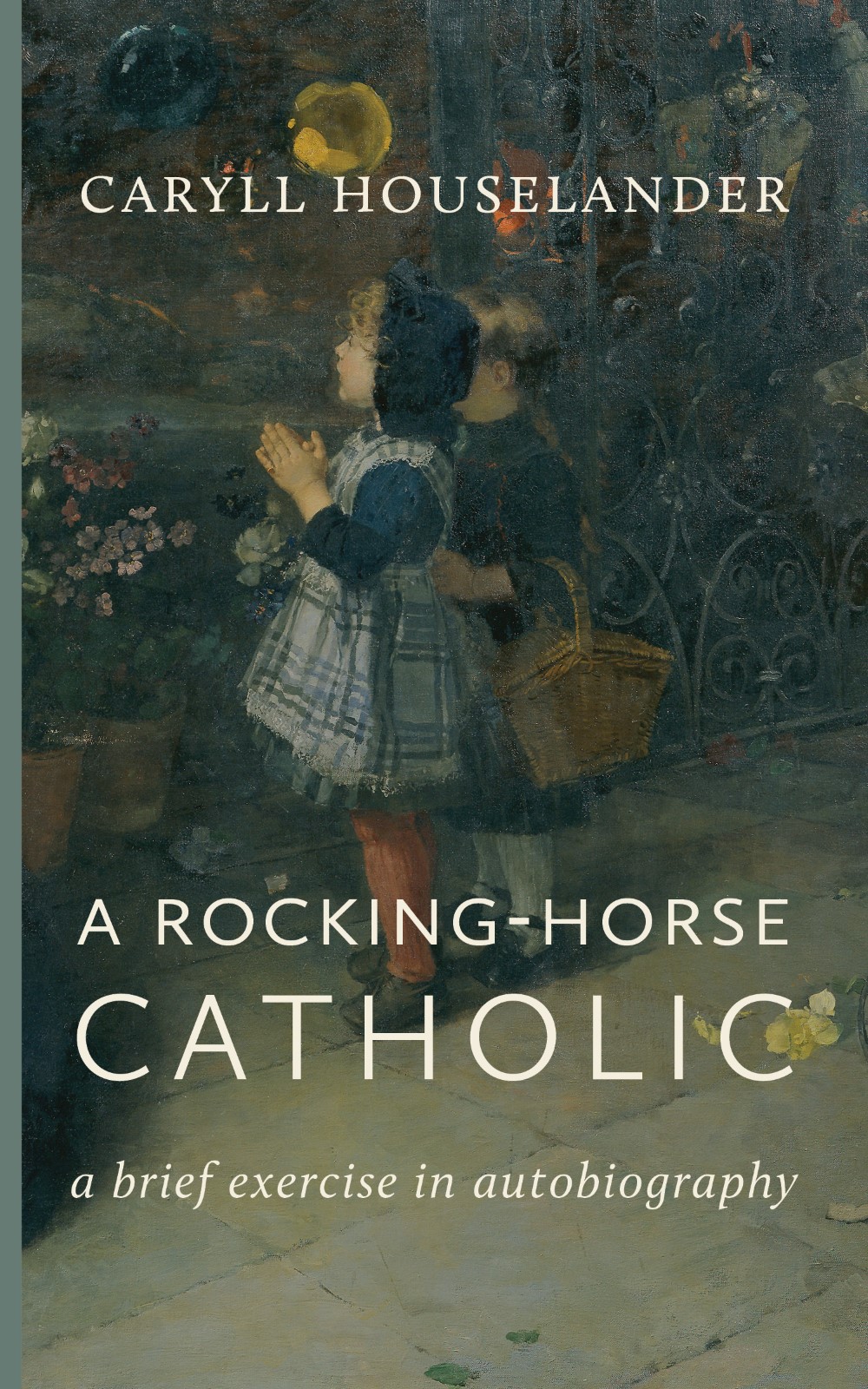
In it, she describes the mystical vision that brought her back to the Catholic faith that she left as a teen:
“I was in an underground train, a crowded train in which all sorts of people jostled together, sitting and strap-hanging — workers of every description going home at the end of the day. Quite suddenly I saw with my mind, but as vividly as a wonderful picture, Christ in them all,” Houselander writes.
The vision precipitated her return to the Church in 1925. She went on to become a frequent contributor to Catholic magazines and literary journals and was the author of several books.
Even though Houselander had limited formal education and no training as a theologian, she earned the respect of learned Catholic theologians, including Msgr. Ronald Knox, an English Catholic priest, apologist and spiritual guide.
“In all she wrote, there was a candor as of childhood: She seemed to see everything for the first time, and the driest or doctrinal considerations shone out like a restored picture when she was finished with it,” Msgr. Knox writes of Houselander, according to biographer Maisie Ward, author of Caryll Houselander: Divine Eccentric, originally published in 1962 and reissued by Cluny.
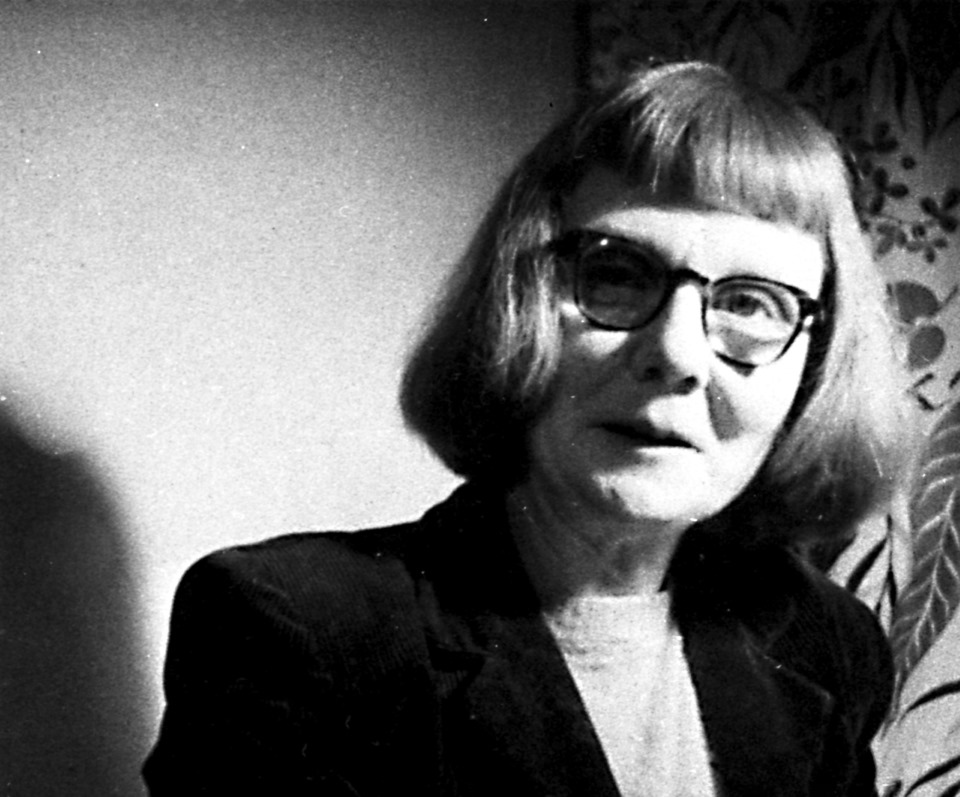
Today, Houselander continues to be a spiritual writer that Catholics turn to for insight and inspiration. Dominican Father Sebatian White, the outgoing editor of Magnificat, regularly features Houselander’s reflections in the monthly prayer guide.
Father White told the Register, “I thought they were beautifully written and had great insights into our relationship with the Blessed Mother and the personal union with Our Lord that we experience as Catholics.”
Houselander’s Spirituality
What Houselander experienced on the London subway car wasn’t the first time she had what she considered an unquestionably supernatural vision; but it was, she writes in A Rocking-Horse Catholic, “an unimaginably vaster experience” than those that preceded it.
On the first occasion, Houselander had a vision of a crown of thorns on the head of a lay nun from Bavaria, who came to England as a refugee from the First World War.
The second time was years later in London ¾ after she had left the Catholic Church. While shopping for potatoes for that evening’s dinner, she saw a “gigantic and living” Russian icon of the Christ the King crucified, just days before the assassination of Tsar Nicolas II. The “vaster” vision she experienced on the London Underground, she writes, also helped her to understand the nature of sin and how it is committed against Christ himself — particularly in cases of sins done “in the name of ‘love.’” In her time away from the Church, Houselander had an affair with a much older man, Russian agent Sidney Reilly, who inspired Ian Fleming’s James Bond series.
“Reverence,” she now understood, should also be paid to sinners.
“Instead of condoning his sin, which is in reality his utmost sorrow, one must comfort Christ who is suffering in him,” Houselander writes. She became known for helping those struggling with mental-health issues, and although she had no training in psychology, Dr. Eric Strauss, who would become president of the British Psychology Society, sent traumatized patients her way.
“She loved them back to life,” Strauss said, according to Houselander biographer Ward.
An Unconventional Upbringing in the Faith
Born in Bath, England, Frances Caryll Houselander was the second daughter of Wilmott and Gertrude Houselander, non-practicing Anglicans. It was something of an accident that she became Catholic at all.
At the age of 6, she was received into the Church, she thinks, in part, because of the influence of a family friend who would support her in her faith and guide her back when she wavered, despite his not having joined the Church himself. Caryll and her sister were escorted to Mass by “Jock,” the family’s fiercely loyal dog, who waited outside until Mass was over.
Once Houselander’s mother entered the Church, she and her sister were subjected to what she described as a “persecution of piety.”
“Not only was she one who never did anything by halves, she always overdid whatever she did at all, whether it was sport, until then her main interest, or as it now became, religion,” Houselander wrote of her mother, a former women’s tennis finalist at Wimbledon.
When priests would come over for dinner, as they frequently did, the girls were made to kneel in front of them and recite prayers. Most distressingly for Houselander, who would go on to suffer from anxiety and scrupulosity, she was forced to make a “confession” to her mother each night.
The happiest period of Houselander’s childhood was when she was sent to a convent school run by French religious sisters.
It was at the convent that she had an experience that, she writes, made it impossible to ever doubt the Real Presence in the Blessed Sacrament. One evening, while suffering from a spell of anxiety and scrupulosity, she received Communion and was “instantly at peace.”
“It seemed indeed that a gentle, golden radiance shone through my thin eyelids and suffused my whole being,” Houselander writes.
Her “miracle,” she writes, helped her become aware of the curative powers of the Blessed Sacrament and of an abandonment of self to God.
“By surrender to God, I mean giving oneself up to God, to be transformed in Him. It is the cure for self that is the core of the whole thing; we require to be cured of self by being changed, as the bread and wine on the altar are changed into Christ,” Houselander explains.
Turning Away From and Returning to the Church
The peace and joy of the convent was, however, not to last. After unhappy stints at several other schools, her mother — who had since separated from her father — eventually removed her from school altogether. Houselander was ordered to return home to help with the housework and act as a chaperone, after her mother took in as a boarder a “derelict priest” who had left his order. The situation left Houselander increasingly isolated from Catholics among her acquaintance who refused to see the family socially because of the family’s living arrangement.
The last straw — the event that drove her to look for God outside the Catholic Church — came when she saw a married couple she knew kneel beside her to receive Communion yet snub her when they exited the church doors. Infuriated at the time, years later, she writes, “It did not dawn on me that in condemning others wholesale as Pharisees, I myself was a Pharisee.”
It was the vision on the crowded subway car — when she saw Christ in everyone — that brought her back.
“The greatest joy in being once again in full communion with the Catholic Church has been, and is now, the ever-growing reassurance given by the doctrine of the Mystical Body of Christ, with its teaching that we are the Church, and that ‘Christ and His Church are one,’” she writes.
In The Reed of God, she urges those who suffer to contemplate that being one with us, Christ wants to suffer in us.
“This is another of the things to be discovered in contemplating Our Lady,” she writes.
“If Christ is formed of our lives, it means that He will suffer in us. Or more, truly we will suffer in Him,” Houselander writes. “Ought not Christ to suffer these things and so enter into His glory?”
