


When Sister Maria Theresia of the Most Holy Trinity died in St. Louis a century ago, she was young and relatively unknown, having largely failed in her grand dreams of serving as a Catholic missionary in the American Midwest due to the debilitating illness that took her life. As such, her story could have easily faded into obscurity.
But the Catholic Church has a way of not only ensuring that people like Sister Theresia are remembered but also elevating them as examples for the whole world to follow.
On April 27, the Vatican announced that Pope Leo XIV — the first U.S.-born pope — had recognized the heroic virtues of Sister Theresia, advancing her sainthood cause and bestowing on her the title of “Venerable.” If it comes to pass that miracles are attributed to her intercession and her cause proceeds to beatification and canonization, Sister Theresia could become the second woman to achieve sainthood while serving in the St. Louis region, after St. Rose Philippine Duchesne.
For the sisters of the congregation to which Sister Theresia belonged — the Carmelite Sisters of the Divine Heart of Jesus, founded in 1891 in the Netherlands — the celebration of their beloved-but-still-virtually-unknown sister is a reminder that Christians are called to trust in God even amid suffering and even when that suffering appears meaningless.
“I think a message that a lot of us need to really see and know and believe [is] that our hidden sufferings really do draw us into deeper communion with the Lord and intimacy with him, if we let him do that in us,” said Carmelite Sister Mary Michael, provincial vicar for the Carmelite Sisters of the Divine Heart of Jesus South Central Province, in an interview with the Register.
“The hope that [Sister Theresia] brings, or could bring, [is] to be a companion in that struggle with anyone who is tempted to despair or think that what the Lord is allowing in their life is some kind of obstacle, when it never has to be an obstacle. It can always be an opportunity,” Sister Mary Michael said.
Teresa Ysseldijk, who would later become Sister Theresia, was born in the Netherlands in 1897 to a faith-filled family, but trouble found her early as an unexplained illness in infancy threatened to claim her eyesight. Although she miraculously recovered from this illness through the intercession of St. Anthony, she would later suffer the loss of her father when she was 9 years old while the family was living in Germany. Despite the heartbreak, she found solace in a deep love for Christ in the Eucharist. On the day of her first Communion, Teresa felt Jesus speaking to her heart and on that day resolved to enter religious life. She entered the Carmelite Sisters of the Divine Heart of Jesus in Tilburg, Netherlands, on Oct. 2, 1917, shortly before she turned 20.
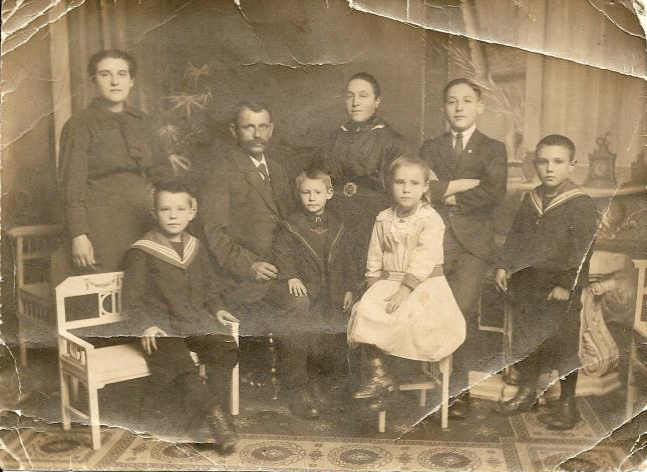
Distinguishing herself with a childlike but strong love for Jesus and a keen attitude to serve others, she professed her vows on July 2, 1919. Sister Theresia had a great devotion to a famous fellow Carmelite, St. Thérèse of Lisieux — who happened to have died the same year Sister Theresia was born.
That December, Sister Theresia — despite not yet speaking English — traveled with several other Carmelites from Europe to the United States to serve as missionaries. She spent a short time at a Carmelite convent in Wisconsin before coming to St. Charles, Missouri, where the sisters had established ministries to the elderly and children.
Soon after her arrival, however, she fell ill, and doctors discovered that she was suffering from advanced kidney disease. Although she received treatment, including the surgical removal of one kidney, doctors were unable to cure her. Despite her failing health and unspeakable pain, the continually joyful Sister Theresia was allowed to profess her perpetual vows. For the last several years of her life, she could do little around the convent besides offering encouragement to her fellow sisters with her smiles and prayers.
In 1925, the year that St. Thérèse of Lisieux was canonized, the Carmelite sisters prayed a novena asking for Sister Theresia to recover. After the novena, Sister Theresia experienced, in prayer, a seemingly devastating message from the French saint: “You will only live a short time, but suffer much.” The young sister accepted the message as God’s will, saying she went “very gladly” to her father in heaven.
She died on March 10, 1926, at St. Mary’s Hospital in St. Louis at the age of 28. According to her order, soon after her death, many healings and answered prayers were attributed to her intercession.
Sister Theresia’s fellow Carmelites never forgot her, but the effort to officially open and advance her sainthood cause took somewhat of a back seat to the promotion of the cause of their order’s foundress, Blessed Mother Maria Teresa of St. Joseph, who died in 1938 and was beatified by Pope Benedict XVI in 2006. Sister Theresia’s cause was officially opened in the Diocese of Roermond, Netherlands — the location of the order’s motherhouse — in 2010.
“She’s a teacher in suffering for us in a way that we really need nowadays … such an example of never really being discouraged by her suffering or allowing her limitations to make her feel like a failure,” said Carmelite Sister Magdelene Therese, a member of Sister Theresia’s community now located in the St. Louis suburbs.
“She just continued serving the Lord with generosity in every way that she still could … letting her own sufferings really bring her closer to the Lord and sanctify her rather than have her focus on herself and her own shortcomings,” Sister Magdelene told the Register.
Sister Theresia’s community has since moved a dozen or so miles from St. Charles to Kirkwood, Missouri, a St. Louis suburb, where the sisters run a large senior living ministry. The community hopes to renovate their chapel with a side altar where Sister Theresia’s earthly remains would be entombed — she is currently buried in Holy Cross Cemetery in the Archdiocese of Milwaukee, but the order has plans to transfer her body.
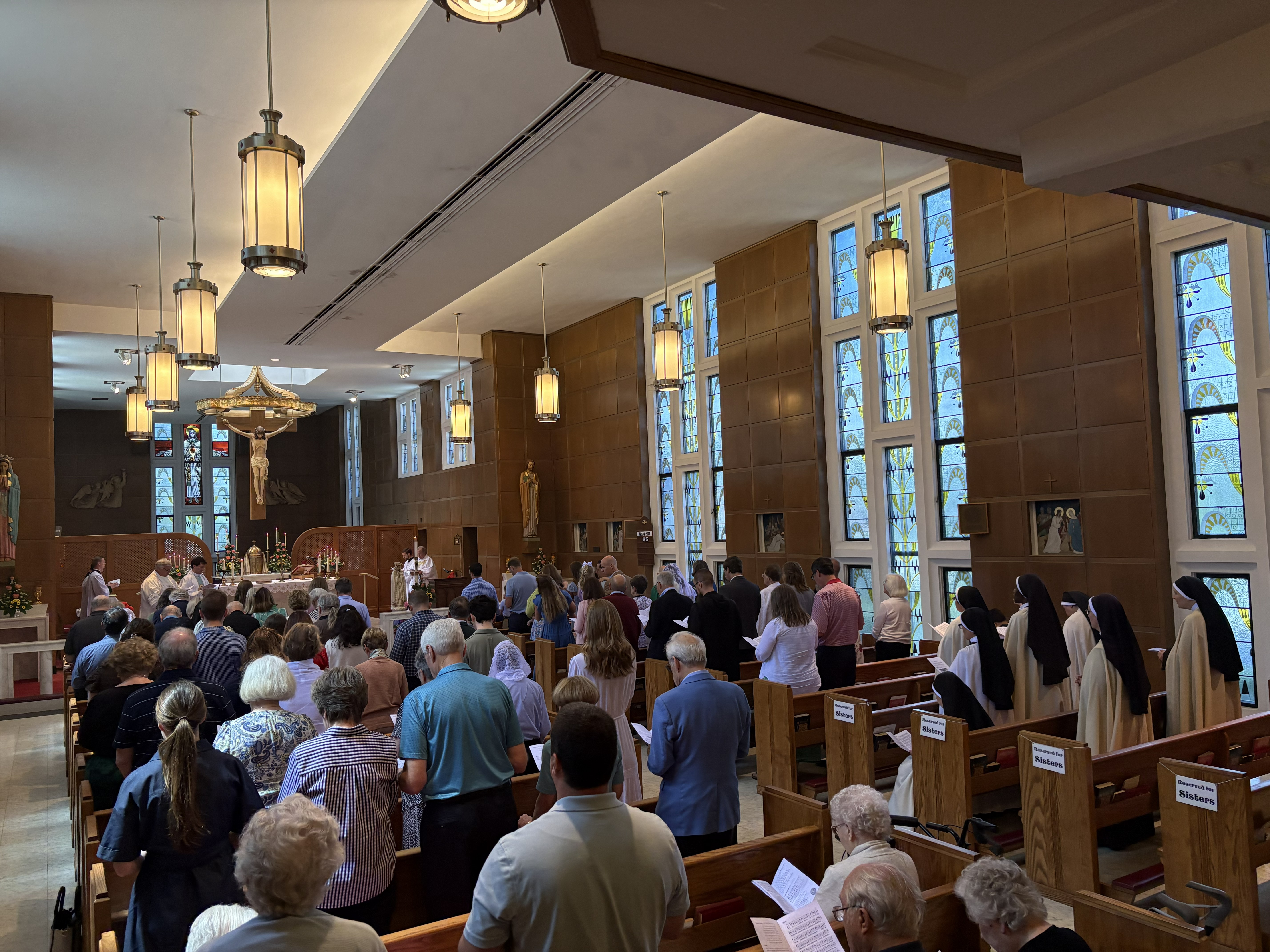
At a memorial Mass for Sister Theresia held in mid-May at the convent’s chapel, Father Joe Weber, a priest of the Archdiocese of St. Louis, praised Sister Theresia for taking to heart the imperative to proclaim the Good News, and — quoting Pope Francis in his apostolic exhortation Gaudete et Exultate — described her as a “saint next door” who lived a largely anonymous but disproportionately transformative life.
The sisters also run a daycare as part of their ministry, and although they say they haven’t yet formally introduced Sister Theresia to the children they care for, her intercession is a powerful help for them in their work. Sister Michael said she recently had a parent ask to pray with a second-class relic of Sister Theresia for their young son, who was preparing to have eye surgery.
Sister Magdelene said: “I think that Sister Theresia will be such a blessing for everyone who really gets to know her and relies on her intercession. … Being so transformed into our Lord’s will here in this life, and then being even more united to him now in heaven, she wants to provide for us and give us the spirit of trust in God that she had.”
