

New Kent Pilgrimage Routes Help Revive the Catholic England of Chaucer| National Catholic Register

CANTERBURY, England — “From every shire’s end
Of England they to Canterbury wend,
The holy blessed martyr there to seek
Who helped them when they lay so ill and weak.”
When Geoffrey Chaucer wrote these lines in his famous 14th-century foundational work of English literature The Canterbury Tales, the pilgrimage he was referring to, from London’s Tabard Inn to Canterbury Cathedral, was enormously popular.
Spurred on by personal devotions and the promise of spiritual rewards and miracles derived from St. Thomas Becket’s intercession, the 65-mile spiritual journey through Kent, where St. Augustine of Canterbury landed to evangelize the English in 597, was for many of the medieval faithful also a rare chance to travel, embark on an adventure, and meet people of a different class and background.
Even though the focal point of their devotions — Becket’s shrine in Canterbury Cathedral — was destroyed by King Henry VIII in 1538, to this day pilgrims walk along that famous route, now known as the Becket Way. The longer, equally ancient and overlapping Pilgrims’ Way from Winchester to Canterbury is also still well-trodden, including by the occasional eccentric pilgrim dressed only in medieval clothes, and by this writer many summers ago.
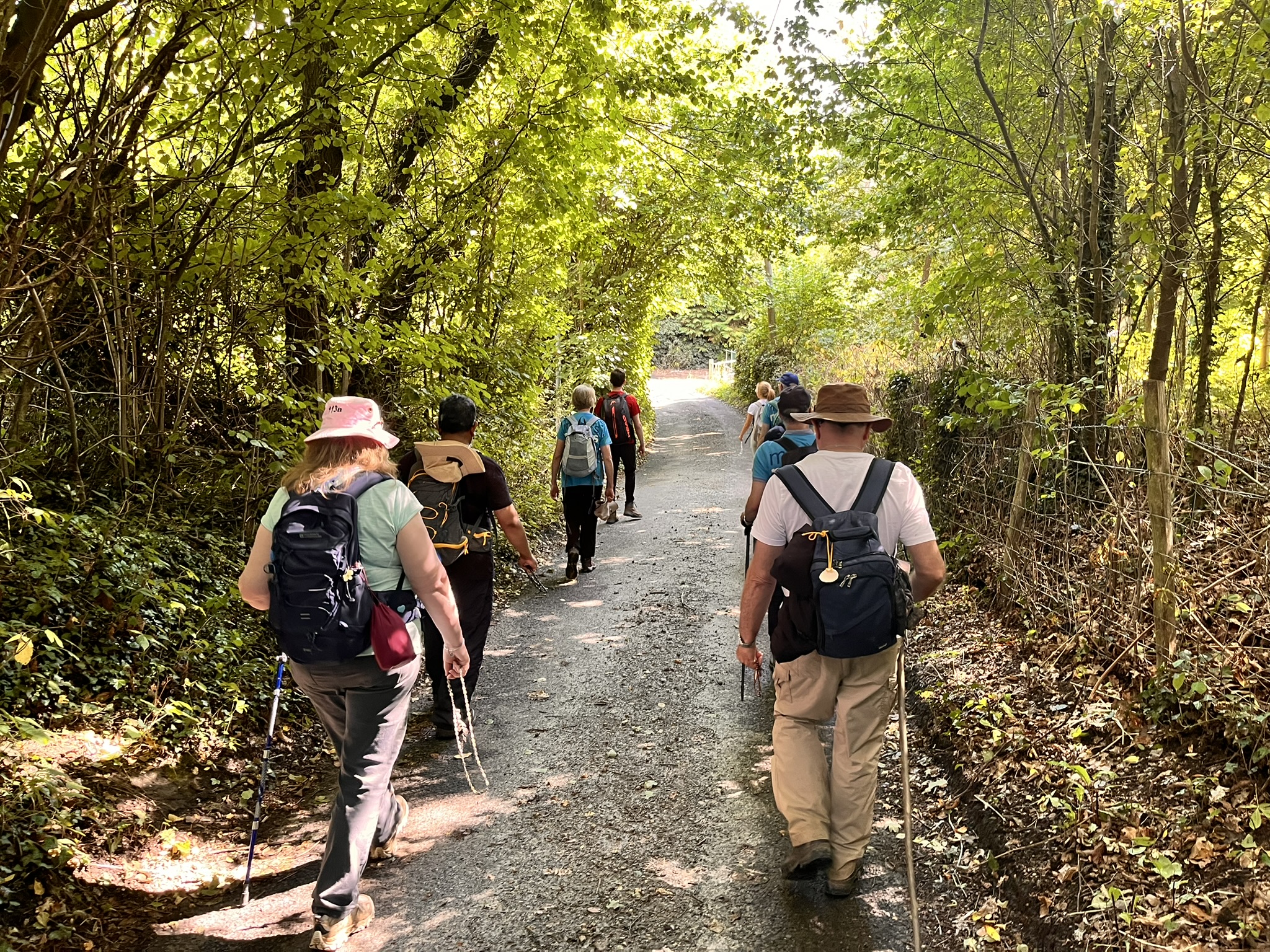
Now two new 21st-century pilgrimage routes — the Augustine Camino and the Way of St. Augustine — are on offer in Kent, a county the size of Rhode Island that boasts an unusually large number of saints due to it being the cradle of Christianity in the English-speaking world. Both pilgrimages are proving popular with pilgrims, including from the United States.
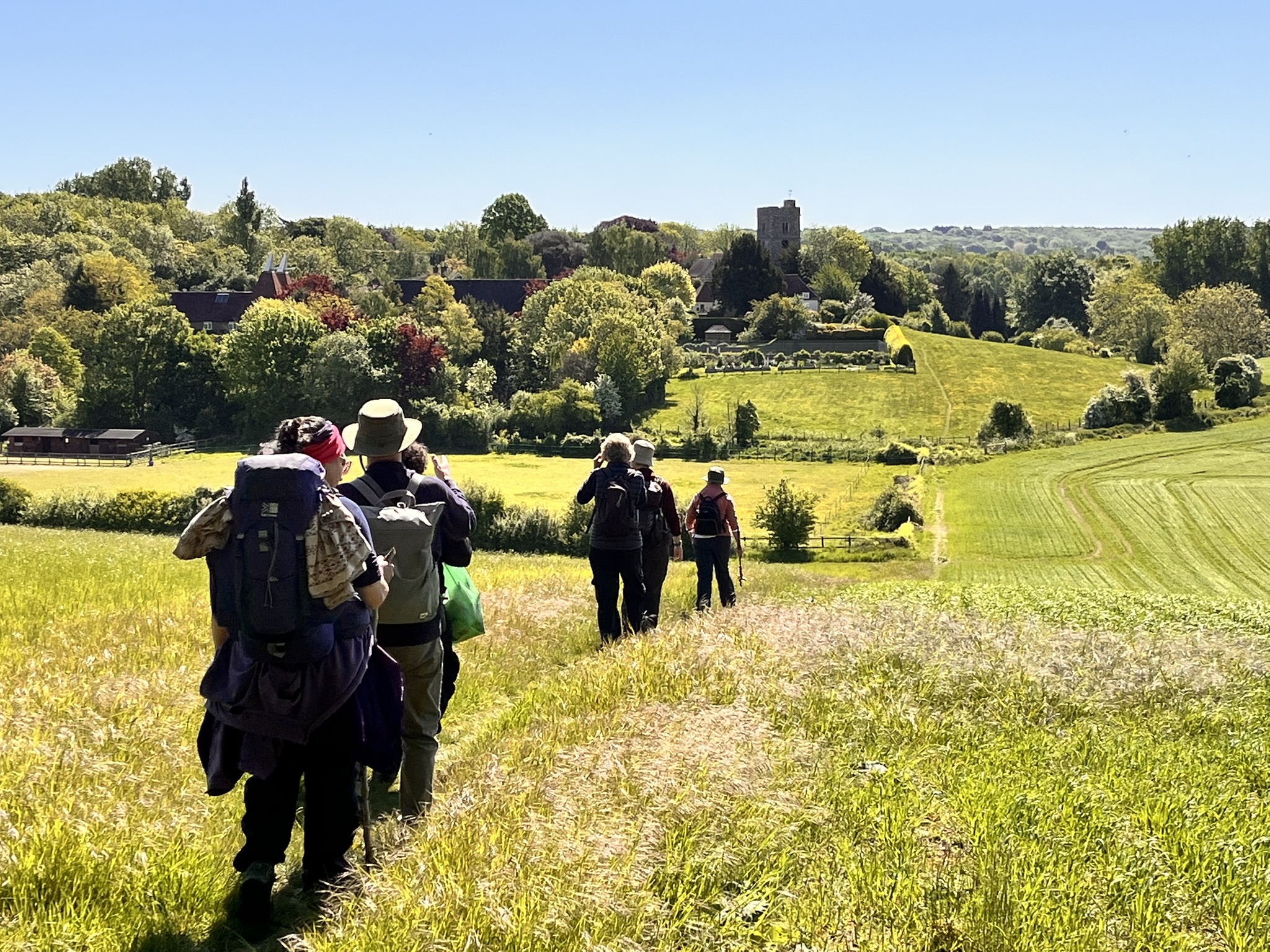
The Augustine Camino covers part of the same route as the Becket Way. Approximately 70 miles long and typically taking about a week, it runs from Rochester Cathedral, perhaps most famous for St. John Fisher, its martyred 16th-century bishop, and beyond Canterbury to the Shrine of St. Augustine in Ramsgate, close to where the Benedictine saint landed from Rome.
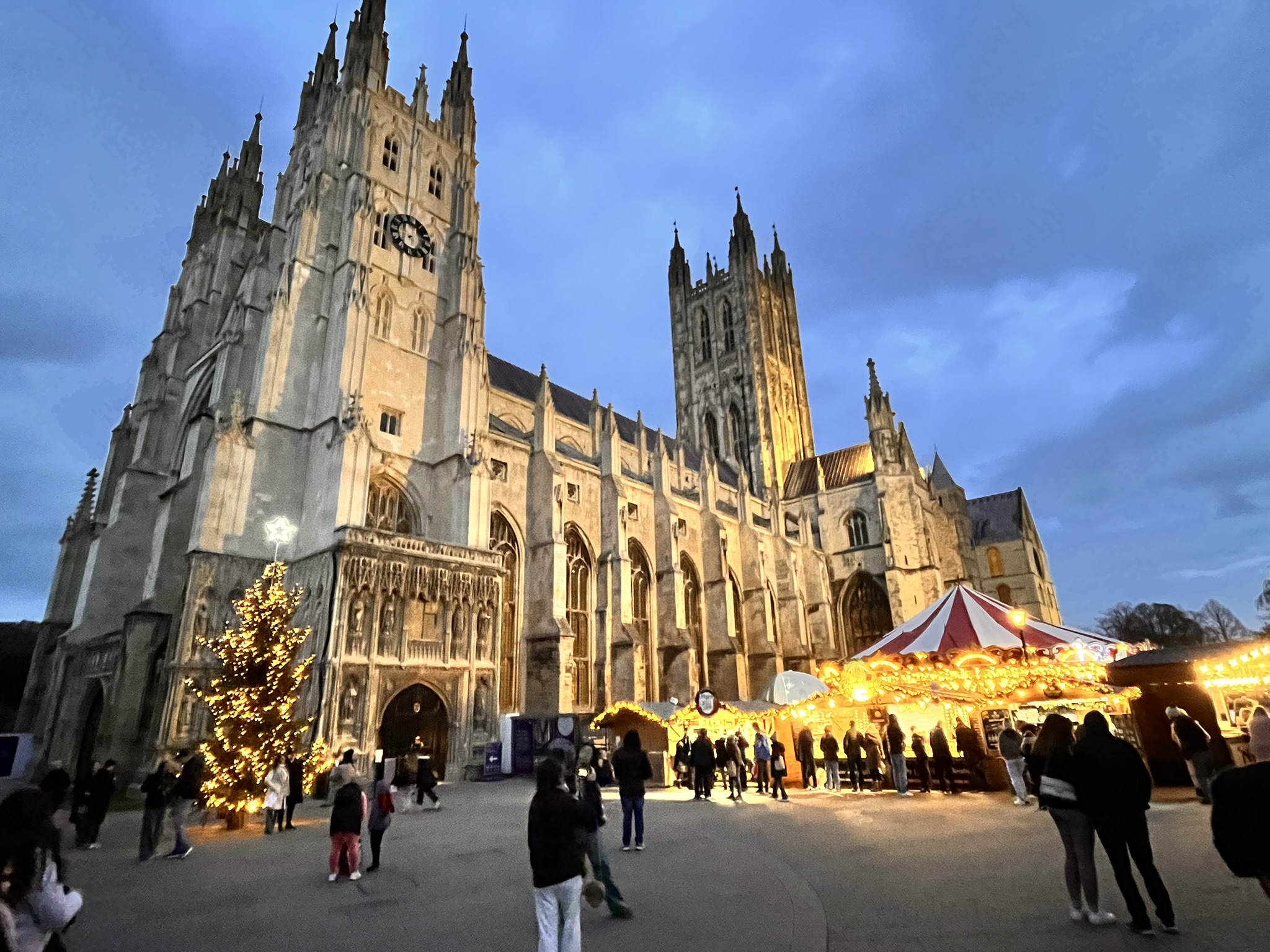
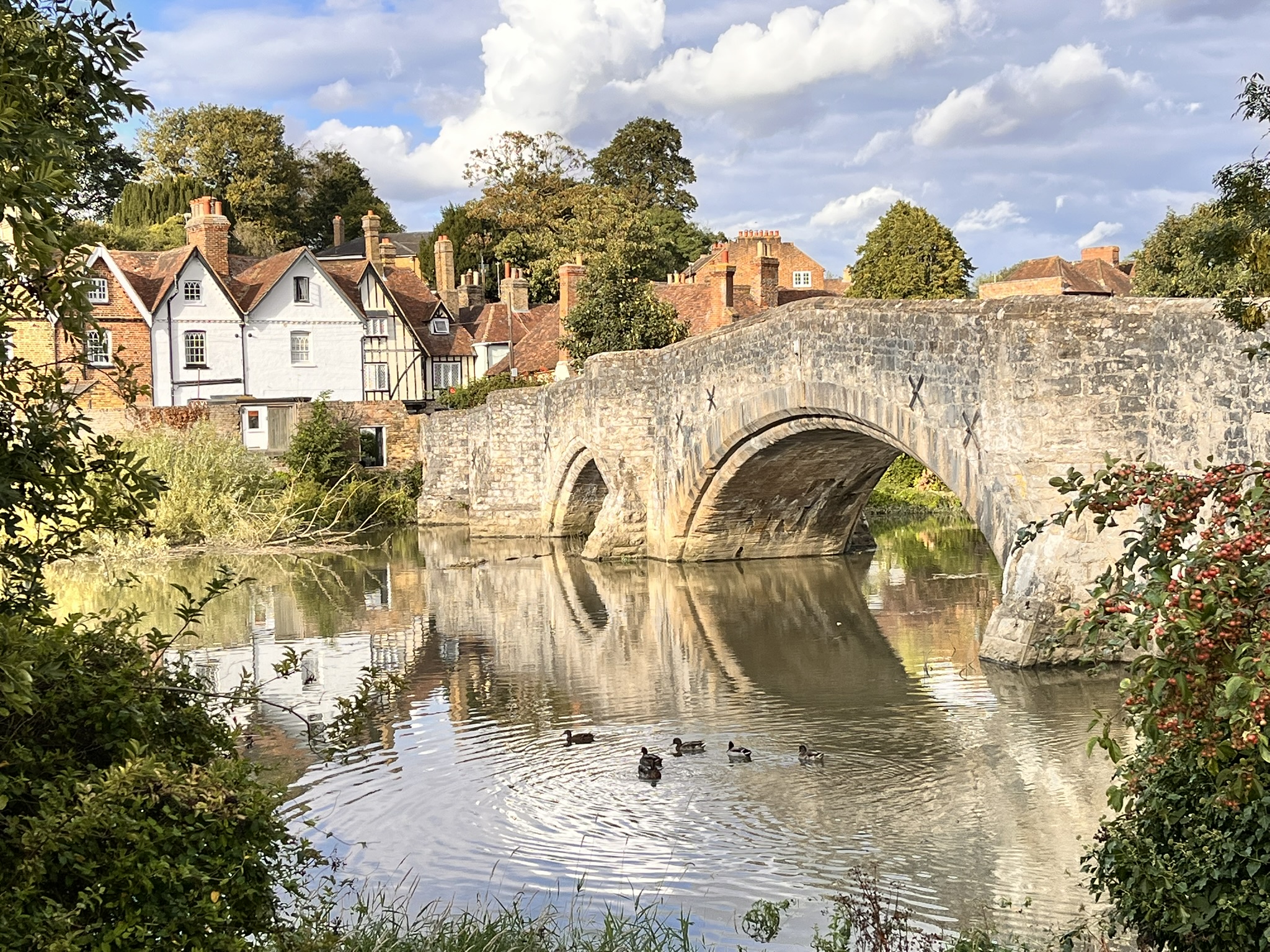
Along the way, the pilgrim stops at various historical sites of significant Catholic interest, including Aylesford’s renowned medieval Carmelite priory that was home to St. Simon Stock; the grand Romanesque-Gothic Cathedral of Canterbury dedicated to the Holy Savior and where Becket was martyred in 1170; and St. Martin’s Church in Canterbury, the oldest church in continuous use in the English-speaking world. Also en route is St. Dunstan’s Church in Canterbury, whose parishioners recently announced plans to expose the head relic of St. Thomas More located in the church.
Sites of Deep Christian Significance
Created and designed as a formalized pilgrimage route in the early 2010s by Andrew Kelly, the Augustine Camino has been carefully designed for its spiritual, historical and scenic richness, visiting ancient churches, monasteries and sites of deep Christian significance.
It winds its way through “the most beautiful and important parts of this heritage,” the camino website says, and “through the orchards and forests of Kent” — a county Henry VIII called, probably in one of his less tyrannical moments, the “Garden of England.” It includes self-guided and guided pilgrimages, the latter offered by Kelly, who is director of the Shrine of St. Augustine in Ramsgate, and his wife. A guidebook is also available, the proceeds of which go to developing and maintaining the route.
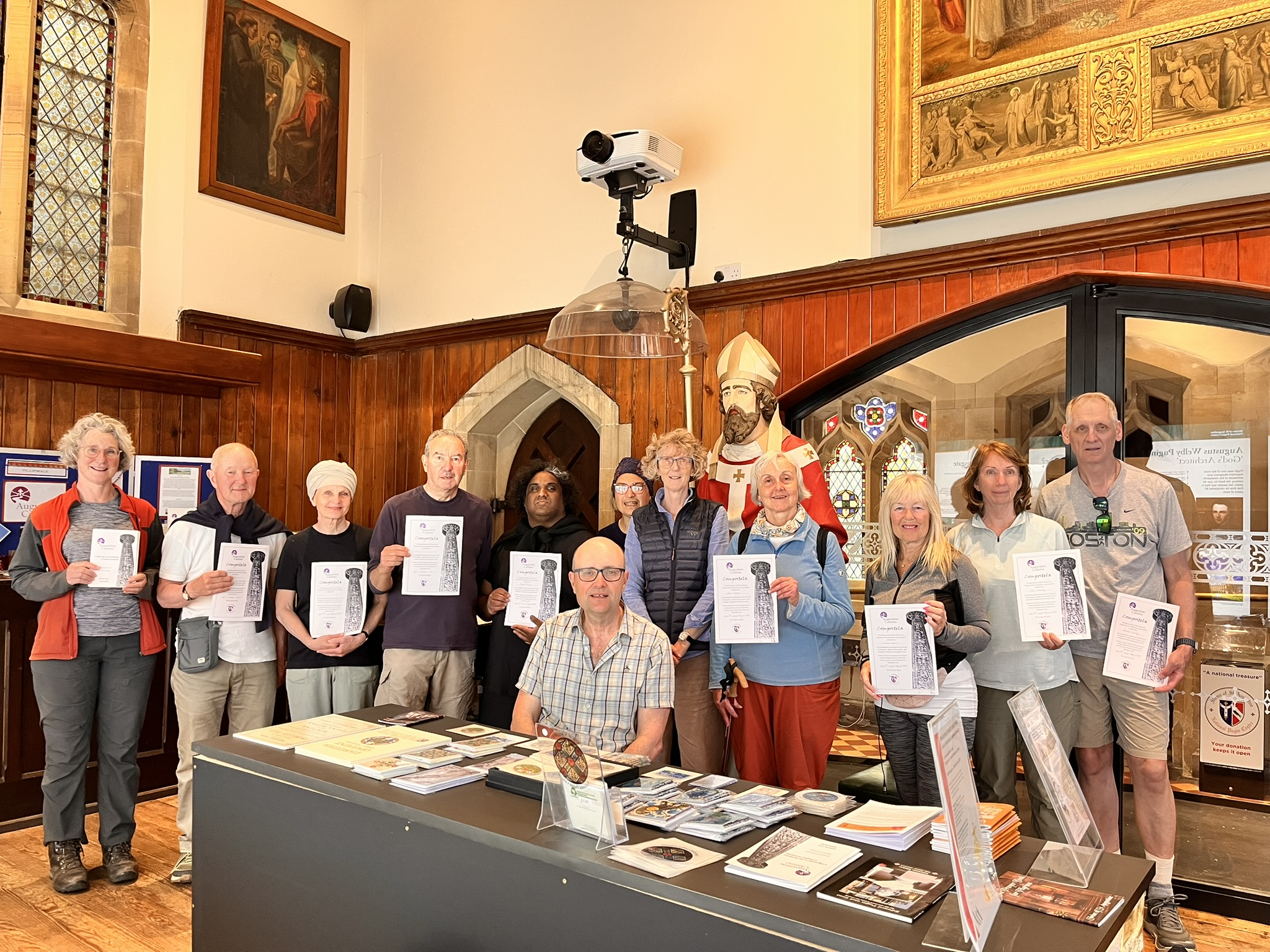
Like the famous Camino de Santiago in Spain, pilgrims can qualify for a “Compostela” — a certificate to show one has completed a major part of the pilgrimage, and the pilgrim can even put them towards a later pilgrimage to Santiago.
The testimonies the Register received from pilgrims were overwhelmingly positive, as are those on the pilgrimage website. American Pamela Kennedy from Virginia, who recently completed the camino with her husband Michael, said that Kelly “made sure everyone was well cared for” and that she would highly recommend it.
“Augustine’s mission to England has intrigued me, and my motivation for this trip was to learn more and explore this area of England,” Kennedy told the Register. She noted that England’s conversion to Christianity “directly impacted” the history of her own country — a view that accords with Church historians who contend that had St. Augustine not taken up the mission entrusted to him by Pope St. Gregory the Great, Christianity in the West would have looked quite different and might not have spread to the United States, or at least not in the way that it did.
Kennedy recalled several highlights of the pilgrimage, including the Rochester and Canterbury cathedrals, as well as the small churches in villages along the way. “At each of these places of worship, a person could breathe in and sense the persons who had worshipped there before for hundreds of years,” she said. “It brings a sense of depth, history and connection to our faith.”
Pete and Maryanne Christensen, both 70 and parishioners at St. Elizabeth Anne Seton Catholic Church in Arlington, Virginia, also walked the Augustine Camino earlier this year. Inspired to go on pilgrimage since watching the 2010 movie The Way starring Martin Sheen, they had already completed several pilgrimages over the past four years, including the 520-mile Camino Francaise from southern France to Santiago de Compostela in 2023.
Grateful for Kelly’s guidance, they treasured “many highlights” of the Kent camino, not only the great cathedrals and other holy sites but also the fact that in the “heart of every village or town was a beautiful church that was likely the gathering place for that community for over a thousand years.” Attending Masses along the way, including at the Carmelite priory at Aylesford and at the National Shrine of St. Jude in Faversham, they noted how many of the ancient churches they visited were originally Catholic but are now Anglican.
Passing Boxley Abbey, a Cistercian abbey in West Kent dissolved by Henry VIII in 1538 and now a ruin, the Christensens said in a joint email, one could “almost feel in the air the fabric of a once-active Catholic community” as they pondered the “impact those communities must have had on the local people, the economy and what they would look like today if they had not been dissolved.” They were also struck by the devastating impact of the two world wars on the populace of a typical English village — especially poignant for them, as some of their immediate ancestors served in the military in England during the two wars.
Canterbury, they said, was “particularly rewarding,” especially its renowned daily Evensong, and visiting St. Dunstan’s Church, which is not only home to St. Thomas More’s head relic, but also the resting place of his devoted eldest daughter, Margaret Roper.
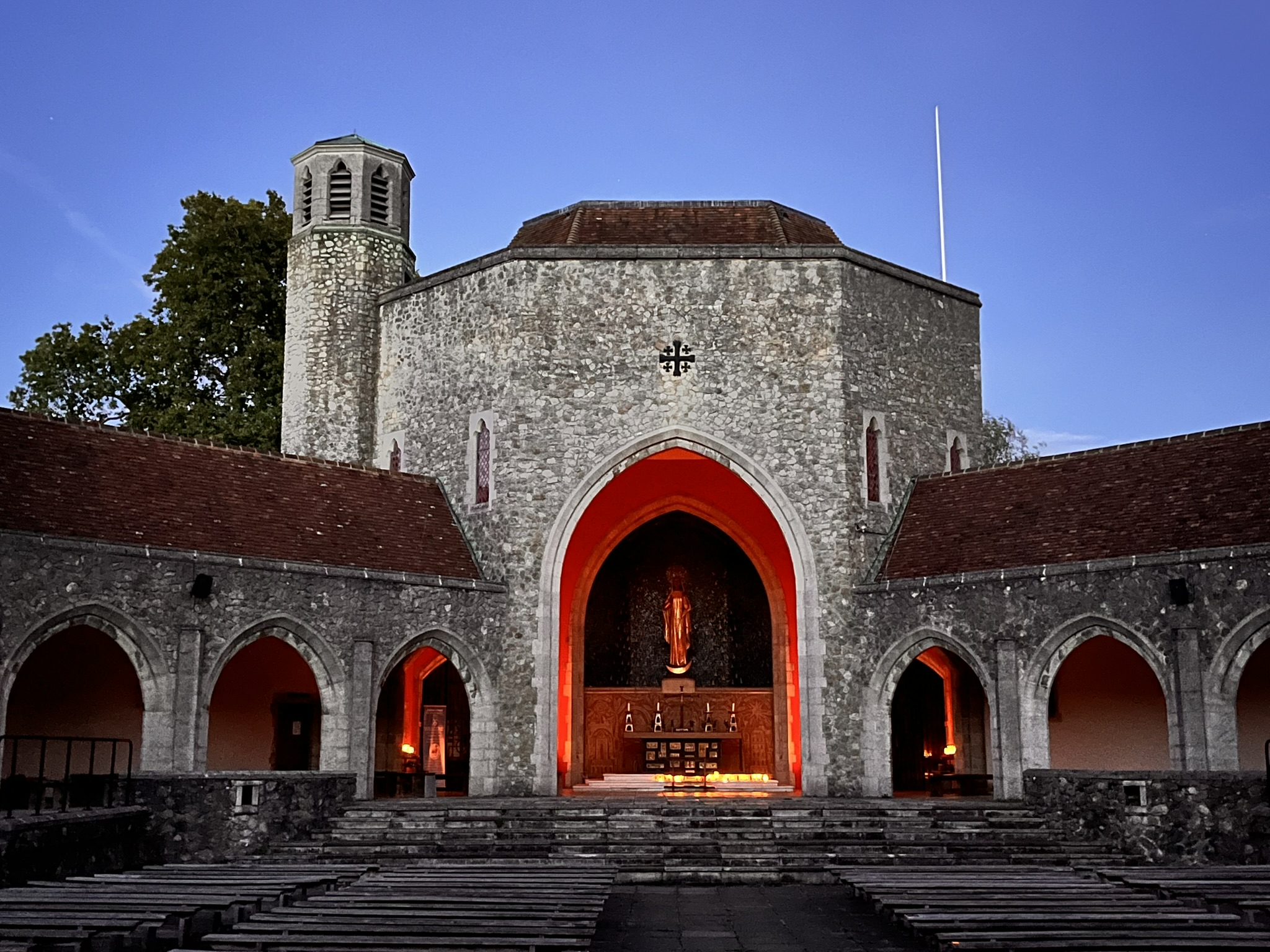
Walking any camino is a “physical expression of faith,” the Christensens said. “You ask God to walk with you, and every step becomes a prayer. The more you walk, the more you grow in faith and the more grateful you become for the blessings of this life and the next.”
Ana Maria Ansanelli, also an American pilgrim, praised the Kellys for their knowledge and interesting talks and said “all the places we visited had something to teach us.” Ansanelli said she slept in two churches along the way. “The floor was really cold but despite that I felt like home, protected and somehow safe,” she said.
Kennedy said she spent one night in a priory and another in a convent and praised the hospitality at both. She would have liked more interaction with the friars or sisters, but thought their schedule possibly precluded that.
“I got sad when I finished the walk,” said Ansanelli, adding that like many pilgrims of old, she found “a great sense of togetherness and serenity that I cannot find in our busy world.”
The Way of St. Augustine
A shorter pilgrimage route, able to be completed in one or two days, is the 19-mile Way of St. Augustine that traces the sixth-century saint’s footsteps from Ramsgate to Canterbury. The route, which passes St. Augustine’s Cross where the missionary is believed to have met King Ethelbert of Kent to begin his evangelization of the English, grew out of the establishment of the Shrine of St. Augustine in 2012 by its then-parish priest and now rector of the Beda College in Rome, Canon Marcus Holden, and English Church historian John Coverdale.
The Way of St. Augustine shares almost the same Ramsgate-to-Canterbury route as the Augustine Camino apart from a few extra attractions in the latter that Kelly says include “some spectacular stained-glass windows” in towns close to Canterbury.
Kelly told the Register that groups adhering to the traditional Roman Rite also “make regular use” of the two Augustine caminos and include members of the Marian Franciscan Order who walk the route every July and the English chapter of the annual Chartres pilgrimage.
In 2021, a group of English Dominican friars walked the entire Augustine Camino, beginning in Ramsgate and then continuing on to Oxford via London. Their spiritual trek of just under 200 miles to mark the 800th anniversary of the death of St. Dominic was recorded in daily despatches for the Register.
One of the pilgrims, Dominican Father Samuel Burke, said among the highlights was honoring the many saints along the way, such as St. Simon Stock, the creator of the brown scapular devotion. “Visiting places in the lives of the saints brings us closer to them,” he said. “It helps to understand their circumstances in which their sanctity and their humanity was borne out.”
Father Burke, who now serves as a Royal Navy chaplain, stressed that to go on pilgrimage is an important witness to others, especially in today’s increasingly secular society, adding that it challenged him as a Dominican to leave the people he met “closer to Christ.” He therefore encouraged Catholic pilgrims to be “explicit and courageous in explaining their motives and purposes.”
“A pilgrimage should not be merely an act of self-discovery, even if one might hope for elements of that,” Father Burke said. “It should be outward looking, missionary and inviting, so as to make good Christ’s mandate to preach the Gospel.”
But overall, Father Burke said pilgrimages are “like a microcosm of our earthly pilgrimage more broadly” and act as a “symbolic ascent and assent” toward God.” They challenge you, sometimes as a penance of spiritual remedy, to simply put one foot in front of another in faith.”
“I defy anyone to embark upon such a journey with vigour and not see fruit in their spiritual lives,” he said. Quoting St. John Henry Newman, he added: “Keep thou my feet; I do not ask to see the distant scene; one step enough for me.”
Pete and Maryanne Christensen offered the following advice for prospective pilgrims hoping to complete the Augustine Camino:
- If you are considering walking a camino and have never done so, then the St. Augustine Camino is a great start. It is short, relatively flat, and countryside is beautiful.
- If you need an extra day for rest, take that day in Canterbury. There is much to see.
- We recommend long pants and hiking poles. Some of the pathways have brambles. The long pants protect you and the poles help you move them out of the way.
- You must have a good mapping application, and the Augustine GPX File is essential. In several cases we needed to use a high resolution to avoid heading down the wrong path.
If you need help planning your camino, we highly recommend Andrew Kelly. Our experience was excellent because of his hard work.
