

Pontifical Latin Mass Returns to St. Peter’s After Landmark Weekend of Traditional Catholic Events| National Catholic Register

ROME — Thousands of faithful from all over the world took part in a solemn pontifical Mass in St. Peter’s Basilica, celebrated by Cardinal Raymond Burke on Saturday, the culmination of a traditional Rome pilgrimage that saw its best-ever attendance.
Part of the annual international “Summorum Pontificum Pilgrimage to the See of Peter,” which began in 2012, the pontifical Mass was suspended in 2022 following Pope Francis’ apostolic letter Traditionis Custodes (Guardians of the Tradition) the preceding year, which had led to sweeping restrictions of the traditional Roman Rite.
But in what has been called a “breakthrough” pastoral response, Pope Leo XIV gave permission for the pontifical Mass to go ahead this year — a gesture widely viewed as a pivotal moment in the Vatican’s approach, reflective of the growth in attendance of traditional Roman Rite liturgies around the world and a strong backlash against the restrictions.
It followed a letter sent to Pope Leo after his election signed by some 70 traditional Catholic groups asking, among other things, for permission to celebrate the Mass as part of the annual pilgrimage to Rome.
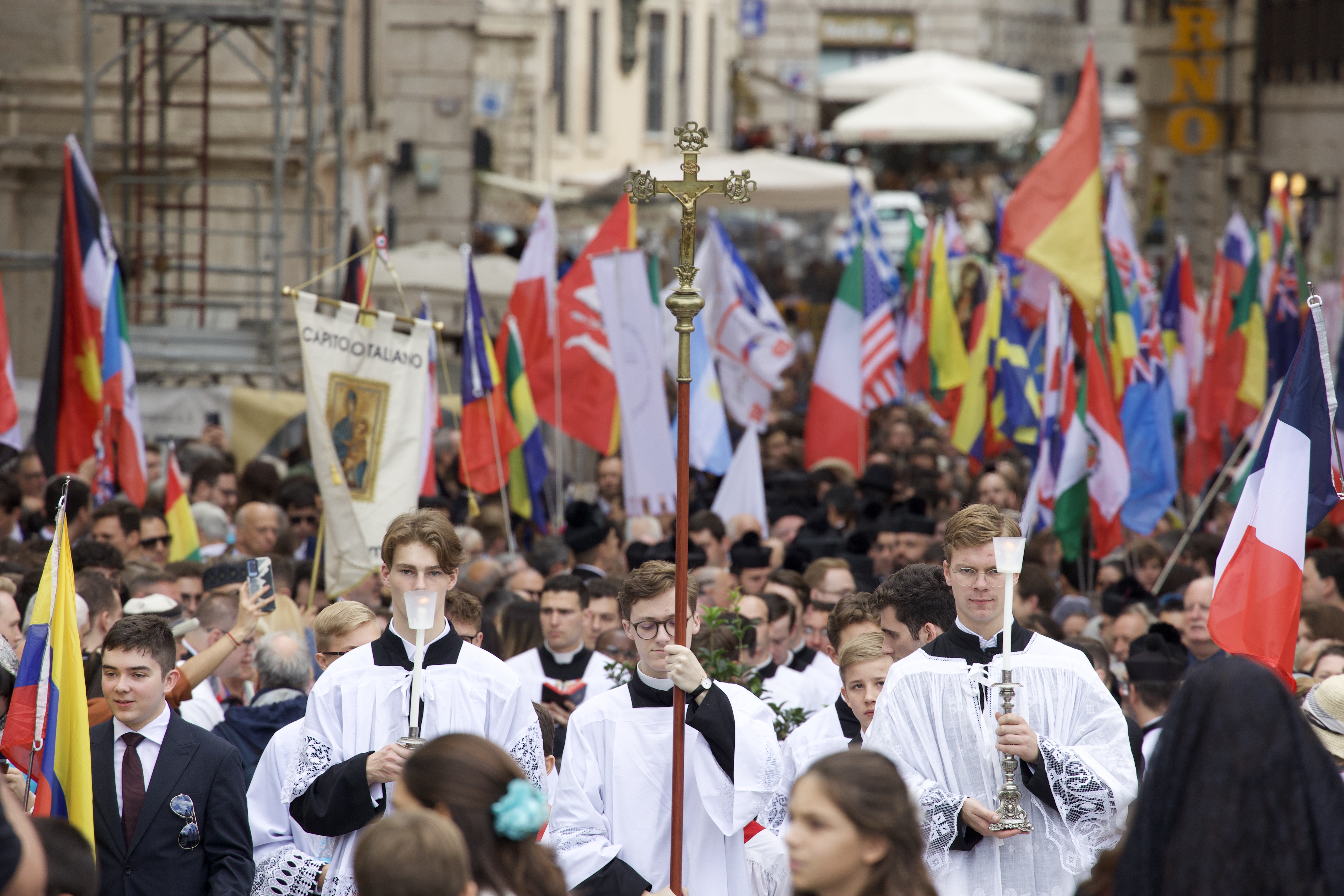
An estimated 3,000 to 5,000 pilgrims, many of them young families, attended the Mass — numbers so large it took the organizers and the Vatican by surprise, leading to a large number of faithful being blocked from entering the basilica and unable to take part in the Mass, although the basilica officials “tried their best to accommodate them,” a pilgrimage organizer said. Most pilgrims entered by joining the customary mile-long procession that began just across the Tiber River opposite Castel Sant’Angelo and made its way toward the Vatican, along the Via della Conciliazione.
Highlighting in his homily the “immeasurable love” of the Lord and the unceasing love of the Immaculate Heart of Mary, Cardinal Burke drew attention to the widespread rebellion against the Lord’s “good order and peace.” The remedy, he added, can be found in undertaking Our Lady of Fatima’s instructions, such as the First Saturdays devotion, and through sound worship in “communion with Christ the King.” (In the traditional calendar, the feast of Christ the King is celebrated on the last Sunday of October.)
Addressing the subject of the traditional Roman Rite, Cardinal Burke noted it had been 18 years since Pope Benedict XVI promulgated his motu proprio Summorum Pontificum, which “made possible the regular celebration of the rite of the Mass according to this form used since the time of Pope St. Gregory the Great.”
Pope Francis abrogated Benedict’s 2007 decree in Traditionis Custodes on the grounds that it had failed to foster unity in the Church — a disputed claim, especially after it later emerged it had been based on misrepresented data about bishops’ opinions.

Privilege to Participate
“Privileged to participate in the Holy Sacrifice of the Mass today,” Cardinal Burke said, “we cannot help but think of the faithful who, throughout the Christian centuries, have encountered Our Lord and deepened their life in him through this venerable form of the Roman Rite. Many were inspired to practice heroic sanctity, even unto martyrdom.”
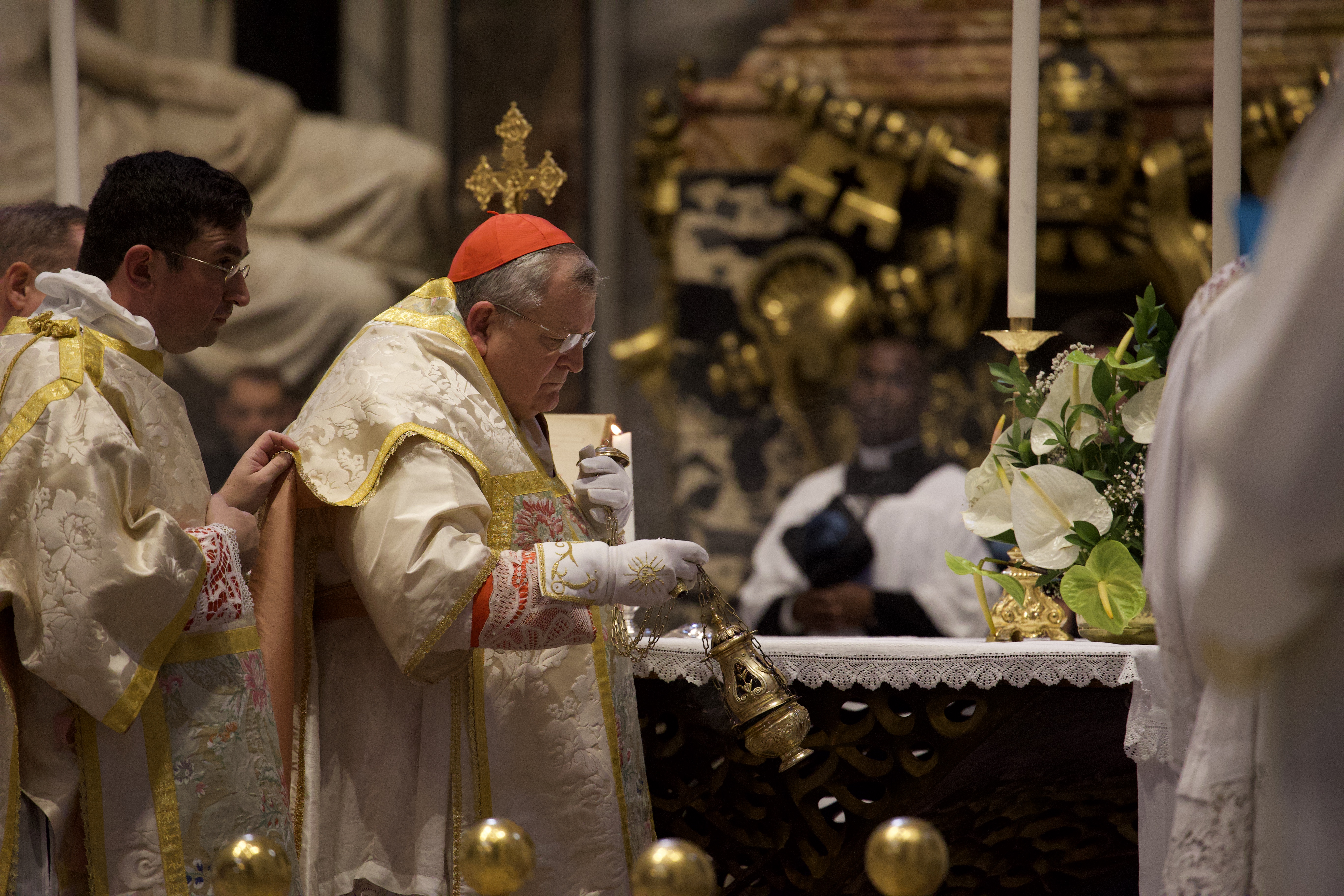
The cardinal pointed out that the old rite, also called the Usus Antiquior, had inspired the faithful to “keep our gaze fixed on Jesus,” especially in responding to a vocation, and he thanked God for how the “venerable form of the Roman Rite” had deepened the faith of so many and helped them discover the “incomparable beauty” of the sacred liturgy.
“Witnessing now the great beauty of the rite of the Mass, let us be inspired and strengthened to reflect that beauty in the goodness of our daily living under the maternal care of Our Lady,” he said.
During the Mass, Cardinal Burke made a point of saying a special prayer for Pope Leo XIV in the Collect, in gratitude for his concession to allow the pontifical Mass to take place.
At the close of the Mass, Cardinal Ernest Simoni, 97, took to the lectern on his own initiative and performed an exorcism, reciting by heart and in Latin the full exorcism prayer of Pope Leo XIII to St. Michael the Archangel. The sacred act of deliverance came in the wake of the Pachamama scandal, the admission of LGBT activists into the basilica as part of Jubilee celebrations, and two recent desecrations of the basilica’s altars.
Many considered it fitting that Cardinal Simoni performed the exorcism. The Albanian cardinal, elevated to the cardinalate by Pope Francis in 2016, was persecuted for many years under communism, suffering imprisonment, torture and harsh conditions, during which he would perform several exorcisms a day.
Reactions to the Mass were highly positive. John Egan from New York told the Register it was “really so special” for the pontifical Mass to be celebrated again “at the throne of St. Peter and so close to Peter’s bones.” The basilica was so crowded he couldn’t see the Mass, “but I could hear it all, and I knew I was exactly where I was meant to be for that Mass — it was a great blessing; I’m really happy.”
Father Matthieu Raffray, a priest of the traditional Institute of the Good Shepherd, said he believed it marked a “turning point” for the future of the Church in the West, adding that “when something works in the Church, and when it’s really Catholic, you don’t have to fight it — you have to support it, and maybe give it some direction.”
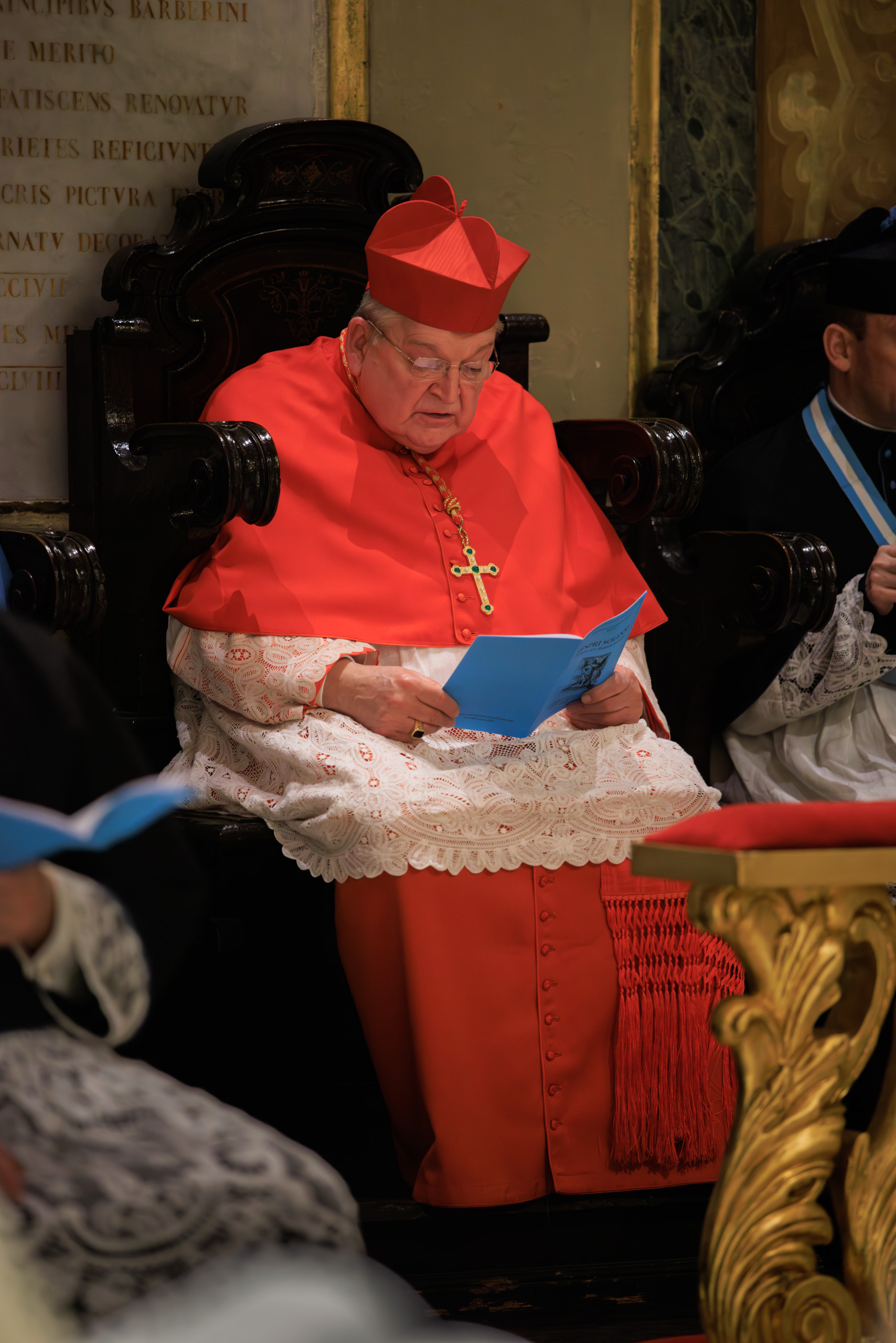
A day earlier, Cardinal Matteo Zuppi of Bologna celebrated pontifical vespers on the traditional feast of St. Raphael the Archangel at the Roman Basilica of St. Laurence in Lucina. That, too, was filled to overflowing, with faithful filling the aisle and the portico outside.
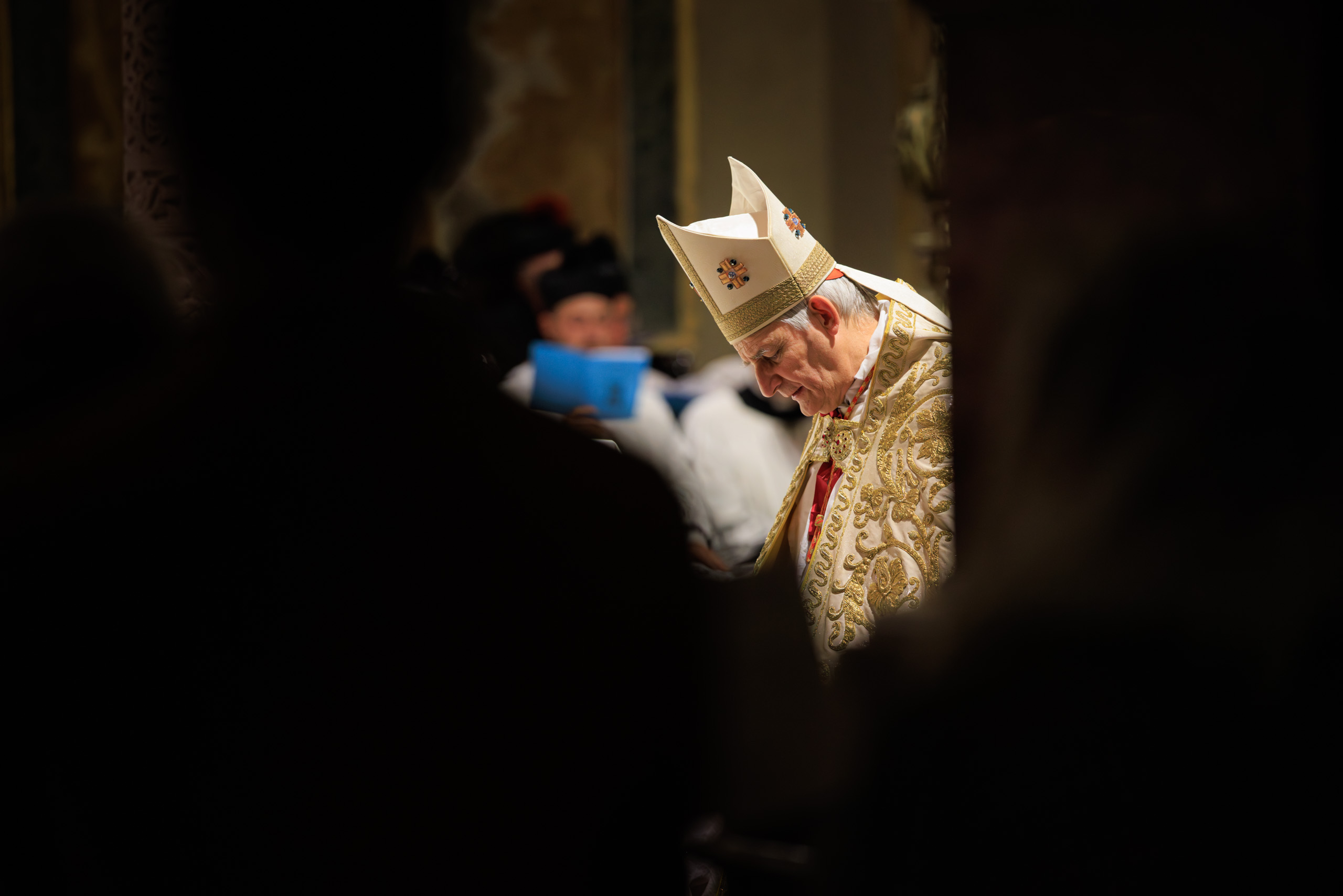
In his homily, Cardinal Zuppi stressed the importance of seeing Communion as a gift of the Holy Spirit, fostering unity and not making us “equal, nor uniform, but united and obedient to the Lord.” He warned against approaching Communion with “our own set of conditions,” or “only if it meets my expectations,” because then it would “not be Communion but convenience, opportunism.”
Powerful Sign of Unity
Cardinal Zuppi, who is also president of the Italian bishops’ conference, is viewed as a strong proponent of the previous pontificate and so his participation was taken as a powerful sign of unity. Father Raffray, who assisted at the vespers in the sanctuary, observed that Cardinal Zuppi spontaneously went over to warmly greet Cardinal Burke, who was also present at vespers, and at the end of the liturgy. Cardinal Burke is known for having often respectfully criticized the Francis pontificate.
“It wasn’t in the schedule, but you could tell they were so happy to be together and that it was an honest and authentic exchange,” Father Raffray said. “It was as if they were saying: ‘We’re all in the same Church, we worship the same Jesus Christ, and we’re here for the future of Western civilization.’ I think that was something fantastic.”
Earlier in the day, the pilgrimage held its annual conference at the Augustinian Patristic Pontifical Institute close to St. Peter’s Square. That, too, was well attended, and included talks by Korantin Denis on a new and highly successful traditional pilgrimage he helped found in Brittany, France, that has grown from just 120 pilgrims to 2,200 in eight years, and a testimony given by Pietra Bertolazzi, a young Brazilian mother who converted — in the face of opposition from her family and friends — from New Age beliefs to the traditional Mass.
The conference also heard from Eduardo McGregor, a young Spanish convert to the faith who spoke about his conversion. “Any true restoration of the Church and Christian culture, any true restoration of what the West once wanted to be and was, inevitably passes through the narrow gate of the old and venerable tradition, the traditional liturgy,” he said.
The events, and particularly the pontifical Mass, also received prominent coverage in the secular press, including The Associated Press, The New York Times and many Italian outlets. Italy’s leading prime-time news program, TG1, also carried the story.
Speaking to the Register at the end of the weekend events, Marco Sgroi, an Italian lawyer and a member of the event’s organizing committee, said he believed the event’s success, after four years of restrictions, was “a clear demonstration of the failure of Traditionis Custodes and the fact that unjust persecution always produces the opposite effect.”
Return to Realism
Msgr. Nicola Bux, a priest of the Diocese of Bari and a former consultor to the then-Congregation for the Doctrine of the Faith, told the Register he thought the pilgrimage “seems to mark a return to realism on the part of the Holy See, in the sense that it acknowledges the continued celebration of the ancient Roman Rite in many dioceses of the Catholic Church.”
He added: “Pope Leo appears willing, as soon as possible, to address the issue already considered, and to some extent set on a path toward resolution by Pope Benedict, with the Summorum Pontificum.”
Msgr. Bux believes the Pope’s approach “could be one of listening and dialogue, with the aim of fostering a clearer acceptance of the coexistence of the two forms of the single Roman Rite, once it is ensured that this does not endanger but rather enriches Catholic unity.”
Christian Marquant, president of Paix Liturgique and the lead organizer of the Summorum Pontificum pilgrimage, said: “We are very grateful to the Holy Father for allowing the Pontifical Mass. I believe it marks a turning point and a fatherly sign that the traditional Roman rite may be allowed the freedom and the peace to prosper and bear its spiritual fruits in the future.”
