

ROME — As the universal Church celebrates the gift of the new Pope, there is one university in Rome where the joy is felt a little more deeply: Pope Leo XIV’s alma mater.
The Pontifical University of St. Thomas Aquinas — also known as the Angelicum — is not only the alma mater of Pope St. John Paul II, but now also of Pope Leo XIV.
The latter’s studies there could tell us something about how he will shape his pontificate and lead the Church, faculty and students say.
“For our university, it’s just an unspeakable honor that we’ve been involved in the formation of two of the last four popes,” Dominican Father Thomas White, rector of the Angelicum, told the Register. “I think we’re still just trying to get our mind around the mercy and the unmerited grace of that confirmation that we are at the service, the formation of the personnel of the Church.”
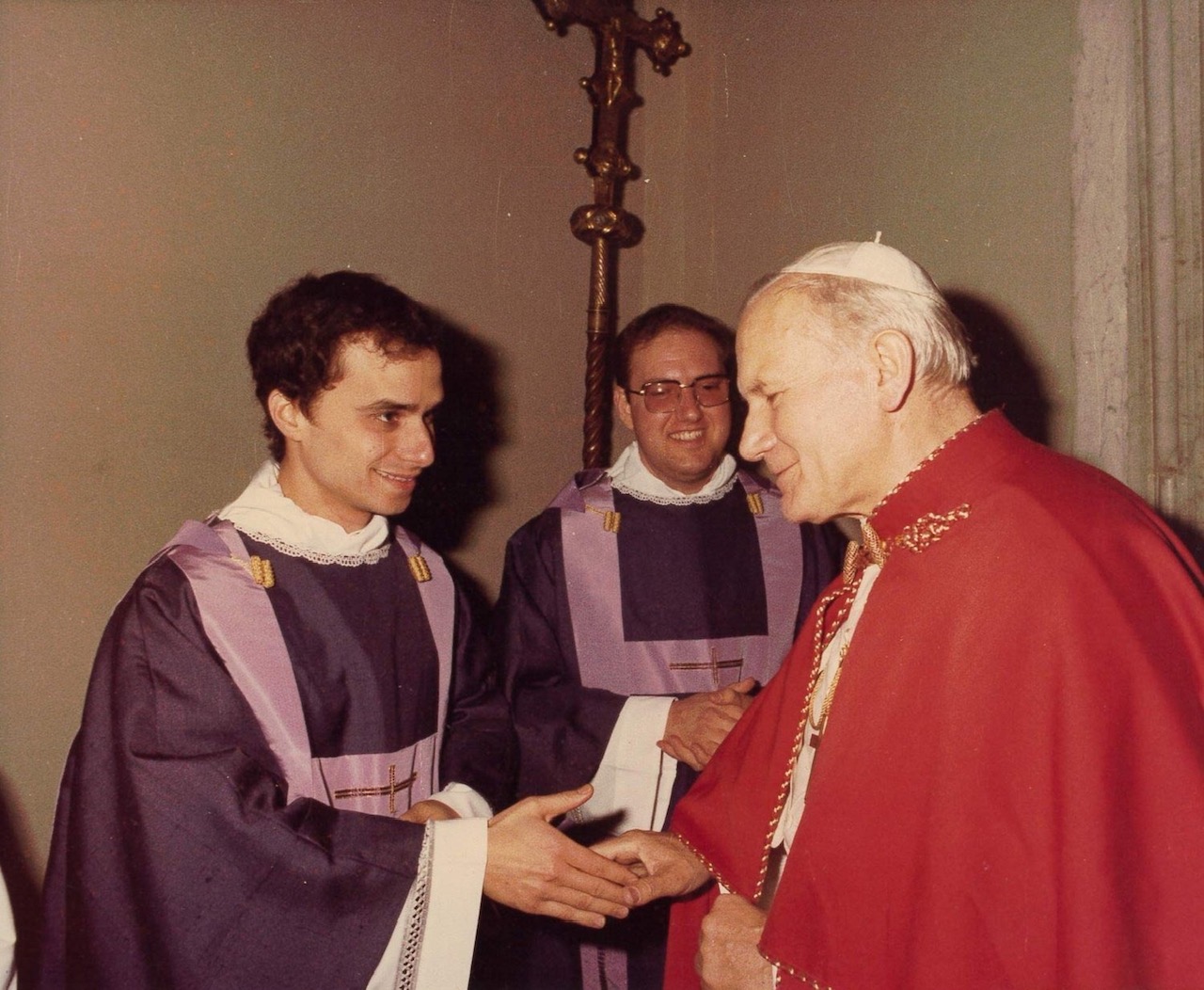
Before becoming Pope Leo XIV, Augustinian Father Robert Prevost studied at the Angelicum between the years 1981 and 1985, earning both a licentiate and doctorate in canon law.
In 1987, he successfully defended his doctoral thesis on “The Office and Authority of the Local Prior in the Order of Saint Augustine,” where he explains, Father White said, how “the prior is supposed to refer himself to Christ and to the Rule and cultivate a selfless way of life for the service of the common good of all.”
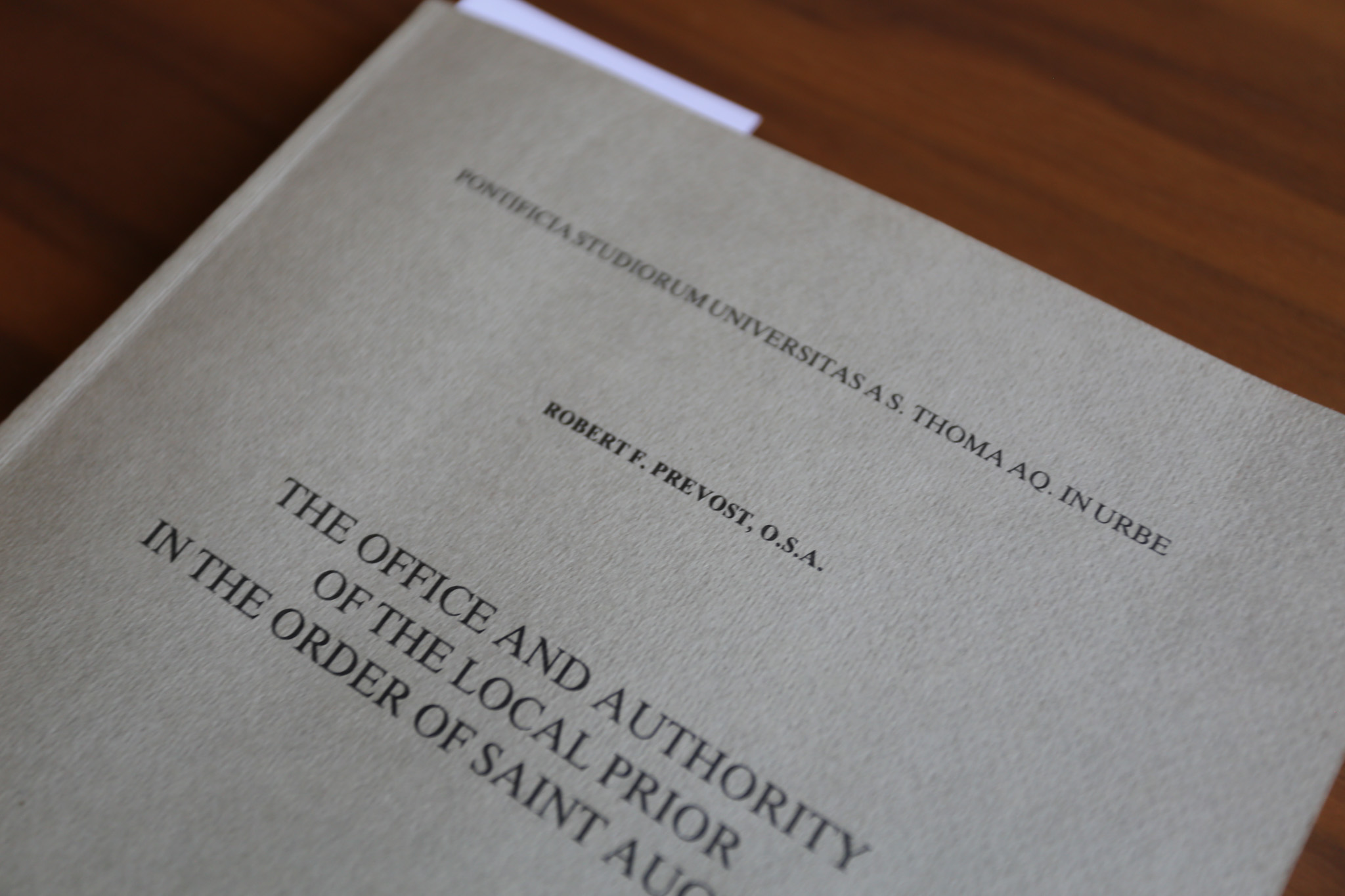
“I have been reading his thesis,” Father White shared, “and it’s a really mature work of a 30-year-old who’s extremely learned, very well read and deeply thoughtful and spiritual, reflecting on obedience and authority in the Catholic Church.”
While the doctoral thesis focuses on the prior, the Augustinian Rule and the Augustinian friars’ community, Father White explained that “the vision could be extended up into the episcopacy in principle, or up to the papacy.”
“So,” he added, “it’s really interesting how God prepared him for this kind of task of being a leader in the Catholic Church.”
“This is one of those people who helps you see the important impact that the Roman universities and Roman institutions have, the role they play in preparing future leaders, and, you might say, ‘cultural protagonists’ who bring the Gospel out into the public life of the world. So, we’re very grateful for that.”
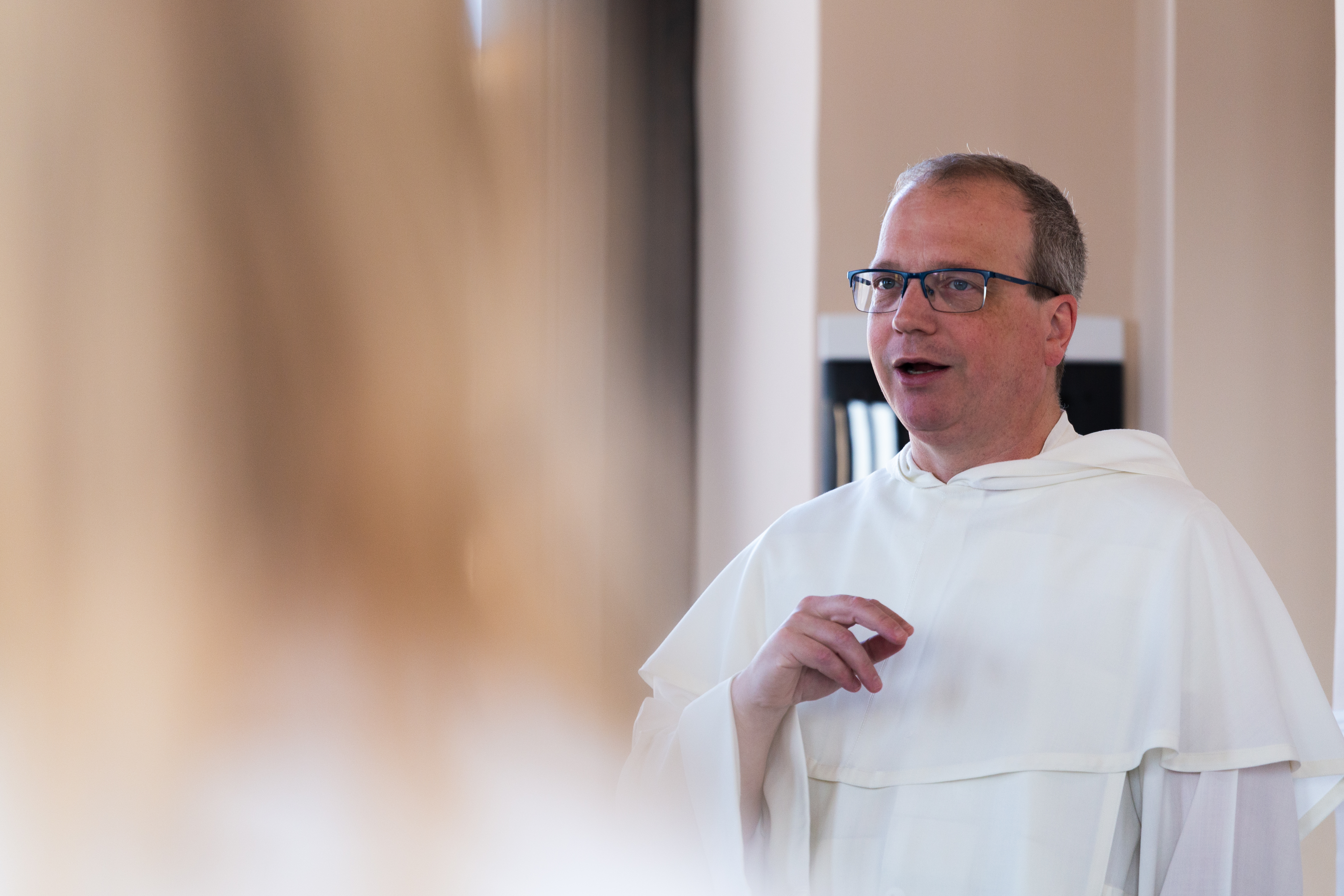
Students ‘Walking in the Footsteps of Giants’
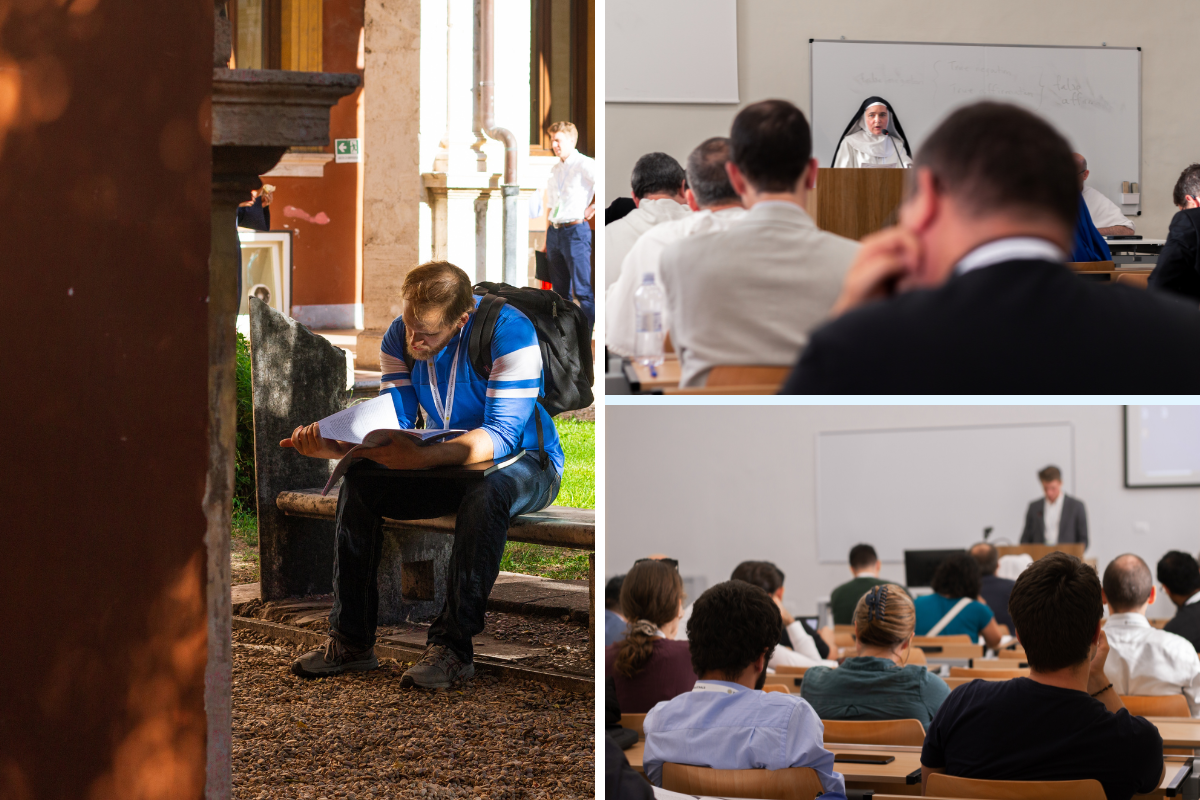
For the international community studying at the Angelicum, which was established in 1222 as the official Dominican studium conventuale (university) and grew into the Angelicum, the special connection to the new Pope has brought an added sense of excitement and pride.
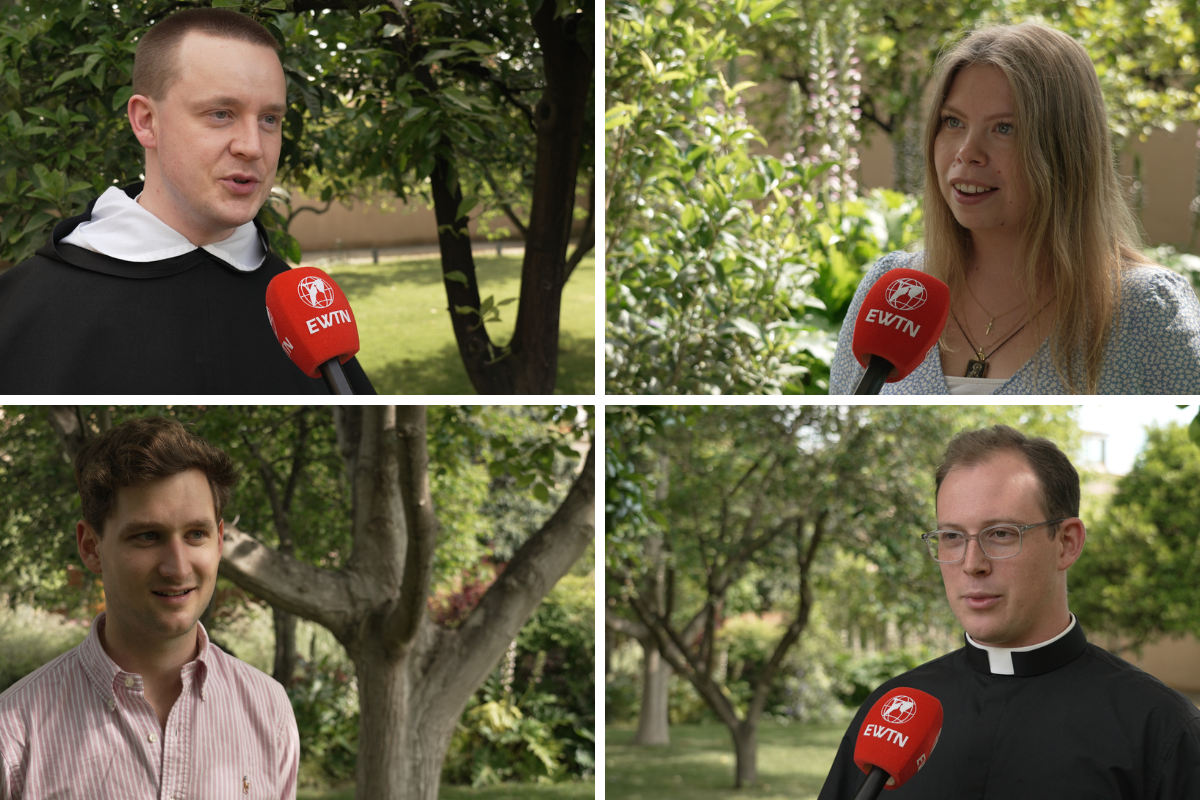
Dominican Father Chris Gault, a theology student from Ireland, explained that walking “in the same halls and the same classrooms” creates a very “tangible connection” between students and the Pope.
“It’s so surreal,” Father Gault told the Register. “But it’s also really exciting, and you feel a great sense of pride, that you are part of the same institution which has produced so many great theologians and hopefully saints.”
It is also, according to Father Gault, shows that “the Angelicum is really in the heart of the Church, committed to Catholic Orthodoxy and committed to the splendor of the light of Christ.”
Reed Robinson, a seminarian for the Diocese of Nashville, Tennessee, studying theology at the Angelicum, explained the blessing of studying at the Angelicum, where both Pope St. John Paul II and Pope Leo XIV studied.
“Walking in the halls of the Angelicum is like walking in the footsteps of giants, of these two men who became pope, were called to lead the Church.”
While most students are not studying canon law like Father Prevost did, Sofia Engstrand, a philosophy student from Sweden, emphasized how special it is to be receiving her formation in the same place as the Pope — and how it makes her all the more grateful for her studies.
“To think that our Holy Father received the same foundation and formation, the tradition of St. Thomas Aquinas and the thought of St. Thomas Aquinas, is just incredible,” she said.
No matter where they come from, students shared great joy in knowing they are walking in the footsteps of those who came before them, including those called to lead the Church, and in realizing that their own daily lives may not be so different from what theirs once was.
Engstrand said, “It also adds to in some way a personal connection to him, to just think: ‘When I get a coffee here, maybe he got a coffee here!’”
An Opportunity and Responsibility to Spread Pope Leo’s Message
For the international community at the Angelicum, the first Pope from the United States represents not just a historic milestone, but a reminder of the Church’s universal mission.
“The Pope seems very aware that he’s the Pope of the whole Catholic Church and is not tied to any sort of excessive nationalism, and I think that’s really important,” Father White stressed. “It’s an invitation to reconsider your own national identity in the light of Christ.”
While Rome is home to more than 20 pontifical universities and institutes offering ecclesiastical degrees in theology, philosophy, canon law and related disciplines to seminarians, clergy, religious and lay students from across the globe, the Angelicum is especially known for its comprehensive English-language degree programs, particularly in philosophy and theology.
“I do think, for us, it’s obviously an interesting opportunity, and I would say, actually, responsibility, as the bilingual or English-speaking institution with a lot of American presence, to help be a bridge to facilitate the dissemination of the message of Christ and of Pope Leo XIV to the world in Rome in a language which has, of course, a very important place in the wider culture.”
For students, the fact that Pope Leo is American is historic — and while his nationality holds little importance compared to the mission and task for the Church that lays ahead of him, they hope his linguistic abilities will bear rich fruit for the Church.
“We are a universal Church, so the nationality doesn’t mean that much,” Nicolaus von Brühl, a philosophy student from Germany, told the Register.
“But I know that when I grew up, there was a German pope, which was kind of a big deal for us. For me, especially throughout my studies, it has been a big deal because he spoke and wrote in German, in his mother tongue, in my mother tongue.”
Explaining that he expects the Pope to reach more of the American population, he stressed that “there is great hope with it,” since nowadays, “the American people have a great influence on Western society and culture.”
Noting that “for most people, if not their first language, it’s the second language,” Father Gault said, “the connection he can make on a worldwide basis — I don’t think that’s comparable to anything that went before.”
“I think all of these things happen in God’s providence. We needed a pope at this time who had English as his first language, and the connection that will make with Anglophones, to really galvanize them, I don’t think that can be underestimated.”
Not only did the Pope study at the Angelicum and speaks American English, but he “understands the cultural things like playing baseball as a kid, running cross country or even having a hot dog at a baseball game,” Reed said.
“So it’s just exciting that the man that has filled the seat, that has stepped into the shoes of Peter understands me in in a way that in the past they maybe hadn’t.”
Spreading the Thought of Aquinas
Reflecting on how Leo’s formation at the Dominican-run university may impact and help his papacy, Father White said — stressing that he can only speculate — that “there’s going to be a balance between being consultative and making final decisions.”
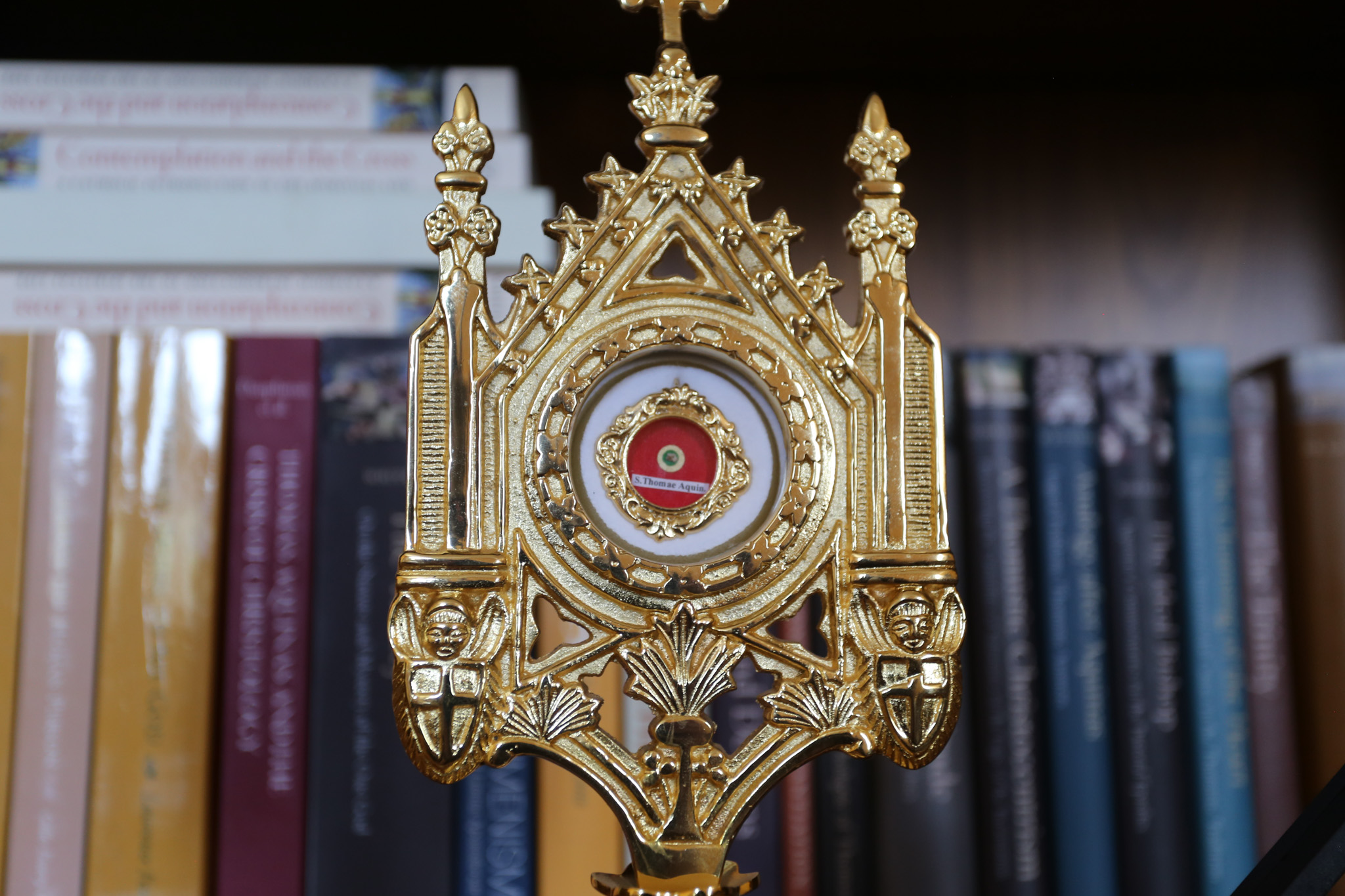
The choice of the name Leo XIV carries significant historical and symbolic weight. For both professors and students, it inspires hope that the new Pope also will — like his predecessor Leo XIII — be a strong advocate of Thomism and the Church’s intellectual tradition.
“Leo III in Rerum Novarum, which the Pope already made appeal to, does have a kind of a Thomistic vision of human nature and of human rights, natural rights and the dignity of the human person made in the image of God as the sort of center of focus for social doctrine. I think we’ll be seeing some of that, or hearing echoes of that as the Pope develops his teaching on social and political matters in light of human dignity.”
“I hope that the Pope will preach a little bit more of Thomism,” Von Brühl said, “and I hope that the Angelicum will gain even more students. I think that would be a great gift.”
