


Msgr. Chuck Kosanke had run out of options.
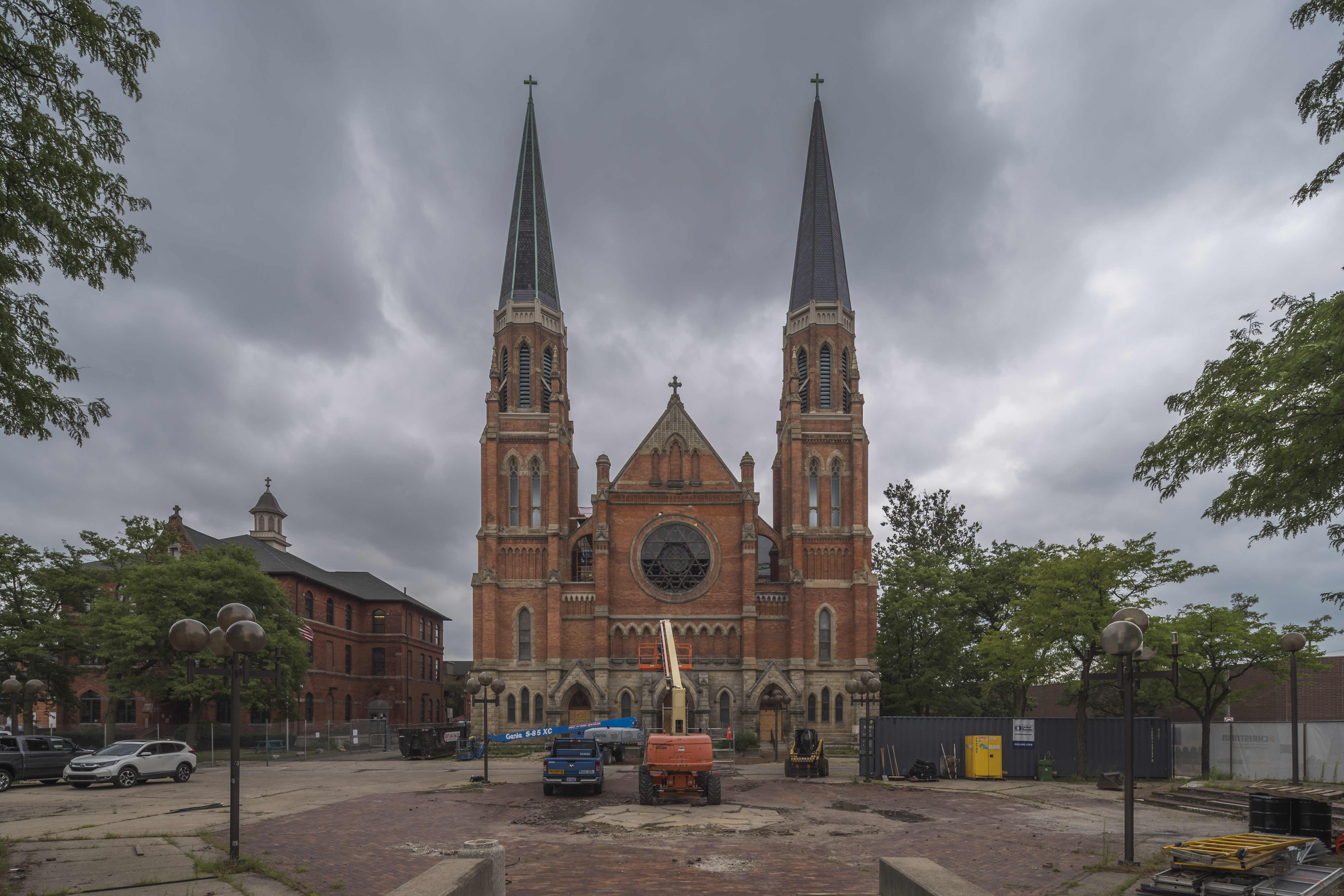
He had been sent as pastor to a parish now known as the Basilica of Sainte Anne de Détroit in 2016 to try to save the twin-spire, brick-and-stone Gothic-Revival church built in 1886, which, after years of deferred maintenance, was in tough shape.
He had experience with that sort of thing — his nickname in the Archdiocese of Detroit is “Mr. Fix-It” — but after trying everything he could think of, he had raised only about $5 million of a projected $26 million needed to restore the church. The parish, though growing, was poor and unable to contribute much.
Msgr. Kosanke felt he had gotten as much from outside donors as he could. Some prospects expressed skepticism that he could raise the amount needed, had concerns their money wouldn’t accomplish the goal, and told him to come back when he had a better plan.
“Now, even though I pray before the Blessed Sacrament every morning, I finally had to have a come-to-Jesus meeting with Jesus,” he told the Register, referring to a time in the spring of 2022. “So one morning I was discouraged because I didn’t see this going anywhere. And I just said to Jesus, ‘Look, if you want this basilica restored, you’ve got to do something.’”
About 10 minutes later, Msgr. Kosanke thought of Mark Pulte, a builder and vice chairman of the Pulte Family Charitable Foundation, whose father, the home-building entrepreneur Bill Pulte (1933-2018), had been a major donor to the Catholic Church and other charities.
That connection with the Pulte family led to an unusual offer: We’ll give more money than you asked for, but the Catholic Church can’t own the property.
And that’s what happened. About a year and a half ago, in March 2025, the Archdiocese of Detroit and a nonprofit organization called The Catholic Initiative announced that the Vatican had approved a unique arrangement: The archdiocese would transfer ownership of the buildings and grounds to the nonprofit organization, which would give the archdiocese a 200-year renewable lease to run the property as a Catholic parish for $1 a year.
The Catholic Initiative, which was formed by the Pulte Family Charitable Foundation in March 2025, agreed to provide $30 million for the restoration of the parish’s physical plant and another $20 million for an endowment to pay for future needs.
The property changed hands from the Church to the nonprofit in July 2025. The church building, which closed in January 2026 after the boiler failed, is scheduled to reopen in late 2027.
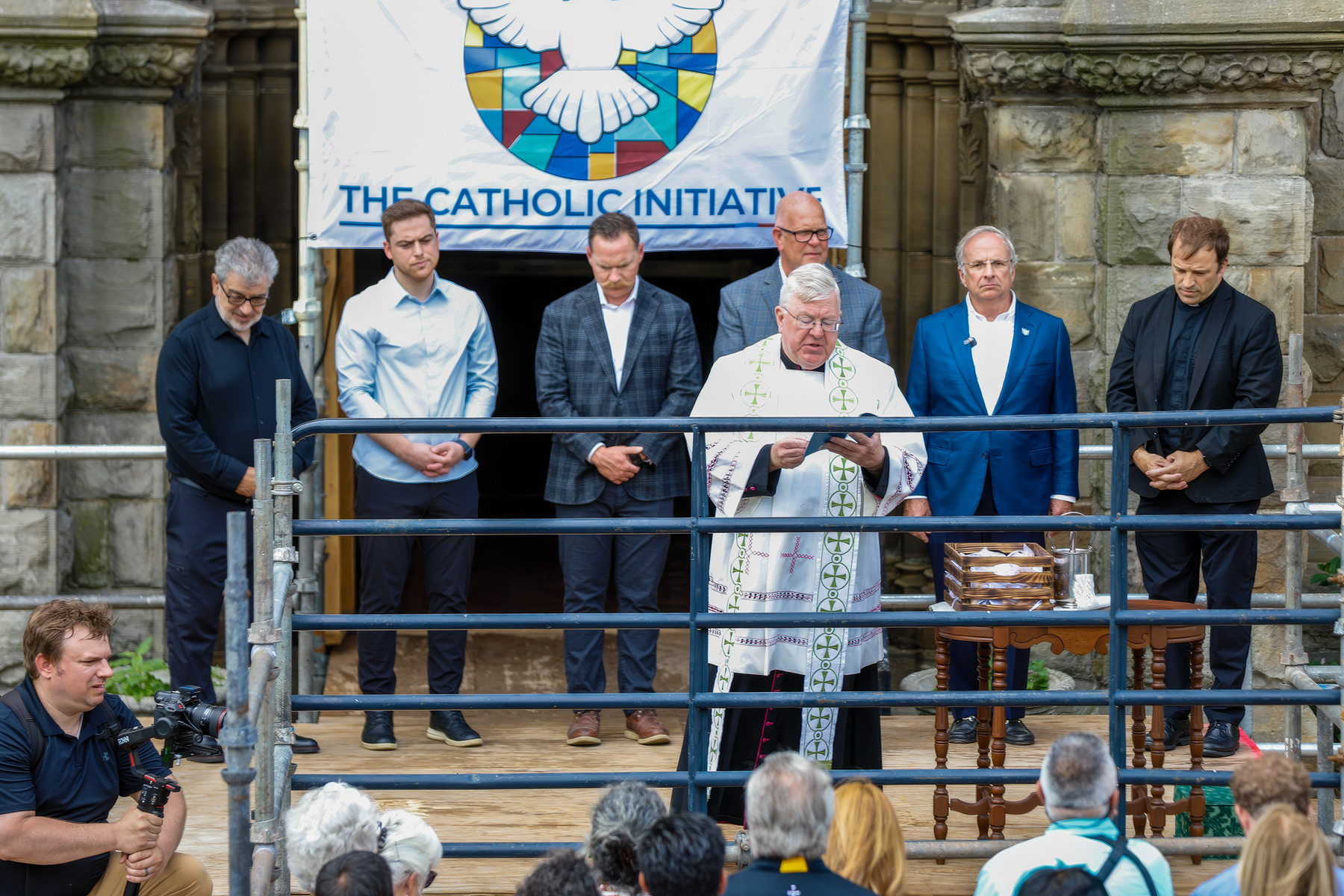
The arrangement is the first of a type that The Catholic Initiative hopes will help preserve “high-faith, low-funds” parishes in cities and make them what Kevin Doyle, co-founder and executive vice chairman of the nonprofit organization, calls “missionary hubs.”
The lay-owned model may also help overcome what Msgr. Kosanke told the Register are common objections he hears from wealthy Catholics: the perception that the Church “doesn’t manage money very well,” he said, and the concern that donations will be used to pay clergy sex-abuse claims or some other liability. On the flip side, he said, donors have more confidence in a large, well-established private charity that owns the property it’s raising money to restore.
Growing Parish, Reviving Community
Sainte Anne de Détroit was founded in 1701, the year the French founded the city, before it became part of the British Empire and, later, part of the United States. It is the second-oldest parish in continuous existence in the country (after St. Augustine in Florida, which was founded in 1565). The current church building, now 140 years old, is the eighth in the history of the parish.
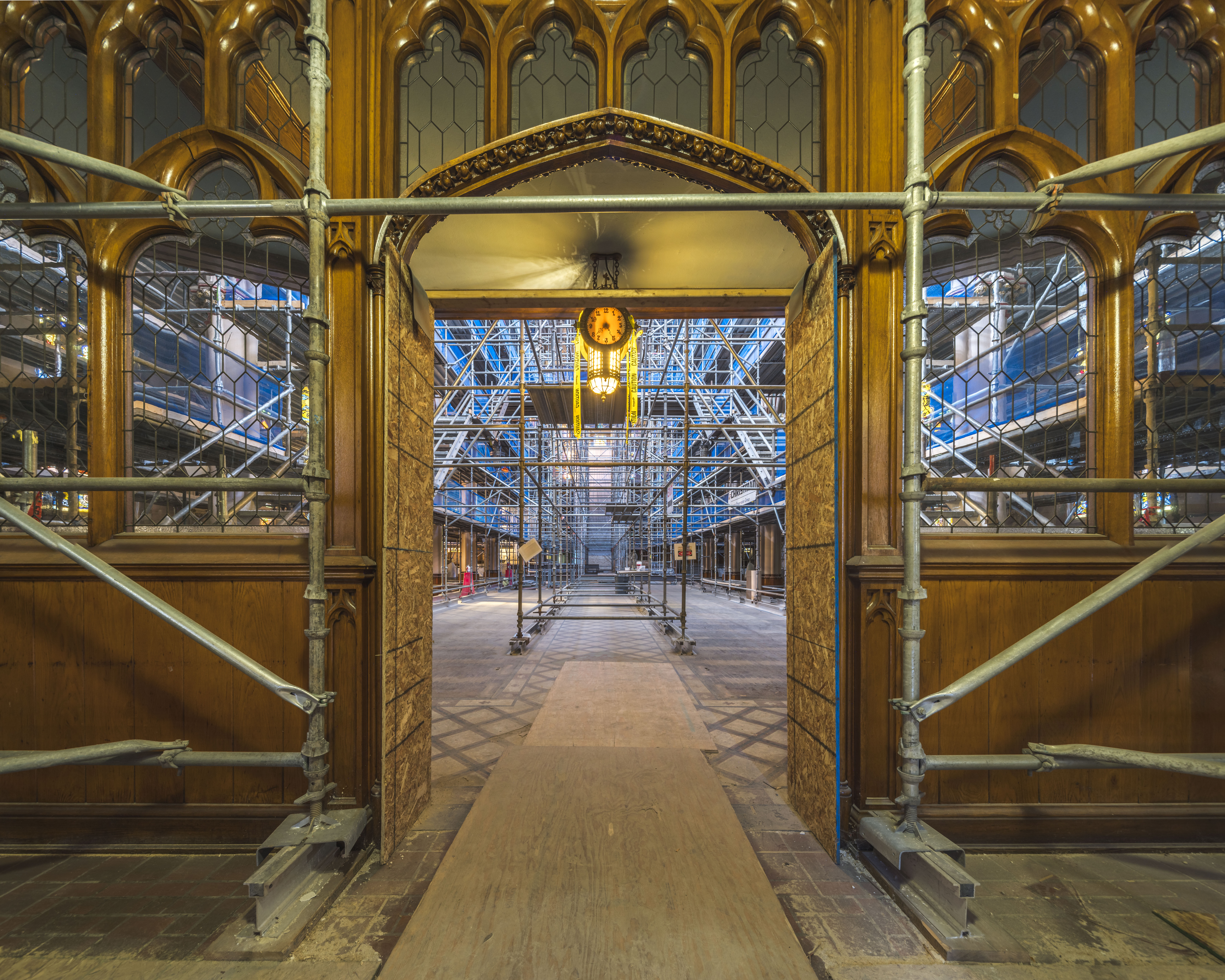
French Canadians built the current edifice, which is in the Mexicantown neighborhood of Detroit, a short distance from the Ambassador Bridge that spans the Detroit River and connects the city with Windsor, Ontario.
The parish, which was run by the Basilian Fathers from 1887 to 2012, served French and then Irish communities, along with some Germans and Poles. Since the 1940s, St. Anne’s has served primarily Latinos, most of them Mexicans.
The parish today consists mostly of Mexican Americans, recent immigrants and churchgoers who live elsewhere but are attracted by the church’s beauty, some of whom got married there and then started going to Mass at the historic church.
Gilberto Garza, 58, a finance council member and plumber who was baptized and confirmed at St. Anne’s and served as an altar boy there when he was growing up, described the way the light shines through its stained-glass windows onto the painted walls and ceilings as one reason St. Anne’s (before its temporary closure) regularly drew Sunday Massgoers from outside the neighborhood.
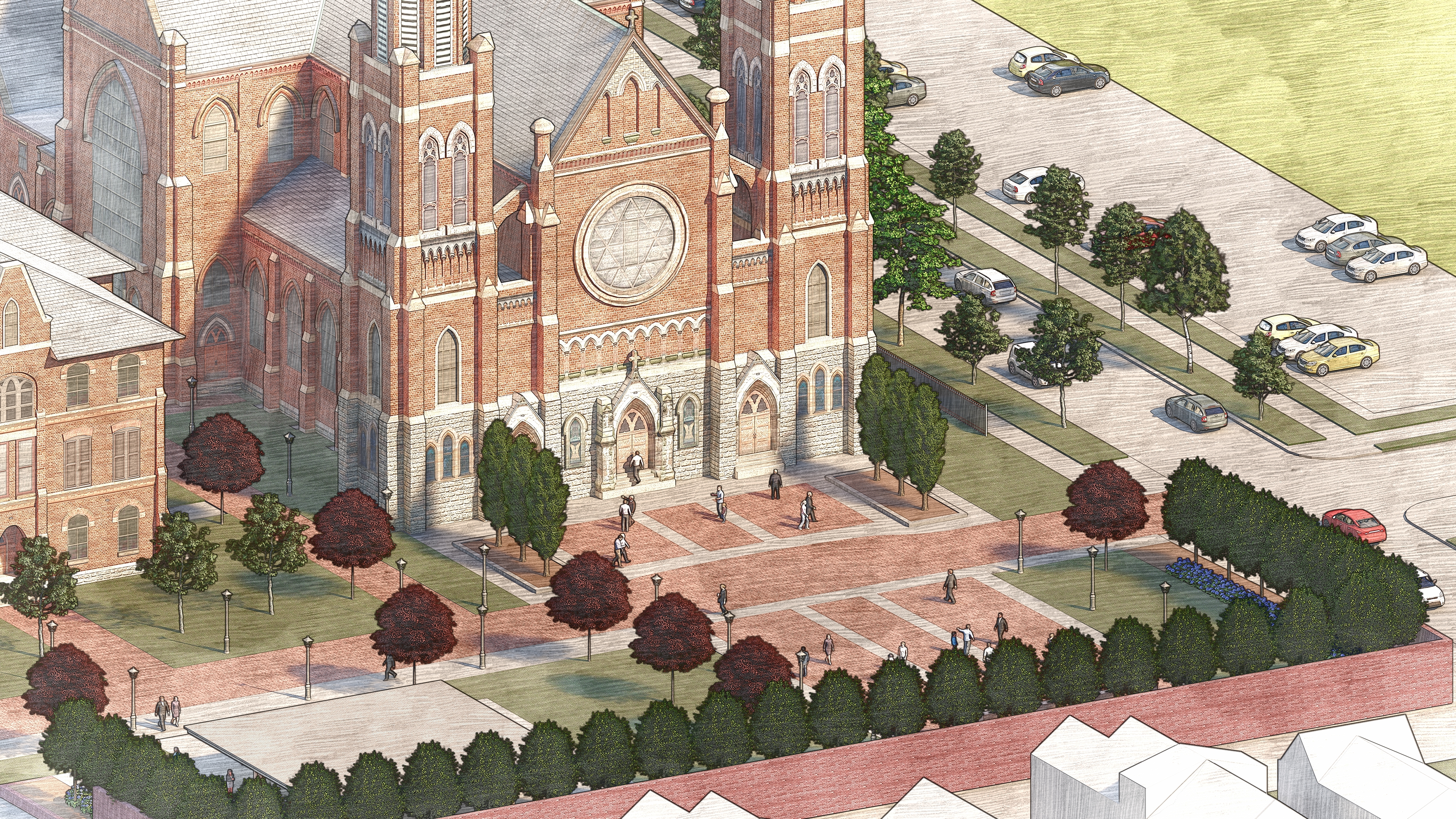
“It leaves you in awe,” he said of St. Anne’s — “Wow, how little you are compared to God.”
A key draw for The Catholic Initiative is that St. Anne’s is vibrant — the parish has grown from 500 families to 800 families during the past decade.
“We’re not interested in restoring museums,” Doyle said.
Another draw is the current revitalizing of the neighborhood, including Ford Motor Co.’s $1-billion acquisition and development of Michigan Central Station, a former railroad station that is less than three-quarters of a mile from the church.
“Not only are we investing in a historic basilica, we’re doing it in a critical Detroit neighborhood serving an important immigrant community,” said Damian Hermann, executive director of The Catholic Initiative.
Doyle said The Catholic Initiative is pursuing a comparable project elsewhere involving a parish church and school, which has been approved by Rome but not yet announced, and is in talks with two other parishes. He also said The Catholic Initiative has received inquiries from members of more than 100 Catholic parishes in the United States.
Not If, But When
The immediate reaction of many to the Detroit-basilica arrangement is skepticism — beginning with Archbishop Allen Vigneron, who at the time of the proposal was the metropolitan archbishop of Detroit. (He retired in February 2025.)
Msgr. Kosanke (who in July 2026 left St. Anne to become rector of the National Shrine of the Little Flower Basilica in Royal Oak, Michigan) told the Register that at one point the archbishop told him he wasn’t sure he wanted to transfer ownership of St. Anne’s to an outside entity.
“Well, let’s put this way: It’s not if you do, it’s when you do,” Msgr. Kosanke told the archbishop.
“He said, ‘What do you mean?’”
“I said, ‘Well, you can sell it now and have it restored and around for parishioners’ use for the next 200 years, or, within the next seven to 10 years, we won’t be able to use it, and then you can sell it to whoever you want to. So it’s not a question of are you going to sell it, it’s just to who and when,’” Msgr. Kosanke said.
Put like that, Archbishop Vigneron supported the arrangement. (The archbishop emeritus confirmed the substance of his conversation with Msgr. Kosanke through a spokesman.)
A Way Forward?
The Register spoke with three experts on Church matters who are familiar with the Detroit-basilica arrangement but not connected to it, all of them affiliated with the University of Notre Dame.
The Register asked all three about trusteeism, a system common in the U.S. Catholic Church in the 19th century in which local Catholics owned and controlled parish property and often fought with the local bishop over matters such as who should be the parish priest.
But the experts said they see significant differences in the Detroit arrangement because, under the Detroit agreement, the archbishop and the pastor run the parish, not the nonprofit organization that owns it. The agreement also includes a “reverter provision” that would revert ownership of the parish property to the parish under certain conditions, including if the lease isn’t renewed or if the nonprofit organization unreasonably withholds endowment money from the parish, Doyle told the Register.
Msgr. John Paul Kimes, a canon law expert and professor at Notre Dame Law School, said he doesn’t see any pitfalls.
“I think this model has a lot of protections in it for both the Church and the donor,” Msgr. Kimes said.
“I think it’s a fascinating model. I don’t know how easily it could be replicated, just because of the scale of things. Could it be done on a smaller scale? Sure, but it’s a lot of money,” he said.
John Meyer, executive director of the Church Properties Initiative at Notre Dame Law School, told the Register he was puzzled when he first heard about the Detroit arrangement to restore St. Anne’s, but added that when he studied it, he was impressed.
“And I found myself a believer in this model for these types of properties,” Meyer said.
He said it’s clear from the agreement that St. Anne’s “will always operate as a church,” because the Pulte family’s charitable organization has no ability to use it for anything else.
“However, the Pultes also know that the $30 million that they spent will go into repairing a beautiful basilica, that the endowment will ensure that that facility is constantly upkept, without having to put that burden on the population who’s already struggling as a parish financially,” he said.
Madeline Johnson, program director for the Church Properties Initiative at the Fitzgerald Institute at Notre Dame, told the Register she’s taking a wait-and-see approach, adding that she finds the Detroit-basilica arrangement intriguing.
“If there was a wholesale separation of the temporal goods of the Church from the hierarchical structure of the Church, I think that would be a sign that we’re not in the healthiest place overall. But I think it’s true that we’re not in the healthiest place overall right now. So I think this type of initiative is very well-warranted,” Johnson said.
The Vatican approved the agreement relatively quickly and without conditions, something that surprised some observers.
Msgr. Kimes said the approval may suggest an openness to new mechanisms to try to save ailing Church properties in the United States.
“I think it shows a willingness on the part of Rome to examine and be open to more creative solutions than they’ve seen in the past,” he said.
Secured for Future Generations
Garza, a parishioner and member of the St. Anne’s finance council, told the Register that the parish was able to pay its operating expenses thanks in part to rental income from a charter school using the former parish school building, but the building’s extensive capital needs were a reach.
“To do a complete restoration, it never would have happened,” said Garza, whose grandparents first came to the parish from Mexico during the 1950s.
The outside funding arrangement for the parish initially seemed too good to be true to him.
“When I first heard about it, I was like, ‘What’s the catch? There’s got to be a catch,’” Garza said. “Now, I feel good because I know that my grandchildren will have somewhere to worship.”
