


With a historic World Cup performance, Norway’s national football team drew worldwide attention to the Scandinavian nation — and, perhaps providentially, to one of its most important saints.
Successful athletes worldwide often use their earnings to purchase luxury items for themselves. Erling Haaland, the top scorer for the Norwegian team and winner of several Golden Boot awards, strayed from the mold, instead purchasing a rare 16th-century manuscript chronicling Norway’s Norse kings and donating it to his hometown library.
Written in Old Norse in Iceland, the 11th-century Heimskringla consists of several sagas. At its heart lies Óláfs saga helga, “The Saga of St. Olaf,” which recounts the life, 15-year reign, conversion and martyrdom of the Norwegian king who was once a Viking warrior.
The saga — which alone occupies nearly a third of the entire work — recounts how, from his royal seat in Nidaros (present-day Trondheim), King Olaf consolidated his rule and advanced the Christianization of Norway.
Haaland isn’t the only one bringing renewed attention to St. Olaf’s legacy with his purchase and subsequent donation of the Heimskringla. The recent announcement of the canonization cause for Norwegian author Sigrid Undset has also sparked renewed interest. For instance, in the Nobel laureate’s acclaimed medieval trilogy Kristin Lavransdatter, the fictive heroine Kristin undertakes a pilgrimage to St. Olaf’s shrine in Trondheim to do penance. This journey is based on the real tradition of walking hundreds of miles to pray at the grave of the holy king.
Announcing the opening of Undset’s canonization cause in Selja, Bishop Fredrik Hansen of Olso praised her literary legacy, saying: “Through her many books she has shaped countless believers, inspired them to live in Christ, and borne witness to our medieval saints.”
Thanks to this added global attention, the St. Olaf pilgrimage to Trondheim seems to be having a moment.
Regan Quigley from Pennsylvania, who recently made the pilgrimage herself, reflected on how moved she was by St. Olaf’s life and zeal and found herself asking: “Why Norway? Why now? What’s going on?”
“If I had to take a guess, I would say because the Lord recognizes the needs of his people and of the world,” she told the Register. “He also recognizes where there is beauty, where there are occasions to be blessed, and he wants to draw people there to receive those blessings.”
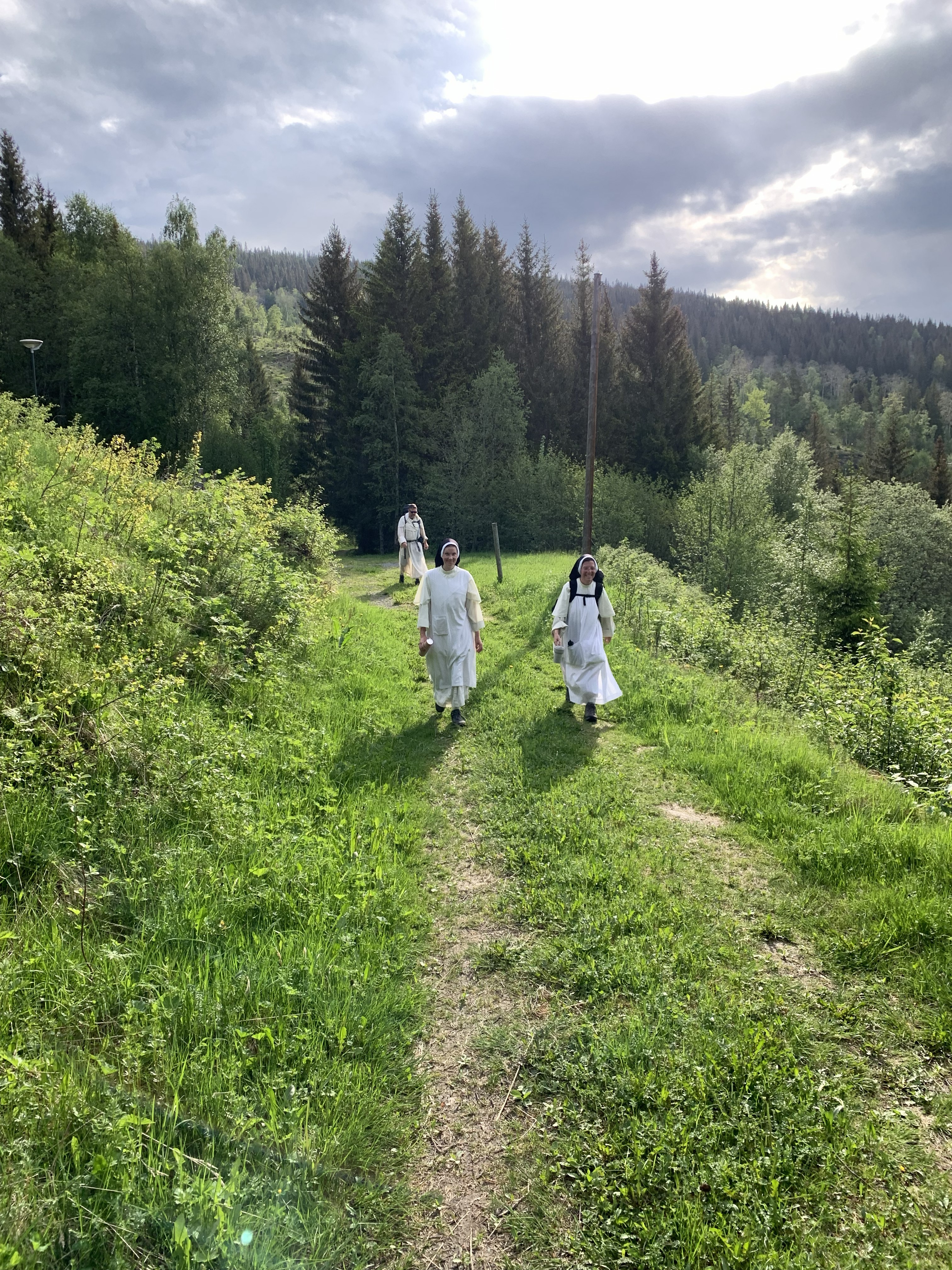
Joining the Revival of Faith in Scandinavia
The relics St. Olaf, who lived c. 995-1030, are believed to rest in the medieval Nidaros Cathedral, which has become one of the most important pilgrimage destinations in Northern Europe.
Since 2002, the Norwegian national Catholic youth association, Norges Unge Katolikker (NUK), has helped revive the ancient pilgrimage tradition to Nidaros Cathedral — a journey that is now attracting a new generation of pilgrims from beyond Norway’s borders.
Earlier this year, Dominican Father Gregory Pine led a group of 15 pilgrims from different countries and backgrounds on the ancient pilgrimage to Trondheim.
Gabriele Silva, 32, originally from Rio de Janeiro, told the Register that after living in Sweden for nearly two years, where he rediscovered the faith he had drifted away from, he became increasingly aware of what he described as “the revival of faith in Scandinavia.”
“And that inspired me,” he explained, “because I felt such a strong faith there that I knew I was walking into something good.”
The invitation to walk to Trondheim was something entirely new for him, yet exciting. “I didn’t know much about St. Olaf, but I knew about what was happening in the region, and I found it very beautiful to be part of it.”
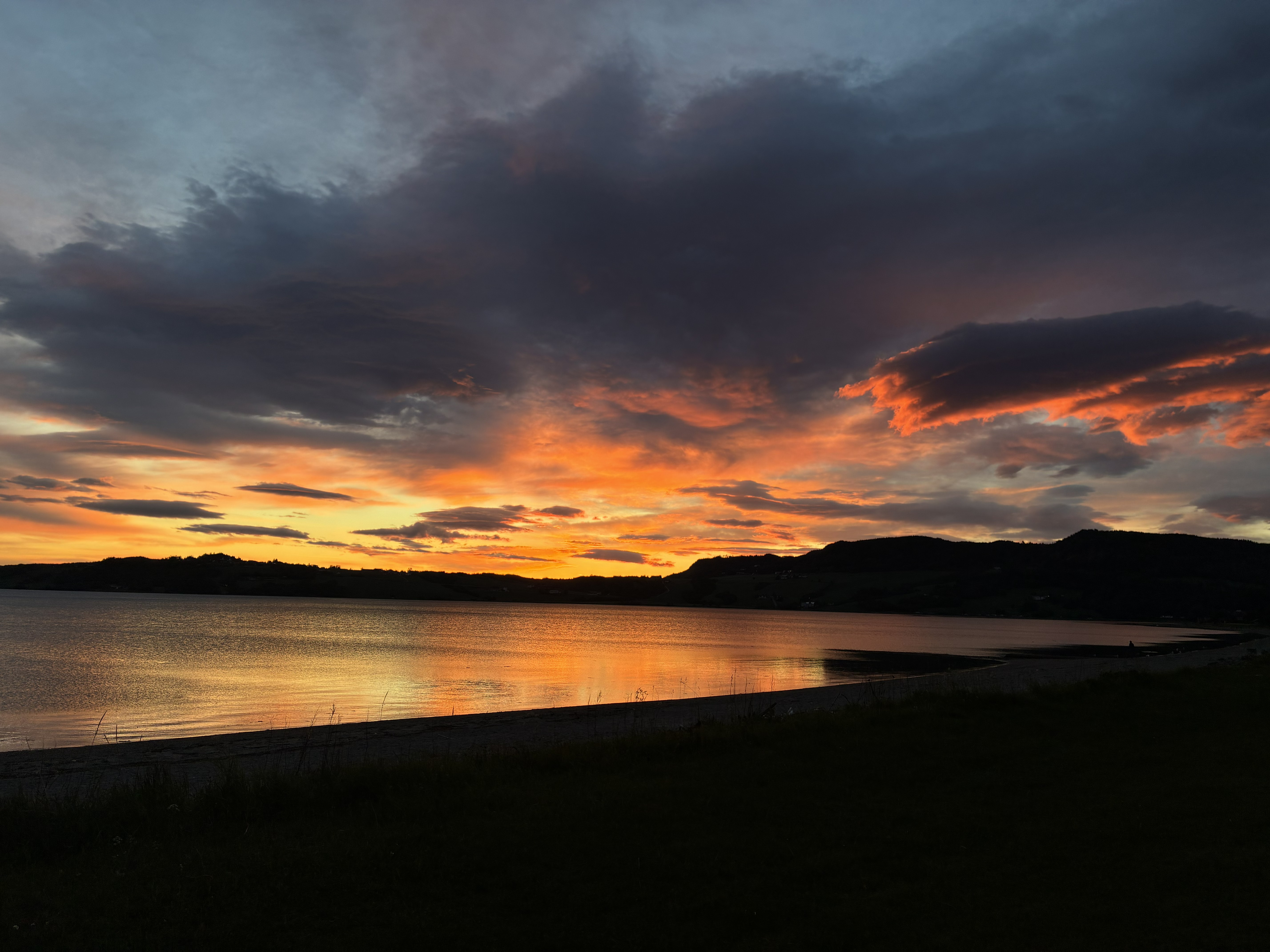
That sense of participating in something larger was shared by other pilgrims.
Seeing the pilgrimage as part of a wider “revival of Christianity in Scandinavia,” Mary O’Brien, 26, from Ireland, told the Register that she was likewise inspired by the opportunity “to be a part of that, even in my own tiny little way.”
While she had done quite a few pilgrimages in Europe before, she felt “really attracted by the St. Olaf pilgrimage purely because it was a bit more unknown,” drawn to the fact that it would be more remote, less crowded, and more conducive to silence and prayer.
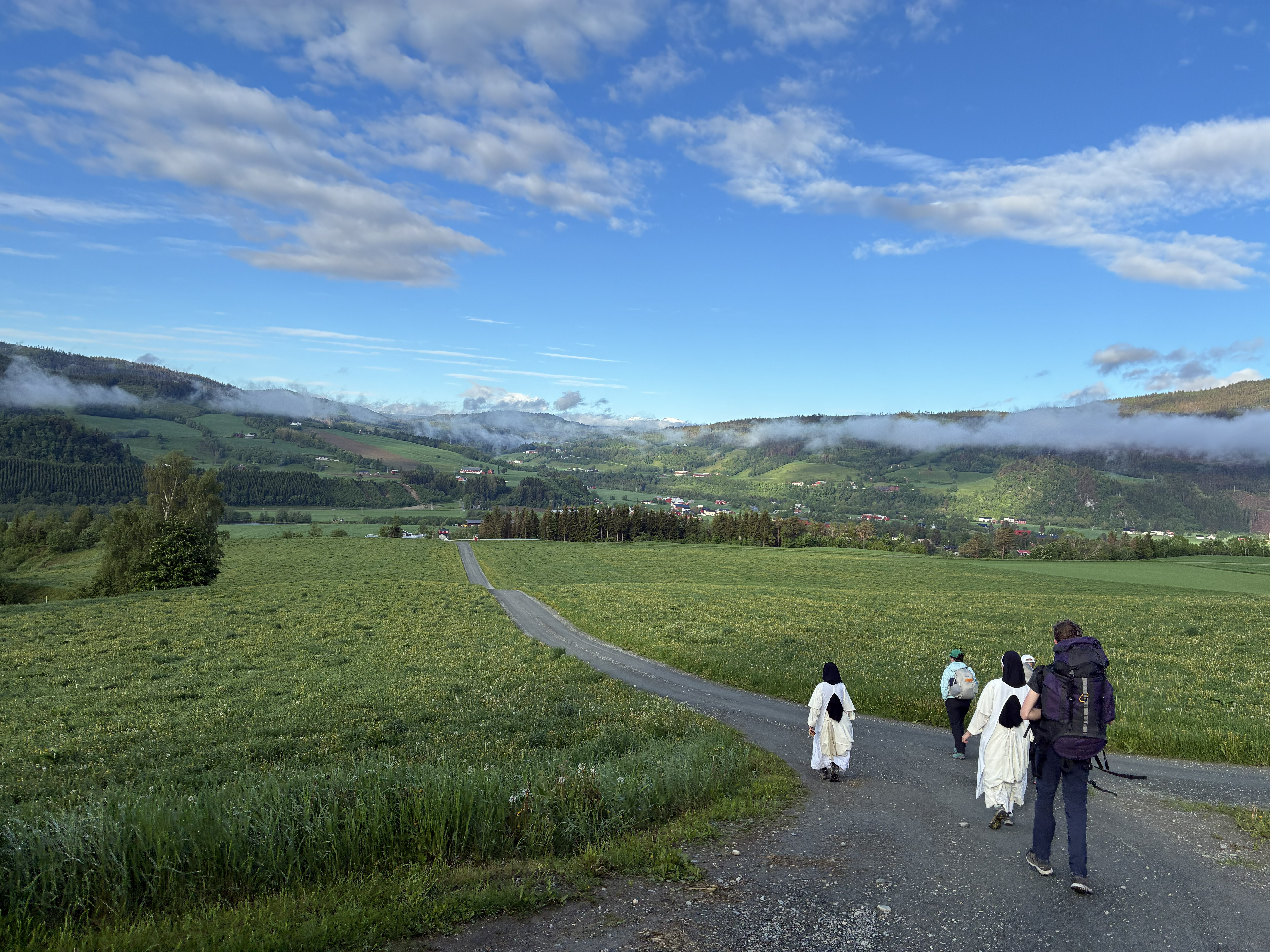
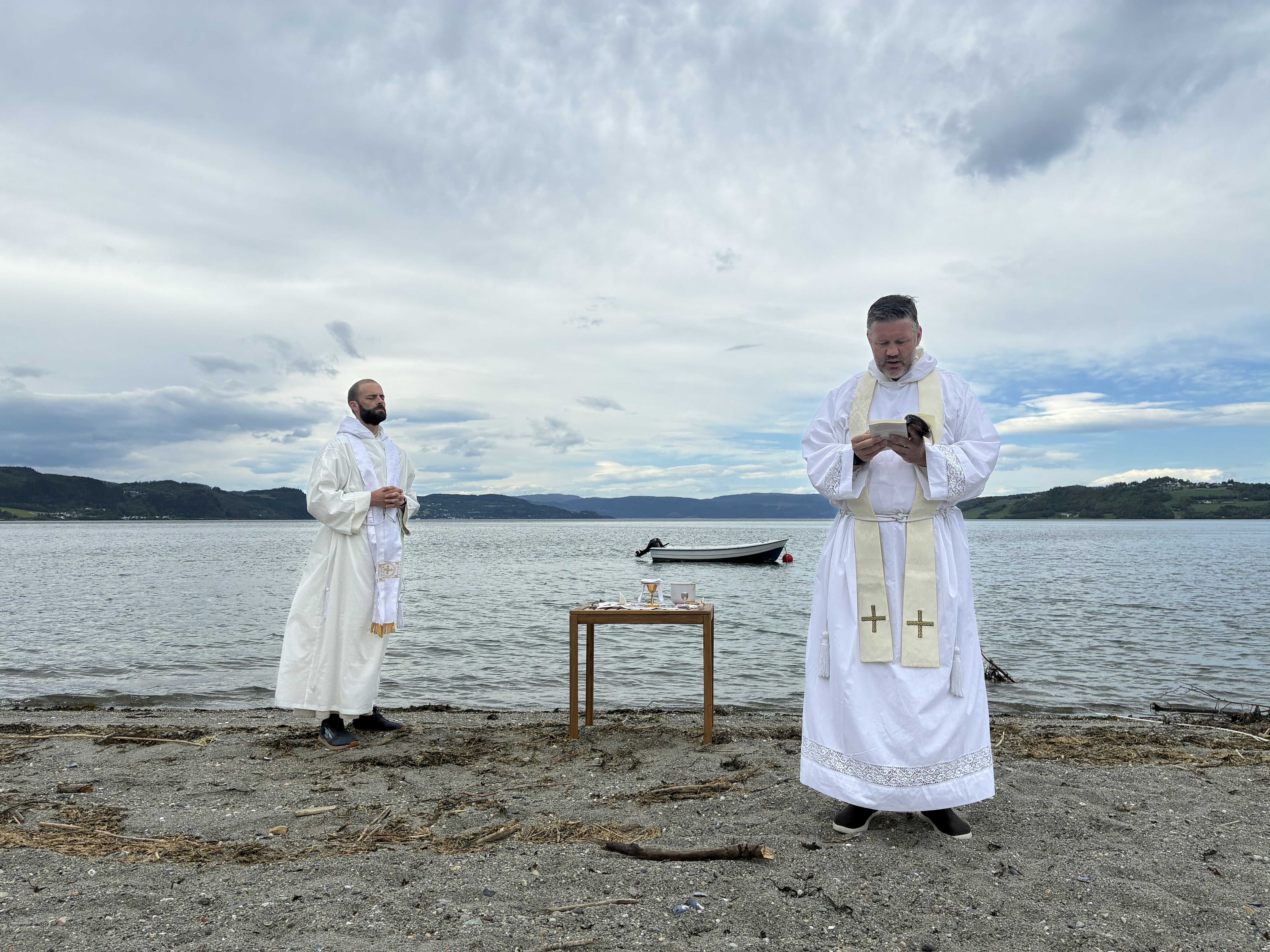
Starting in Berkåk, a week’s walk from Nidaros Cathedral, the pilgrims embarked on a beautiful yet physically demanding journey, with each day shaped by morning silence, daily Mass and adoration, and moments of prayer in Lutheran churches (Catholic churches are more difficult to come by on the pilgrim trail) and wherever a suitable place could be found.
“Having Christ appear wherever we were gathered,” O’Brien said, “coming to dwell amongst us wherever we happen to find ourselves, was pretty special.”
For some pilgrims, the journey to Nidaros was the fulfillment of a desire carried for years.
Dominican Sister Maria Joseph from the U.S. was among them. Reflecting on how her childhood fascination with Norway — first sparked by the 1994 Olympics in Lillehammer, the home of Sigrid Undset — she told the Register: “The Lord sort of planted this desire in my heart.”
For her, the history of the Church in the country made the pilgrimage all the more meaningful. She learned that after the Reformation in 1537, Catholicism was outlawed in Norway, with public Catholic worship prohibited for centuries — a suppression that also brought the ancient St. Olaf’s Way pilgrimage route to Nidaros to an end.
“The Church really had to rebuild from the bottom up,” she noted. “I think in some ways what’s beginning to bear fruit is the last hundred years of work and rebuilding the Church.”
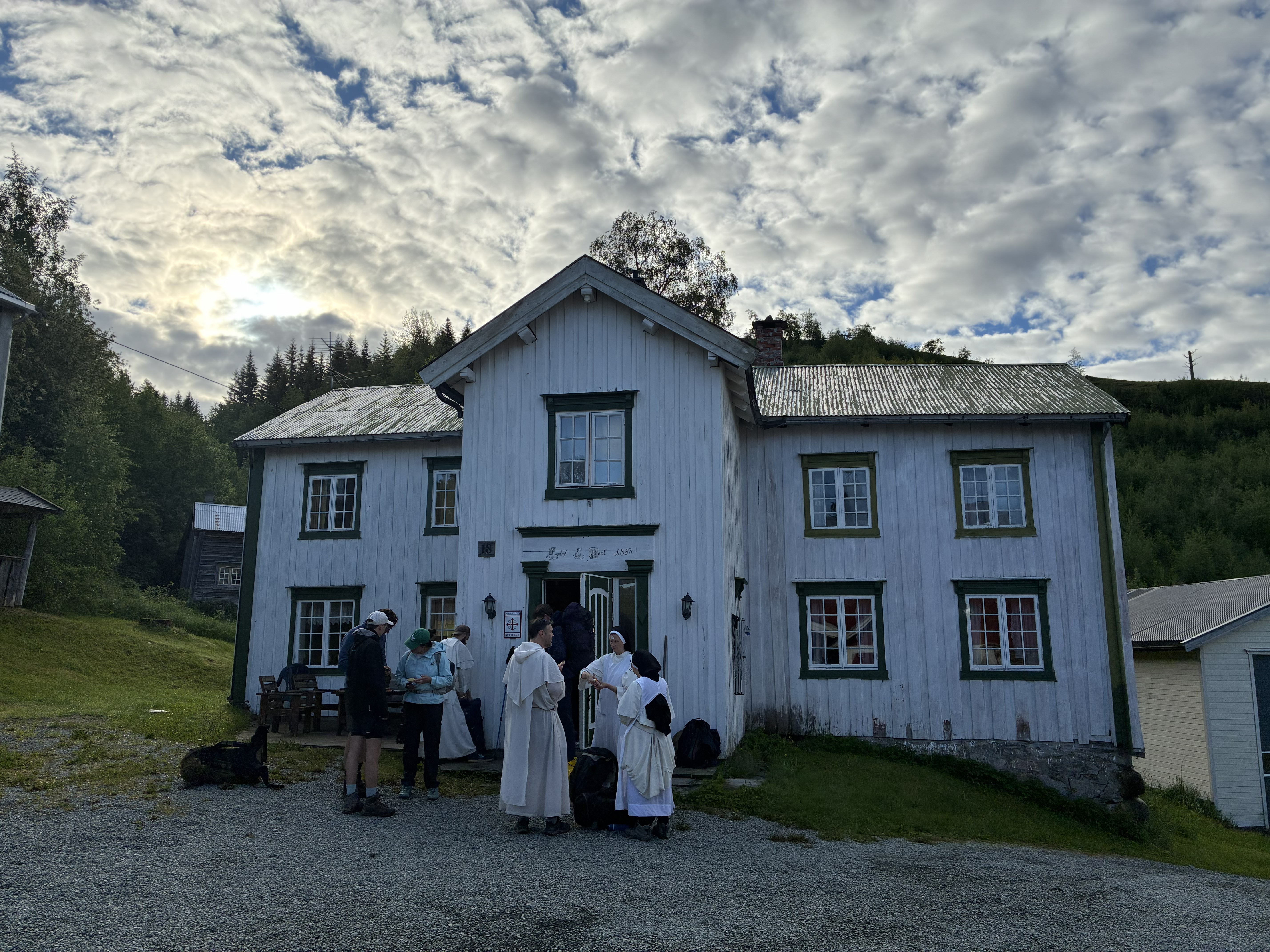
Getting to Know St. Olaf
While most of the 15 pilgrims had only heard of St. Olaf “as this great king that Christianized what was pagan Scandinavia,” the group spent the pilgrimage “reading aspects from his life and learning about him as [they] walked,” O’Brien said.
“I had no idea what was to come of this pilgrimage, walking for a saint I didn’t know, in a country I’d never been to, with a group of about 15 people, almost all of whom I had never met,” Quigley, one of the pilgrimage’s organizers, told the Register.
“I was under the impression, and I was correct in the end, that going there and walking St. Olaf’s Way to Trondheim, encountering people along the way who were more familiar with him than I was, would be how I would come to know him the best.”
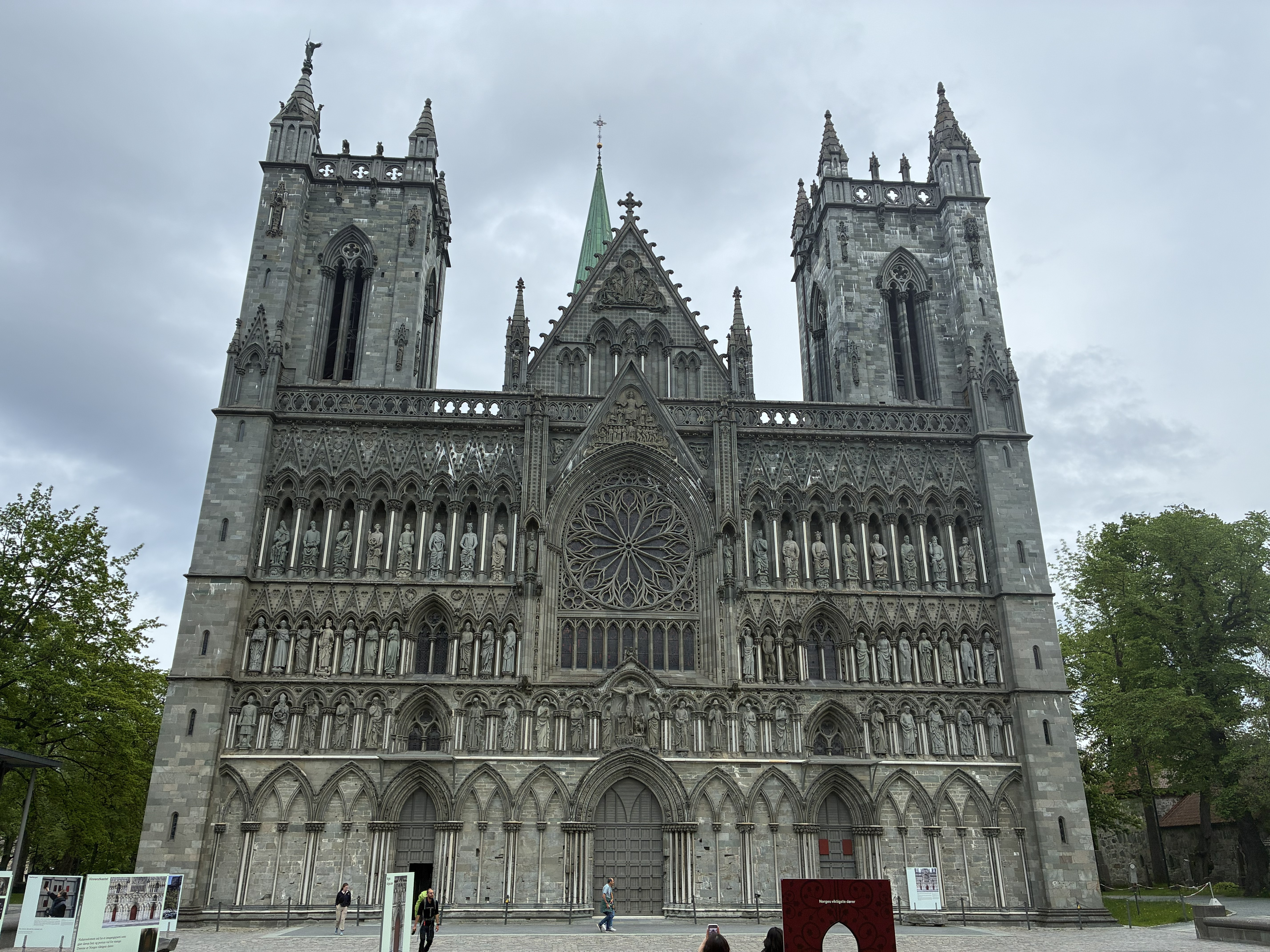
Different aspects of St. Olaf’s story resonated with participants.
“I admire the sense of unity he brought,” Silva commented. “At that time, there were many separate tribes and jarls [regional chieftains and leaders], constantly at war with one another.”
St. Olaf, he stressed, is “still a figure shared by both the Lutheran Church and the Catholic Church, and so, in a way, it feels like he is still uniting people in Norway. I think there is a sense of Christians coming together to help a very secular country face the challenges that secularism brings.”
The pilgrimage concluded with a chance to meet Bishop Erik Varden, bishop of Trondheim, whose pastoral work and online presence have drawn greater interest to the country, O’Brien said.
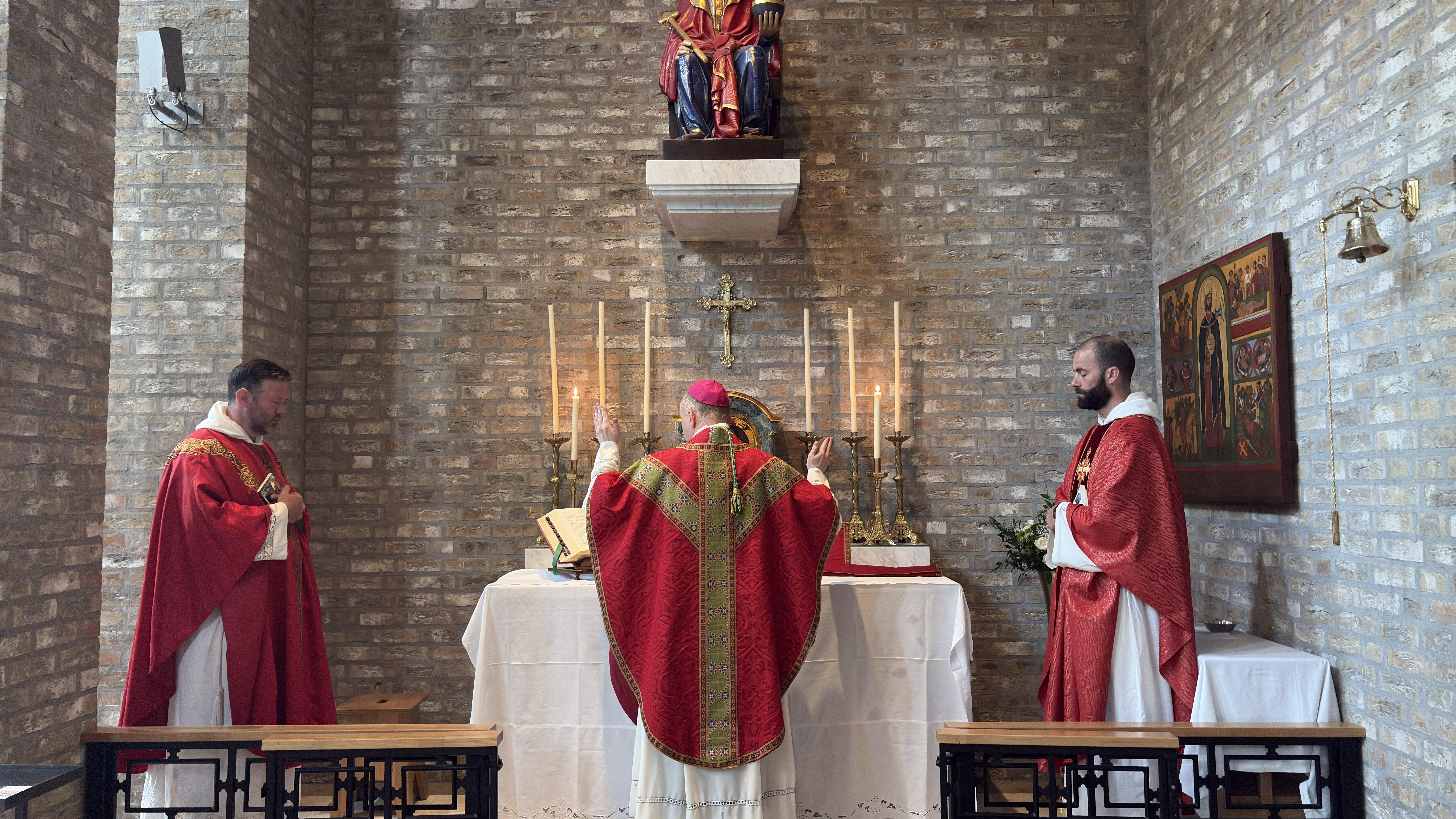
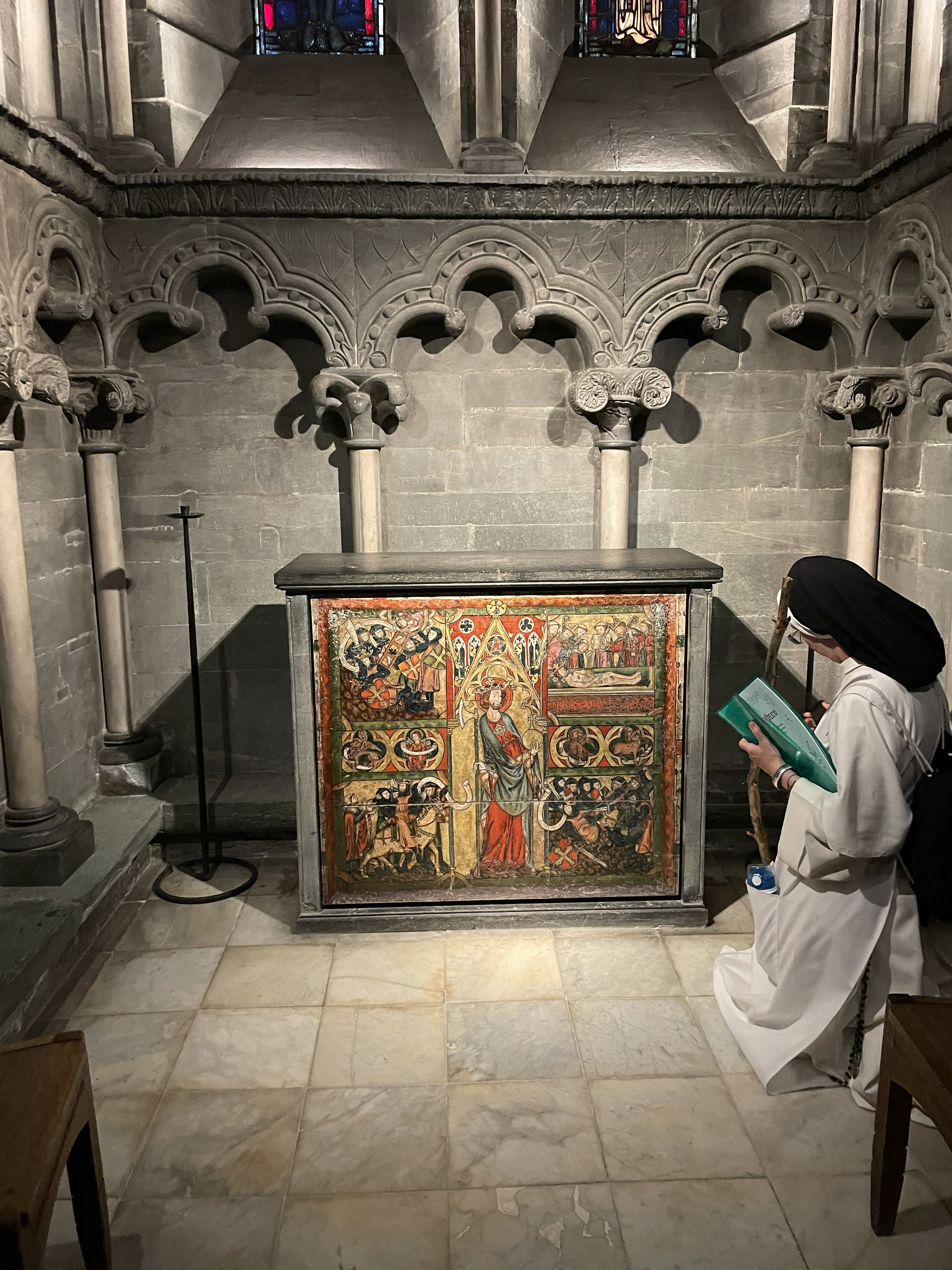
Sister Maria Joseph stressed that one of the highlights of the journey “was being greeted by Bishop Varden at the end of the pilgrimage,” who said “a votive Mass of St. Olaf at the altar of St. Olaf in the Catholic cathedral and blessed us with a relic of the saint.”
“In hindsight, I recognized that we were kind of arriving in Norway at a time when Christianity is moving there,” Quigley said, a reality affirmed by the bishop: “It is still a very secular country, but it is not devoid of Christian notions or Christian movement. The Lord is present. Things are quiet, but things are happening.”
“The idea of Catholicism in Norway being so persecuted for so long,” O’Brien shared, “because of the outlawing of Catholicism and the pilgrimage itself being banned for many years, the idea of it being something that couldn’t be done before, makes it more attractive to revive.”
What St. Olaf Has to Say Today
“As younger Catholic people,” said Sander Floriaan Groenewoud, 30, from the Netherlands, “we want to take our faith seriously and we want to go back to the roots,” a trend he sees across Europe.
“When I go to the Netherlands, Germany or Belgium, I notice that most Catholic young people are rediscovering a love for their heritage, a love for their countries,” he shared, highlighting a sense of patriotism that he believes has been lost in previous generations.
From this perspective, he added, the appeal of St. Olaf is easy to understand. After all, he added, “he is this Viking king, which I can imagine is really appealing to young Catholic people who want to fight, not in the physical sense, but fight hard for God.”
Sister Maria Joseph, who teaches sixth grade, explained she “certainly grew in friendship with him” and echoed the appeal of St. Olaf’s Viking identity. “I think if I mentioned to my students that there was a saint who was a Viking, they would find that really cool.”
“The idea that there could be hope for someone who was really involved in what we think are most treacherous things, that he could be a saint, I think that is appealing,” the Dominican sister highlighted, noting that royal saints are more often remember for their acts of charity, almsgiving and service to the poor.
“I’m sure Olaf did that in his time after his conversion, but it’s not what first comes to mind about him. The image of him with his axe, that’s what people remember first.”
As the millennium of his death in the year 1030 approaches, the Dominican sister shared that she believes St. Olaf “is emerging as a figure who has some importance for our times.” Reflecting on what his legacy might offer the present day, she asked:
“Is there something of him that can speak to us about the Christianization of culture, about bringing a more Christian mentality to the way we live — even to our political life?”
